
By Cece Siago | siagocece1@gmail.com
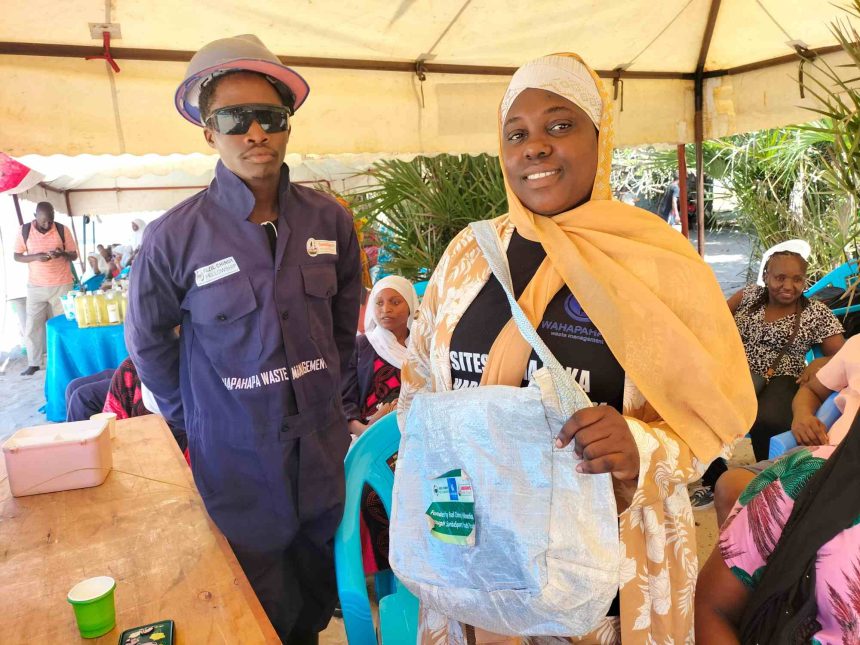
For the past two years, Nsema Hoka has led a community-based organisation tackling waste in Kombani, Kwale County.
Every few weeks, she walks along the beach collecting plastic bottles, abandoned fishing gear and other waste washed ashore by the Indian Ocean.
As the founder of Wahapahapa Waste Management CBO, Hoka has mobilised young people to clean beaches and encourage households to separate waste for recycling, hoping to make coastal towns cleaner and safer for people and marine life.
“We want people walking along the shores of the Indian Ocean to see no litter, especially plastic. But funding remains an issue,” she said.
For Hoka, proper waste segregation is the first step to recycling what can be reused and disposing of the rest responsibly.
Her experience reflects a wider challenge facing many conservation groups along Kenya’s coastline, where projects often depend on short-term donor grants that are difficult to sustain.
That could begin to change if Kenya succeeds in launching its first blue bond.
During the 11th Our Ocean Conference held in Mombasa last month, Kenya unveiled plans to develop its first US$300 million Go Blue-Green Bond Programme.
Unlike donor grants, a blue bond raises money from investors through the capital markets. The funds are then invested in projects linked to the ocean and coastal economy, while investors are repaid over time from revenues generated by those projects. The goal is to unlock long-term financing for activities that both protect marine ecosystems and support economic growth.
The programme, being developed by coastal counties under Jumuiya ya Kaunti za Pwani (JKP) in partnership with FSD Africa, the United Nations Development Programme (UNDP), the Nairobi Securities Exchange (NSE), Kenya Maritime Authority (KMA) and Kenya Ports Authority (KPA). It is expected to finance projects in fisheries, aquaculture, maritime infrastructure, coastal tourism, biodiversity conservation, blue carbon and other sectors of the blue economy.
The Nairobi Securities Exchange will support the bond’s development, while FSD Africa and UNDP will provide technical expertise and help mobilise investment.
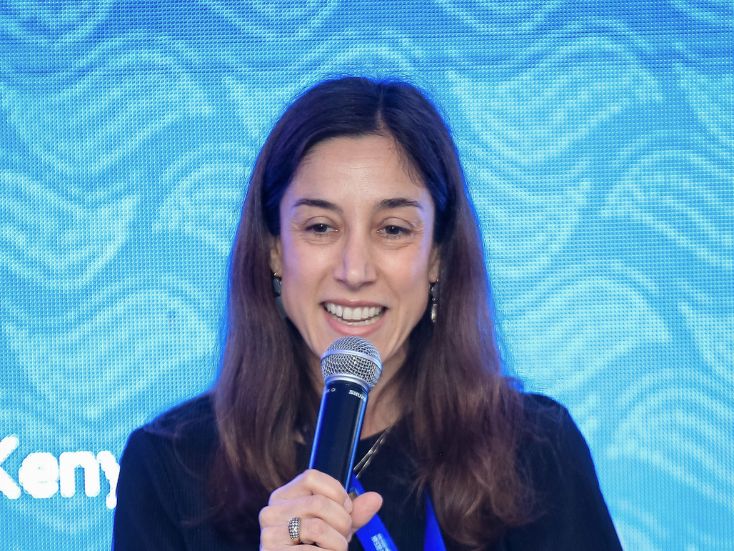
In a statement, FSD Africa Principal Specialist for Sustainable Finance Cecilia Bjerborn Murai described the programme as an important step towards building a scalable African model for financing the blue economy.
“Kenya has an opportunity to demonstrate how innovative capital market solutions can mobilise long-term investment for sustainable economic growth, climate resilience and environmental protection,” she said.
In a separate interview in Mombasa during the Our Ocean Conference, FSD Africa’s Blue Finance Specialist Barbara Calvi said the bond is expected to be issued in both Kenya shillings and US dollars to attract domestic and international investors.
She said the programme goes beyond raising capital by linking environmental protection with economic activity, including investments in port infrastructure, wastewater treatment, fisheries and conservation projects.
“By doing this we achieve three objectives: capital mobilisation towards a sustainable blue economy, positive nature outcomes through investments in mangrove conservation and restoration, and social inclusion through job creation and retention across coastal communities,” Calvi said.
She added that, if successfully issued, the transaction could become one of the largest thematic bond issuances undertaken by an African country.
Calvi said one of the programme’s most innovative features is a proposed revenue-sharing mechanism between the Kenya Ports Authority and Jumuiya ya Kaunti za Pwani. Under the arrangement, a share of revenues generated from selected port-related activities would be channelled into projects supporting local fisheries, ecosystem restoration and other blue economy initiatives across the six coastal counties.
The programme is now entering its technical preparation phase. Over the next 12 months, the partners will structure the bond, identify bankable projects, engage investors and complete regulatory processes before the inaugural issuance, which FSD Africa hopes to complete before the end of 2026.
For coastal leaders, however, the bigger challenge is ensuring that projects financed through the bond can generate sustainable returns.
The proposed programme builds on the recently concluded European Union-funded Go Blue Project, which supported hundreds of coastal community groups, micro and small enterprises, and county governments through grants training and technical assistance to grow the blue economy.
Unlike the Go Blue Project, however, the new initiative seeks to mobilise private investment through the capital markets rather than rely on donor funding.
JKP Chief Executive Officer Emmanuel Nzai said that shift requires a different way of thinking.
“This is different from other financial help because its large and it is a bond, not a grant,” he said.
According to Nzai, the programme is intended to support businesses that can generate income while creating jobs and protecting marine resources. That means projects must be commercially viable and capable of attracting investment.
“It is not just about the seaweed value chain. It is about the business of seaweed and who is processing it for profit,” he said.
“If it is a fishing vessel, it is not fish for you to just eat, but sell and make profit and pay for the bond.”
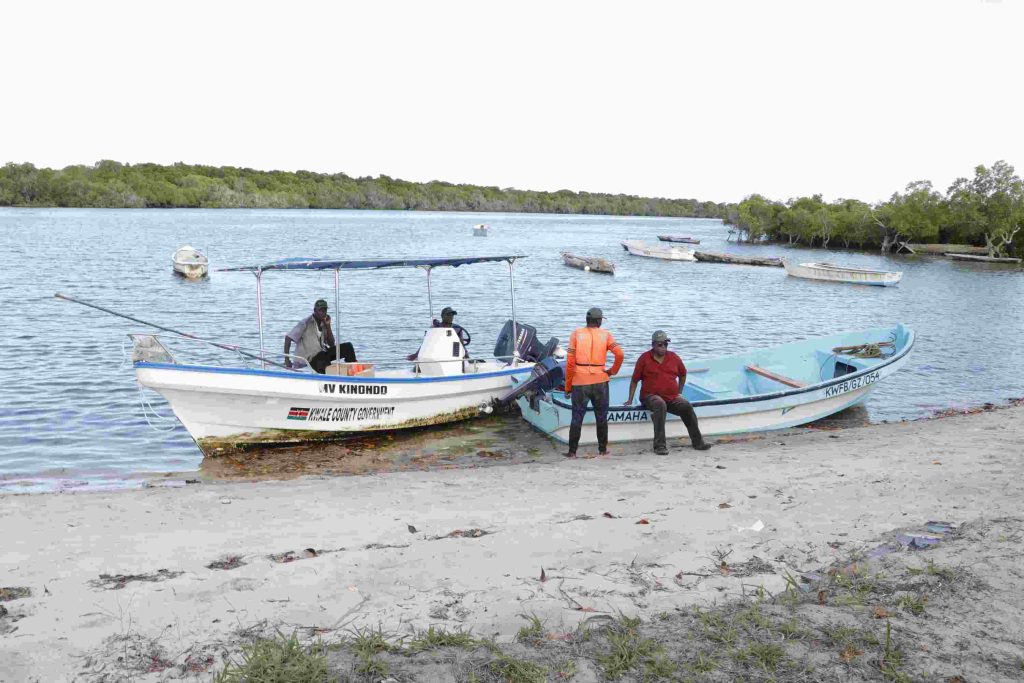
Back in Kwale, Hoka says community groups want lasting support rather than handouts — support that allows them to keep beaches clean, create jobs for young people and protect the ocean.
If Kenya’s first blue bond succeeds, community groups like hers could gain access to long-term financing that rewards both conservation and enterprise, helping turn local efforts to protect the ocean into sustainable businesses.
©MESHA Features 2026