


By Margaux Rundstadler I m.rundstadler@croplifeafrica.org
As governments and industry prepare for the first International Conference of the Global Framework on Chemicals (GFC) in Geneva this November, regulators from three African countries want science based tools to manage risk while protecting farmer livelihoods.
The regulators from South Africa, Kenya and Ghana came together with CropLife International and CropLife Africa Middle East (CLAME) to share how their countries are putting science-and risk-based management of Highly Hazardous Pesticides (HHPs) into practice.
The webinar, held last month and hosted by CLAME, examined the roadmap to Target A7 of the GFC – the 2023 commitment to phase out highly hazardous pesticides (HHPs) by 2035 wherever risks are not effectively managed and safer, affordable alternatives exist.
The discussion offered a consistent message from national regulators: there is no one-size-fits-all solution, and countries are already building practical, locally tailored tools to manage risk while protecting farmer livelihoods.
Country experiences show a common, risk-based direction
South Africa applies a science-based, risk-informed approach aligned with the FAO/WHO HHP guidelines, said a representative of the Department of Agriculture. Based on risk assessment agricultural remedies of potential concern can be limited to use by only designated persons, while a derogation process allows authorities to consider additional risk-assessment evidence for substances of concern where appropriate.
A national HHP (Highly Hazardous Pesticides) list has also been developed by the Department of Environment’s multi-stakeholder committee and will be shared with the Department of Agriculture.
Kenya reviewed all pesticide active ingredients following a petition submitted to parliament and conducted public consultations on regulatory decisions, according to a representative of the Pest Control Products Board (PCPB).
The country’s regulator, in collaboration with stakeholders, is now focusing on stronger communication with farmers on the proper use of pesticides, re-evaluation guidelines and a fast-track pathway for lower-risk products, including biologicals. Kenya is also working closely with EAC Partner States to develop guidelines for identifying HHPs and to ensure that effective and affordable alternatives are available.
Ghana identified 22 active ingredients meeting HHP criteria and assessed their risks in the Ghanaian context, considering the availability of alternatives, farmers’ needs and appropriate mitigation measures, said a representative of the Environmental Protection Agency. The experience with aluminium phosphide illustrates how targeted restrictions, licensing and monitoring can help address significant risks while maintaining a focus on practical risk management.
Dr Christoph Neumann, Senior Advisor of CropLife International, recapped the industry’s engagement with the UNEP global chemicals management processes over the past two decades, including a 2016 voluntary HHP portfolio review covering more than 6,000 products, and reiterated industry support for a Global Alliance on HHPs.
He noted, however, that CropLife International has not yet taken a final decision on membership, over concerns on the Alliance’s proposed governance structure, outside the Global Framework on Chemicals and the UN system.
Shared lessons ahead of Geneva
Across the three country presentations, panellists converged on a set of shared principles: decisions on Highly Hazardous Pesticides (HHPs) should remain science-and risk-based rather than blanket bans, transitions should be managed progressively and assessed product-by-product, and successful phase-outs depend on giving farmers time and genuinely understanding their needs.
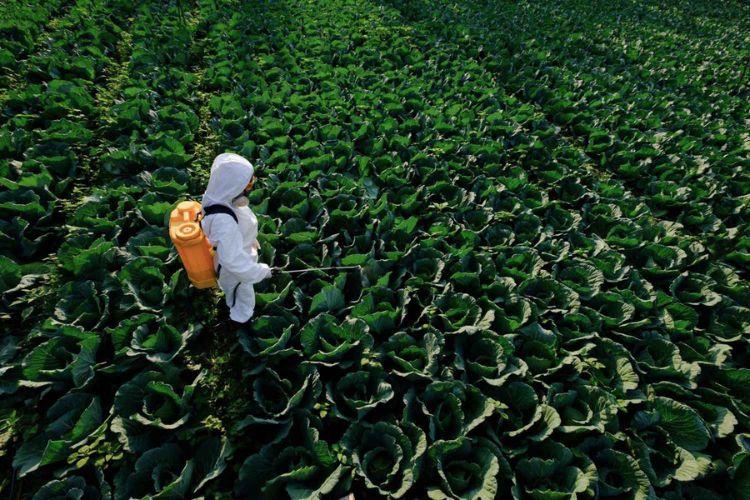
A key commonality across all three countries was also the consideration of restricting the use of certain highly hazardous pesticides to certified or qualified farmers or professional spray service providers based on pre-defined criteria, a practical and highly effective risk-management strategy during the transition.
Speakers also stressed the importance of involving agriculture and health ministries alongside environment ministries in GFC discussions, of regional cooperation and of keeping restricted-use products out of informal and illicit trade channels.
“What came through clearly is that our region already has a growing toolbox for managing HHP risk responsibly,” said Ms Stella Simiyu, CEO of CropLife Africa Middle East, in welcoming remarks to the webinar.
“The opportunity ahead of ICC1 is to learn from these national experiences, strengthen cooperation across borders, and scale the approaches that are already working for farmers, regulators and the environment.”
CLAME, which is the regional association representing the plant science industry, composed of research and development companies and 23 national associations across the region, is supporting this transition on the ground through structured stewardship programmes.
They also undertake farmer training and Spray Service Providers, expanded access to biological products, partnerships with poison centres, and its Sustainable Pesticide Management Framework, completed in Kenya and active in Morocco and Egypt.
With ICC1 taking place in Geneva in November, CLAME says the priority for the region is to preserve Target A7’s risk-based design, ensure ministries of agriculture are represented alongside environment and health counterparts in national delegations, and build on regulatory models, such as those in Kenya, South Africa & Ghana, that demonstrate the value of science-and risk-based decision-making.
CropLife Africa Middle East’s article published under MESHA Features Production 2026