

This story is produced with the support of Pulitzer Center
By Yodit Admasu Tefera | yodittefera@gmail.com
As the cost of food, medicine and other basic commodities rises, women who head households face a difficult choice: how to keep their families fed while paying for the care of children who need regular medical treatment.
In Ethiopia, where women traditionally carry much of the responsibility for household care, the pressure can become overwhelming. For low-income mothers raising children with disabilities or chronic conditions, the financial burden can be accompanied by fatigue, stigma and psychological distress.
Fantaye Kebede knows this reality intimately.
A street cleaner for the Addis Ababa municipality, Fantaye earns a monthly net salary of about 6,100 birr, or roughly US$37. She is raising four children alone after her husband died five years ago.
Her 10-year-old son has epilepsy and requires regular medication.
“I don’t have words to describe how hard life is. Everything is getting more expensive every day,” she says.
Fantaye works every day of the week, often taking overtime because she cannot afford to lose the additional income.
“I work from Sunday to Sunday without rest. I don’t want to miss work for fear of losing my job, and I don’t want to miss the overtime payment. It can cover some commodities for me.”
Her work has also taken a physical toll on her.
She says she delivered all her children by Caesarean section and that the wound from her last operation never completely healed. Because she had to carry her son while seeking medical treatment, she underwent three further surgeries after the stitches repeatedly broke.
“Even now there is fluid coming out of my wound, but I can’t stop to rest,” she says.
Her son’s treatment adds to another financial burden.
“I bought 10 tablets for 750 birr (US$6) the other day. These will last him for two and a half days.”
That means the medication alone can consume a substantial portion of her monthly income.
Her son’s condition also affects her sleep. He sometimes wakes in the middle of the night agitated, requiring her to calm him before returning to bed. There is no sleep for Fantaye after that, she starts getting ready for work.

“I wake the older children up and tell them to look after him before I go to work.”
She has learned to focus only on getting through one day at a time.
“I try not to think about tomorrow. I only think about what is present. Even my children urge me not to stress. I can’t control tomorrow, so I have to stop worrying so much.”
Then she says something that captures the insecurity experienced by many low-income caregivers:
“I can’t afford to be sick.”
When poverty and stigma collide
Fantaye is not alone.
Sinidu Abera, another single mother, supports herself and her five-year-old son, who has special needs.
She previously worked for a Chinese company. After having her son, she left formal employment and began selling household utensils on a back street near her home because she could not leave her child alone or trust someone else to provide the care he needs.
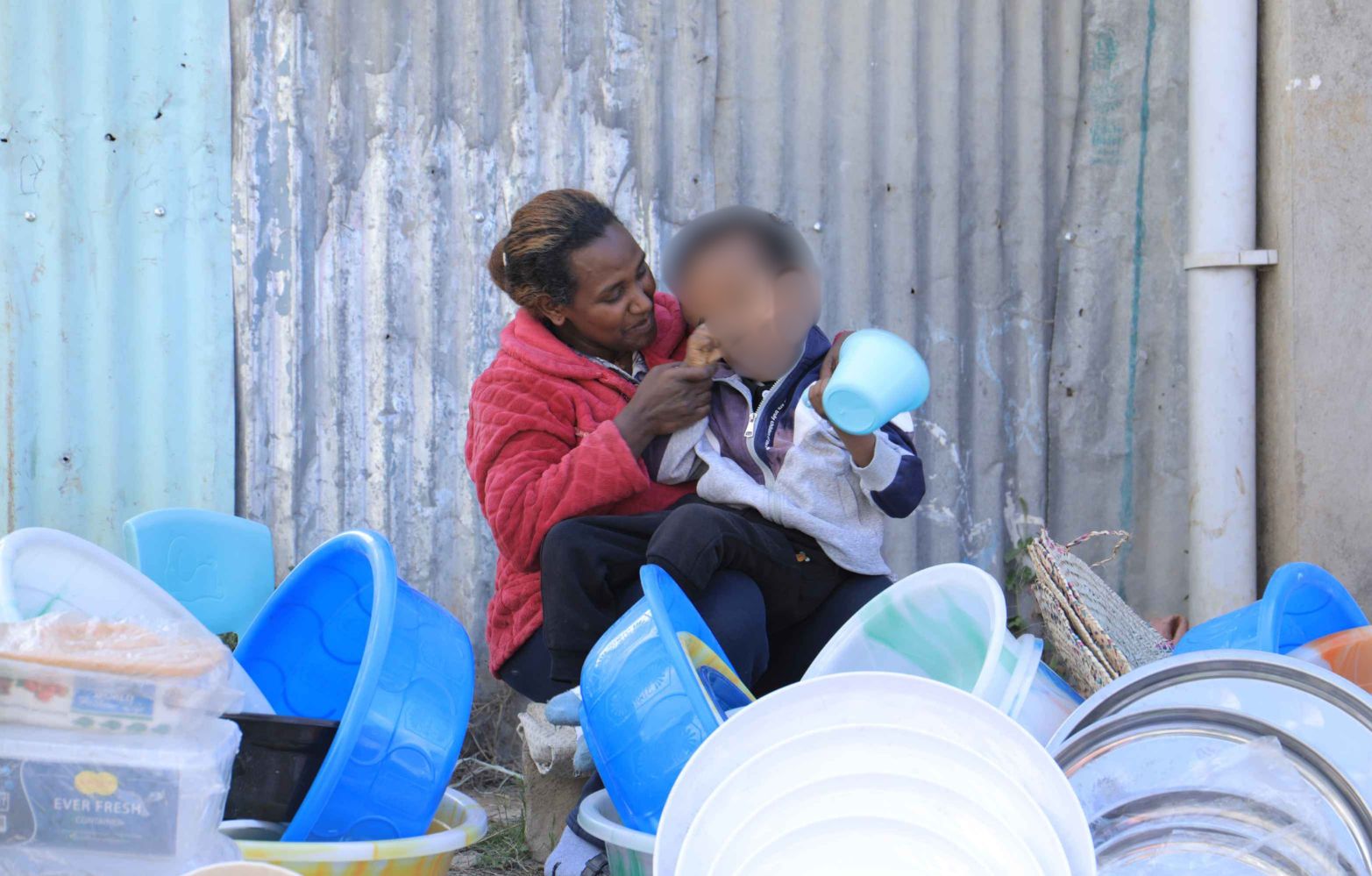
“I am lucky I found this spot on this inside street. If I were on the main road, the police would have confiscated my goods,” she says.
The location allows her to continue working, but it also limits her customers. Her stall is near a church, and she says most of her customers are churchgoers who buy from her mainly around holidays and Sundays, but that doesn’t stop her from opening her stall everyday.
For Sinidu, the economic hardship is compounded by something less tangible but equally painful: stigma.
“The stigma I face is worse than the economic hardship,” she says, tears in her eyes.
She says some people interpret her son’s condition as punishment for something she has done.
“They think that I have committed some atrocious sin to have a son like him, and some have even outright said, ‘God forgive you for your sins.’ Someone else said, ‘It was better that he died.’”
Others have asked why she does not place her son in an orphanage and have another child.
“They say, ‘Why do you ruin your life?’”
For Sinidu, giving up her son is unthinkable.
“I would rather beg on the street than give my son up. I am the only one who understands his needs. I am his mother. I am responsible for him.”
Her experience illustrates how economic hardship and social stigma can reinforce one another. A mother who cannot afford formal childcare or medical care may already be economically vulnerable; stigma can further isolate her from the support she needs from the community.
Sinidu says it is this kind of stigma that forces mothers that keep their special needs children at home rather than exposing themselves and their children to judgment.
From stigma to support
Fantaye remembers experiencing similar stigma when her son was younger.
“Yes, there was stigma at the beginning when he was two years old. I even stopped going to church because of the judgmental gazes.”
But her experience has changed.
“Since then, the awareness of people has evolved. The people around me give me hope and encourage me every day. If I have to go somewhere, they step up every time to babysit my son. They give me courage every day.”
Her experience points to another side of the story: community support can make a significant difference to caregivers who otherwise have very few resources.
But neighborhood support networks cannot substitute for affordable healthcare, social protection and mental-health services.
The hidden cost of mental-health stigma
Yodit Tesfaye, the newly elected president of the Ethiopian Mental Health Service Users Association, says stigma surrounding mental illness remains widespread.
Tesfaye, who has been diagnosed with bipolar disorder, says people often question her diagnosis because she does not fit their image of someone with mental illness.
“People do not believe me when I tell them I have the condition. They say, ‘But you don’t look like one.’”
She says mental illness is often portrayed in Ethiopia through extreme stereotypes.
“The perception of a mentally diagnosed person in our society is that every mentally diagnosed person is going to go on the streets stark naked and speaking profanities. People need to understand there are various levels and types of mental illness.”
She says this lack of understanding can also affect people’s access to support.
“Our community does not even visit mental patients at health centres, as they do other illnesses.”
Members of her association therefore make a point of visiting people receiving mental-health treatment.
“Our association members are committed to visiting patients because we believe that human interaction is crucial to recovery.”
Stigma can also affect people’s livelihoods.
Tesfaye says some people living with mental-health conditions are reluctant to disclose their illness at work.
“If I am taking sick days from work, I don’t have the confidence to present the sick leave to my boss because I fear that he wouldn’t understand and could compromise my position at the office.”
For people already struggling financially, losing income because of illness can turn a health problem into a household crisis.
Poverty and mental health cannot be separated
Tesfaye also points to what she considers a gap between mental-health policy and the lived experience of people who use mental-health services.
“The policies look good on paper, but they have not gone to the ground and touched the lives of the people.”
She argues that policies should be informed by people who have experienced mental-health challenges themselves.
“It should be practical and should reflect the lives of people with lived experience to have the desired impact. There has to be needs-based research and needs-based policy to support mental health in the country.”
For Yohannes Worku, a mental health and psychological support professional with more than a decade of experience in clinical psychiatry, the relationship between poverty and mental health is increasingly being recognized by humanitarian organisations.
He says some organisations have begun combining livelihood programmes with mental-health interventions, based on the understanding that economic hardship and psychological wellbeing cannot be addressed separately.
Yohannes also points to a shift in humanitarian assistance from directing support primarily through men, traditionally viewed as heads of households, toward providing more assistance directly to women.
He says the change reflects women’s central role in managing household resources and has produced positive results in some programmes.
That shift could be significant to women such as Fantaye and Sinidu are making daily decisions about food, medicine, childcare and household survival.
Beyond emergency assistance
Asadrew Zerihun, a social worker, says women’s support groups should be strengthened and that the government should expand social support for low-income households.
His recommendation comes as Ethiopia implements wide-ranging economic reforms aimed at stabilising the economy and reducing inflation.
Dr. Abule Mehare, an economist, supports the direction of the government’s economic reform but cautions that reforms should not be implemented in ways that place excessive pressure on households already struggling to survive.
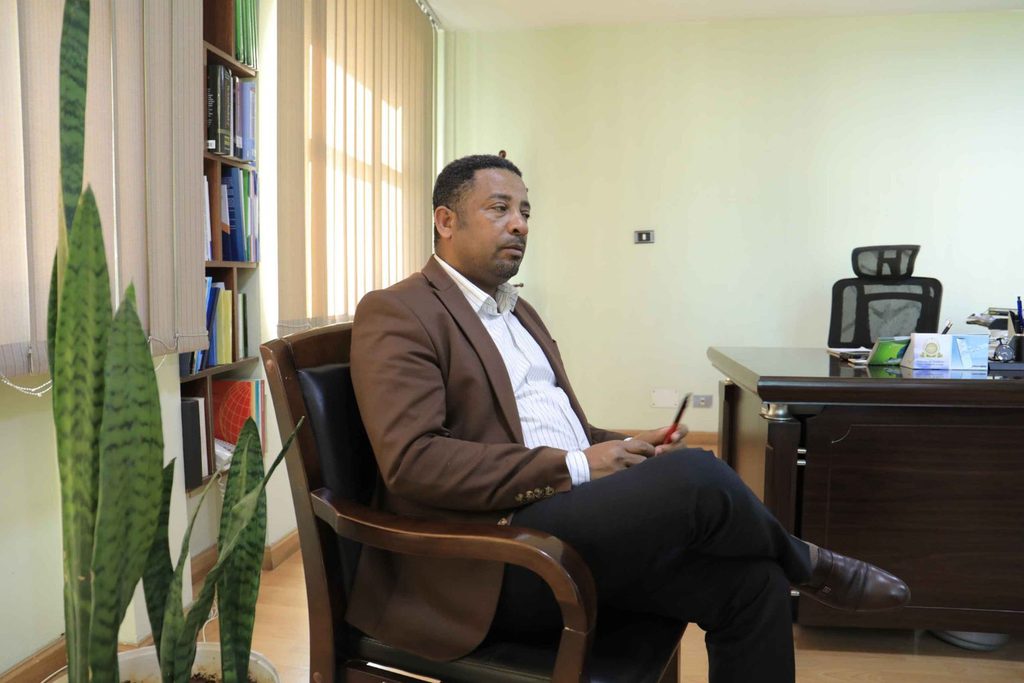
Price adjustments to basic services, including water and electricity, he says, could have particularly serious consequences for low-income households.
This raises a broader question about economic reform: when macroeconomic indicators improve, are the benefits reaching households that have the least capacity to absorb economic shocks?
For women raising children with disabilities or chronic illnesses, the answer may depend not only on the price of food, but also on the cost of medicines, access to healthcare, childcare, social protection and the availability of community support.
The cost of survival
Ethiopia’s falling inflation rate may indicate an improvement in macroeconomic stability. But for households like Fantaye’s and Sinidu’s, the relevant question is basic:
Can they afford to feed their families, pay for medicine and keep working when they themselves become sick?
For a mother earning 6,100 birr a month and spending hundreds of birr every few days on medication, economic statistics can feel very distant.
Fantaye has already learned that stopping work is not an option.
“I can’t afford to be sick.”
As the world turns its attention to mental health, the experiences of women like Fantaye and Sinidu show why psychological wellbeing cannot be separated from the economic realities of everyday life. For women carrying the responsibility of keeping their families alive and healthy, the cost of survival can extend far beyond the price of food.
©MESHA Features 2026