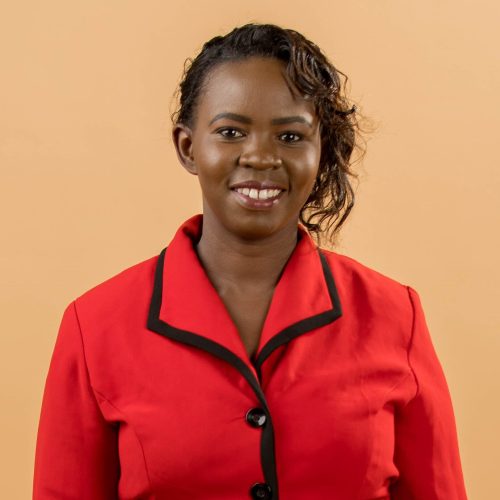



By Christine Ochogo | christawine@yahoo.com
Women are the backbone of agriculture and the entire agrifood systems as they are not only farmers but are entrepreneurs and hold household nutrition.
Mrs Phyllis Nduva from Makueni County represents thousands of rural women redefining farming, turning resilience into opportunity and challenging gender barriers as a result of discriminatory practices and structural barriers within institutional frameworks.
Her morning begins with tending crops, inspecting fruit trees, balancing productivity, family care and leadership as depicted in this video: https://www.youtube.com/watch?v=asuAS1ELuyQ
While many still view farming as a man’s domain, she has spent a decade proving that farming is a source of income and that women are the backbone of agriculture.
“I started serious farming 20 years ago and my farm is my source of livelihood. I plant fruit trees, legumes and cereals but I mostly concentrate in fruit farming as it pays me more,” she said.
Unlike many women who do not have access to resources and support to do agribusiness, Phylis is lucky to get support from her family and even her late husband allowed her make decisions on their farm.
“With my farming, I have taken up the role of a family head and my late husband supported me and gave me full mandate to operate in our farm. We can also consume fresh produce directly from my 20-acre piece of land,” she told Sayansi Magazine during a recent visit to her farm.
In contributing to environmental sanity, she practices organic farming and uses Integrated Pest Management (IPM) innovations to keep fruit flies and diseases at bay.
Working as a strong team with her son Doninic Mwendwa in their Kitwasi Orchards, the duo has set up a fruit drying plant that help her reduce postharvest losses and ensure shelf life of her fruits and other farm produce.

“I have installed a dyer in my home for value addition of my fruits and other farm produce thus reduce post-harvest losses and also be able me to have steady supply even at off seasons.”
As much as women in sub-Saharan Africa comprise nearly half (49 percent) of the total agrifood systems workforce, the largest proportion of any region in the world, significant gender gaps persist.
Food and Agriculture Organization of the United Nations (FAO) 2025 report on, The Status of Women in the Agrifood Systems in sub-Saharan Africa, indicates that women face persistent challenges in accessing professional opportunities in the agricultural sector.
A concern of slow progress in closing the gender gap emerged as the world celebrated the 2026 International Women’s Day (IWD2026) and the International Year of the Woman Farmer.
Dr. Nicoline de Haan, Director, CGIAR Gender Equality and Inclusion Accelerator, warned that if no quick solutions are taken, the gender gaps could take over a century to close.
“Women suffer more not because of their own making but because of the inability of the society to understand that they need access to resources, technology and information including information on climate change and weather so that they can be well prepared,” she mentioned.
However, Phyllis’s story highlights the growing role of women in farming, where determination, innovation, and hard work are reshaping gender norms and strengthening food security.
It is a clear demonstration that empowered women have the ability to drive real change in the agrifood systems and in addressing climate challenges if given equitable opportunities.
“We urge our men to involve our women in farming activity right from production, marketing and even ownership since they deserve equal rights,” Robert Musyoka a farmer in Makueni County advised.
Phyllis a woman farmer doubles up as the chairperson of Makueni Fruit Processors Cooperative Society where they have empowered over 10,000 farmers, 60 per cent being women, by training them on good farming practice and give them platform for markets.
By coming up with innovations to close the gaps on equal access to land, putting women at the center and empowering them with tools, aligns with the 2015 United Nations Sustainable Development Goal 5 that calls for Gender Equality by 2030 and the African Union Agenda 2063 chapter 3 that envisages under its aspiration, a full gender equality in all sphere of life.