

By Susan Ndunda | susannanjinia@gmail.com
Every school day, children wake up before dawn to prepare for school. They leave their homes, while it is still dark and.
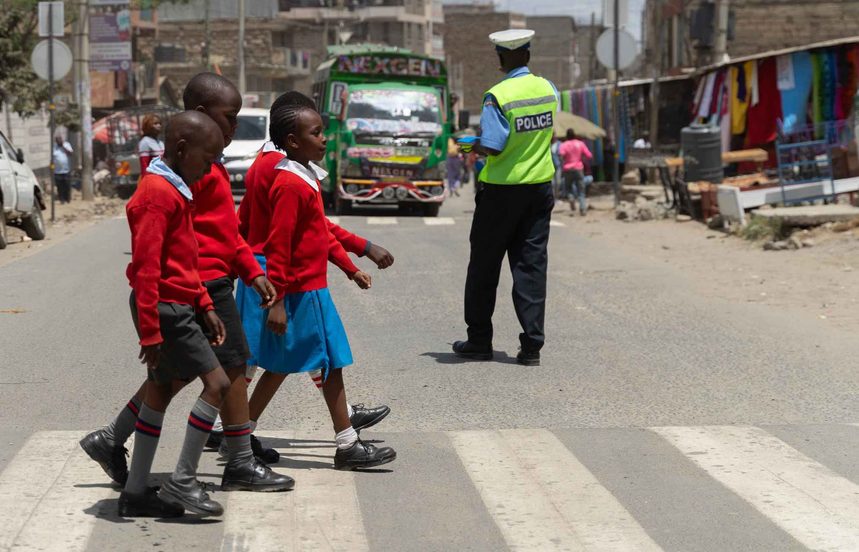
Some walk long distances along roads without pavements, while others cross busy highways or use public transport to get to school on time.
In the early morning rush, motorists might find it hard to see and identify children, particularly in poorly lit areas.
Some walk along road shoulders, cross roads at dangerous points or travel in overcrowded vehicles, exposing them to the risk of road crashes.
The danger can be greater when drivers are speeding, visibility is poor or children are rushing to avoid arriving late for lessons.
For many learners, the journey to school is a daily necessity, but it can also be one of the most dangerous parts of their day.
This makes road safety measures such as safe pedestrian crossings, speed controls near schools, school-zone signage, reflective clothing and adult supervision essential to protecting children on their way to and from school.
Statistics from the National Transport and Safety Authority (NTSA) show that pedestrians accounted for 5,009 road crash deaths in 2025, with children representing a significant proportion of the victims.
The report further shows that as of October 4, 2026, NTSA had recorded 3,900 road deaths.
Many road crashes occur during the morning and evening rush hours, exposing learners who use the roads to and from school to an increased risk of being involved in fatal accidents.
Students at Mwangaza Comprehensive Primary and Junior School in Kayole, Embakasi Central, Nairobi County, are among thousands of learners who must navigate roads shared with speeding vehicles, motorcycles and other road users before settling down for their first lesson.
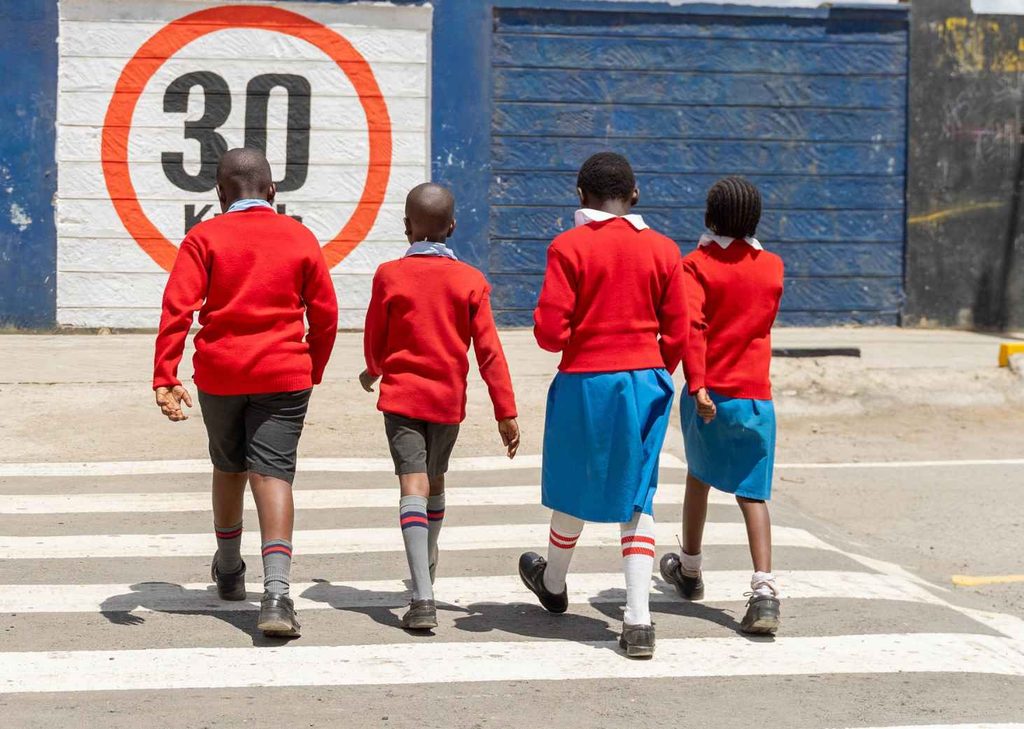
The school has a population of more than 2,000 learners, many of whom face daily road safety risks as they travel to and from school.
However, these risks are beginning to ease following the unveiling of a new road-safety intervention featuring sidewalks, speed bumps and a zebra crossing.
The infrastructure provides pupils with a safer route to and from school while offering parents greater peace of mind as their children leave home each morning.
Implemented under the theme ‘Safer Roads, Brighter Futures,’ the initiative brought together the school community, government agencies, road-safety organisations, development partners and local leaders in a shared commitment to protecting children on the roads.
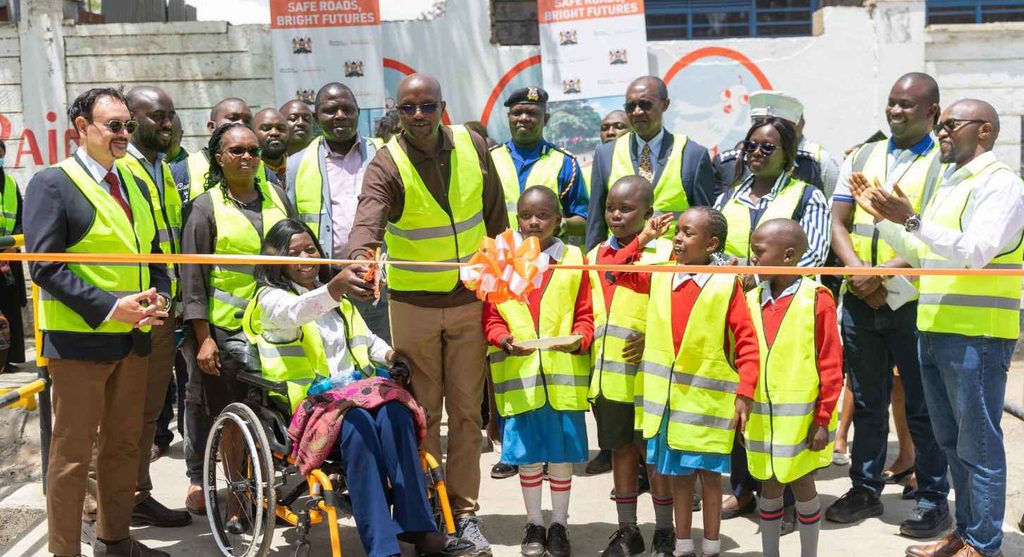
The effort goes beyond preventing crashes to ensuring that every child can travel to and from school safely.
Faith Otieno, a student representative at the school said the interventions were about protecting their education, dreams and future. She recalled that the school community had lost one of its own in a road accident before the new safety measures were introduced.
“Before the construction of the sidewalks, we faced a lot of challenges, to the extent that we lost one of our own in a road accident,” Otieno said.
Lucy Webuye, Deputy Head of Institution at Mwangaza School, described the project as a historic milestone for the school and the wider community, saying it would improve road safety for learners and future generations.
“We are here today to witness a historic event that will guarantee Mwangaza School students their safety when using the roads,” she said.
“This project represents a massive milestone for our institution and the community at large. It will directly enhance the safety of our students and the generations to come,” Webuye added.
Speaking during the launch, Joanina Njuguna, the Sub County Director of Education in Embakasi Central, described the construction of sidewalks and speed bumps as an investment not only in infrastructure but also in the lives, safety and future of children.
“The construction of these sidewalks, as well as the speed bumps, is not simply an investment in the school environment. It is an investment in the lives, safety and future of our learners,” Njuguna said.
She noted that children leave their homes each morning expecting to arrive safely at school, attend lessons and return home in the evening.
Yet, the journey can become the most dangerous part of their day.
“They have to share roads with vehicles, motorcycles and other road users. And when there are no proper walkways, children are forced to walk on the roads or very close to moving traffic,” she added.
Charles Kerich, Nairobi County Executive Committee Member (CECM) for Mobility, drew a comparison between the nationwide response to the COVID-19 pandemic and what he described as a muted reaction to deaths on Kenyan roads.
“Do you remember COVID-19? Do you know that COVID killed 2,000 people and the whole country was shut down?” Kerich asked the gathering.
He noted that road crashes claimed 5,009 lives in Kenya in 2025, a toll he said was more than twice the number of deaths he attributed to COVID-19, yet road safety had not elicited a comparable level of public alarm.
“Last year alone, road accidents killed 5,009 people in Kenya, yet there is no panic when it comes to road crashes,” Kerich said.
Kerich noted that road deaths are more common in the early morning and evening, raising concerns about poor visibility and inadequate street lighting, particularly for pedestrians travelling to and from school.
“Pedestrians lead in the number of deaths, and as you know, many of our children, when coming to school, are pedestrians,” he said.
He also highlighted the vulnerability of motorcyclists, linking the rising number of motorcycle-related fatalities to declining helmet use and underscoring the need for greater compliance with road safety measures.
Roselyne Moraa, Initiative Coordinator for Bloomberg Philanthropies’ Initiative for Global Road Safety (BIGRS) in Nairobi, said the intervention at Mwangaza School reflected a broader commitment to protecting vulnerable road users, particularly children.
“No parent should have to wonder, ‘Will my child get back home?’ when they go to school. And today, we are changing that story,” Moraa said.
She emphasised that the new infrastructure represented more than physical structures, signalling a commitment to prioritising children’s safety on the roads.
“What we unveil here at Mwangaza School is more than pedestrian infrastructure. It is a statement of what we value. It says that a child’s life matters,” she said.
Moraa also underscored the importance of collaboration among national and county governments, communities, schools, civil society, the private sector, the media and development partners in advancing road safety and ensuring children can travel to and from school safely.
Samuel Musumba from National Transport and Safety Authority (NTSA) reiterated the importance of road safety to safeguard road users and especially school going children who are vulnerable.
He revealed that 2025 recorded the highest number of deaths which was a 6 percent increase in the last five years.
“Last year, we recorded 5,009 lives lost on the road by the end of December. That was so huge, I think this is the highest in the last five years,” noted Musumba.
He added that out of the total deaths of road accidents, 1,890 were pedestrians which constituted 38 percent of road deaths in the country.
He said that such high numbers of deaths call for action and road safety initiatives which should remain a priority especially for children who experience road safety differently from adults.
Musumba explained, “Speed is not just merely a traffic management issue, but around the schools, speed is a matter of life and death. In our NTSA Action Plan 2024 to 2028 we are targeting to reduce these deaths by at least 50 percent. The emphasis is on improved infrastructure particularly for vulnerable road users.”