


By Dr. Morounfolu Olugbosi | morounfolu.olugbosi@tballiance.org
Africa can build off significant progress against tuberculosis (TB), a disease that has long plagued the continent for over 5000 years.
According to the World Health Organization’s (WHO) annual report on TB, in 2024, estimated numbers of new cases continue to decline in sub-Saharan Africa, while efforts to detect new cases continue to gain traction – between 2015 and 2023, the African Region achieved a 24% reduction in estimated TB incidences.
As a result, the estimates of undiagnosed cases have shrunk every year for the past decade; according to the WHO annual 2023 and 2024 reports, the missing undiagnosed TB cases decreased from approximately 3.1 million to 2.7 million respectively. Mortality rates have also declined steeply over the past 10 years for both HIV-positive and -negative people – the only region in the world where this trend has been seen.
Some of the African countries with the worst burdens of disease have seen the most consistent progress. Every year since 2020, Central African Republic (CAR), Democratic Republic of Congo (DRC) and Kenya have all seen their TB case detections increase while overall incidence has declined. CAR, DRC, Liberia, Nigeria and Sierra Leone have all seen TB deaths decrease annually in that same timespan. And, also every year since 2020, Angola, DRC, Nigeria, Somalia, South Africa, Zambia, Zimbabwe—all countries with a high burden of drug-resistant TB (DR-TB)—have seen the number of new DR-TB cases drop.
In November, my own organization, TB Alliance, released promising Phase 2 clinical trial results on a new TB treatment regimen—one that includes an experimental compound, sorfequiline. The regimen could place us on a path to develop a TB treatment that could potentially last only one month, an innovation in TB care allowing us to imagine a world where TB can be not just “controlled,” but truly eradicated.

And yet, much of this good news has been overlooked in the turmoil generated by steep cuts in foreign aid by traditional donor countries. To be clear, these cuts have had severe impacts, especially in sub-Saharan Africa where many diseases still hit hard. Despite the progress we have achieved, 25 out of the 47 countries in our region still have a high burden of TB, drug-resistant TB, or TB-HIV co-infections. Reduced funding, at the very least, slows our pace in turning the tide.
Unfortunately, financial adversities in the interventions against TB have long been part of our challenge. The fact that there are still more than 10 million TB cases yearly and 1.2 million deaths is evidence that the world has never mounted a TB response in scope or urgency that is proportionate to the health and financial impact of the disease.
Despite such challenges, the TB community has showed incredible resiliency and efficiency, and has made tremendous progress – even after experiencing significant setbacks due to the COVID-19 pandemic, when many TB research labs and treatment facilities had to rapidly pivot to serve as key contributors to the COVID-19 response.
Two key drivers of this progress have been increased national commitments to prioritize combatting TB and the rapid adoption of new TB technologies.
South Africa is an example of what national vision, leadership and investment can achieve. It is one of the world’s leaders in rapidly and widely adopting new, shorter treatments for Drug-Resistant Tuberculosis (DR-TB).
New, shorter, all-oral regimens (Bedaquiline, Pretomanid, Linezolid) for drug-resistant tuberculosis which offers a significant improvement for older, longer, injection heavy treatments
South Africa has about 80% of people with DR-TB on BPaL-based treatment (a new, shorter, all-oral regimens (Bedaquiline, Pretomanid, Linezolid) for drug-resistant tuberculosis which offers a significant improvement for older, longer, injection heavy treatments); and the country plans to treat about 90% with these regimens in the next year. And, with a new TB dashboard tracking its progress in testing 5 million people before 2035, it is showing transparency and accountability in achieving bold TB goals.
Nigeria is another great example, working diligently to not just identify new DR-TB cases but also to secure the new treatments that can have such a marked impact on a disease that once required a year and a half of harsh medicines. Today, Nigeria already has more than 90% of people with DR-TB being treated with the BPaL/M regimens.
Regardless of international investment, the urgency behind the goal of ending TB can be found at home. High-burden countries have to lead the way, leveraging the progress from the past five years, and to make a real difference in improving the lives of communities by investing in TB control and research. TB preys on the least wealthy communities; solving the disease requires governments to invest in and lift up these communities. When we see this in action, we empower ourselves to shed the weight of a TB pandemic and create new opportunities for health and wealth.
At TB Alliance we are on the verge of a Phase 3 clinical trial that will include sorfequiline and the new experimental regimen that would yield more new treatment tools. We who are concerned about ending TB look forward to embracing more innovative technologies because the scientific community is just as determined to end TB once and for all.
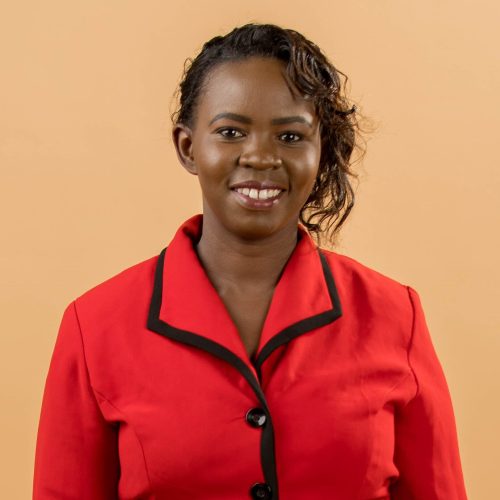
Dr. Morounfolu Olugbosi works with the clinical development of products in TB Alliance’s research portfolio, helps to oversee clinical trials in TB endemic countries, and heads the organization’s South Africa office.