

By Clifford Akumu | akumu.clifford@gmail.
Kenya is set to launch a project that will see small emerging towns/urban centers have access to clean water and proper sanitation, Julius Korir, Principal Secretary (PS) State Department for Water and Sanitation, said.
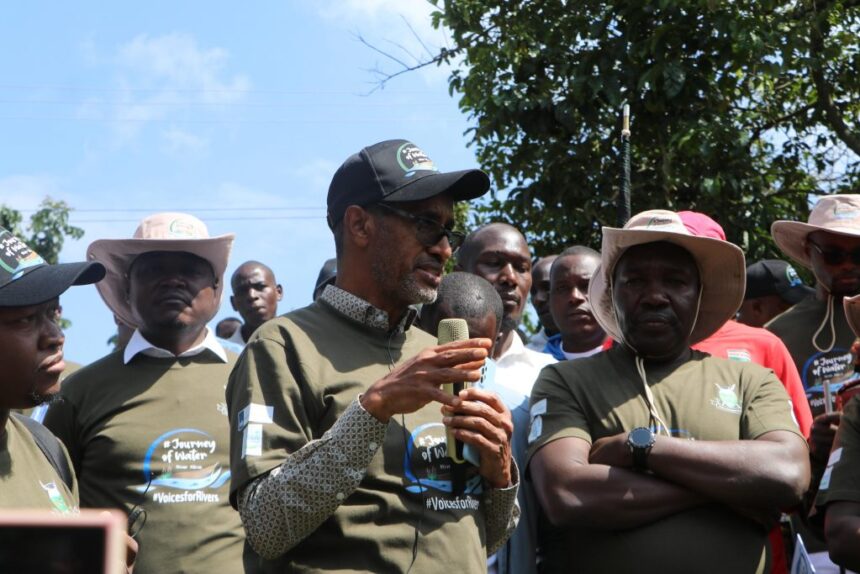
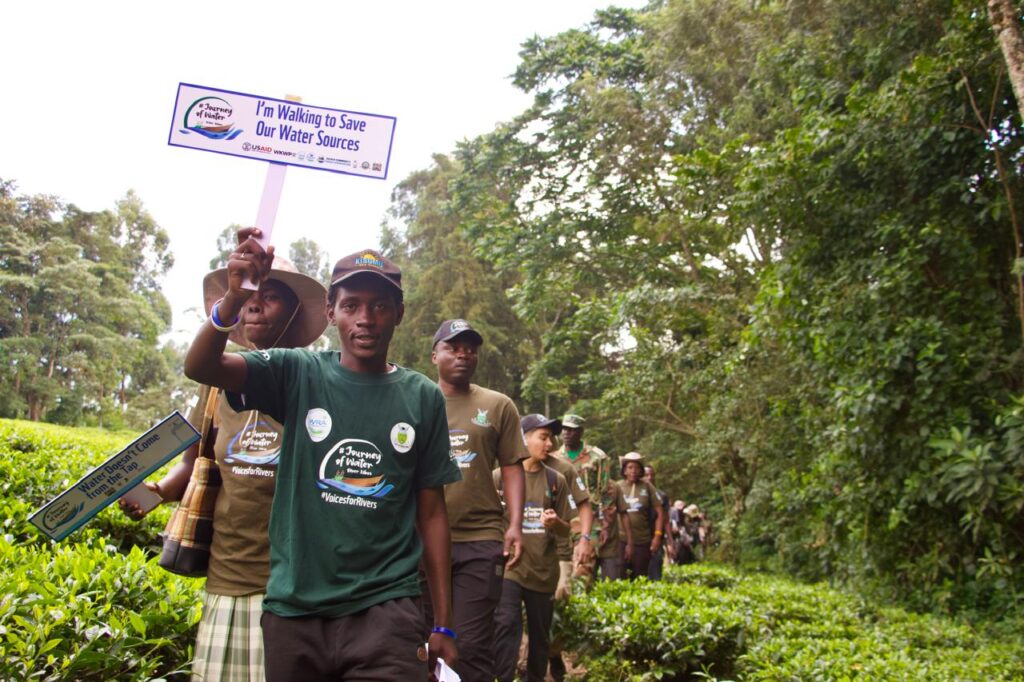
Speaking to Journalists in Nandi County as he flagged off the Journey of Water campaign that aims to sensitize communities in the riparian areas about water conservation, Korir urged communities to protect water catchment areas as they are vital to water sources.
He reiterated the Governments’ commitment to ensuring universal access to safe drinking water in the country, adding that “most emerging centres across the country lack water and sanitation.”
The first phase of the project, funded by the African Development Bank, will commence before the end of the year. He noted that it will cost Ksh22 billion, with the second phase taking Ksh43 billion.
“We hope by the end of this year, phase one will have commenced. In two years, we will have completed the second phase of this project,” he told journalists.
Korir said water sources continue to face challenges of illegal abstraction and riparian encroachment exacerbated by climate change, which increases competition and conflicts. The PS highlighted that only 29 percent of Kenya’s population has access to sanitation. Further, 40 percent lack access to safe drinking.
“We want to sensitise the community in the riparian area on the need to change practices in their farming, reduce degradation, plant appropriate trees so that we can protect the catchment and sustain the flow of water,” he added.
PS Korir stressed the role of clean water in reducing the burden of waterborne diseases, noting: “Where communities have access to clean water, waterborne diseases like cholera, typhoid, bilharzia, and others will be reduced. And to reduce the burden on health expenditure, we need to provide clean water and dignified sanitation.”
He added that the government has, through its blueprint Water and Sanitation Investment Plan, mapped 63 dams that will help in water harvesting even as the country races against time to meet its promise of achieving 100 percent access to water by 2030.
“We are already fundraising on Climate Adaptation Funds to help us build more dams. We are also calling upon well-wishers to help us with water catchment protection and restoration,” the PS noted.
According to Korir, Kenya will soon operationalise the Intergovernmental Water Sector Coordination Framework, a critical tool for water conservation because it represents all stakeholders, from the National and County Governments to the communities living within the basins and other key stakeholders. The framework aims to enhance collaboration between the national and county governments. Similarly, the Ministry is engaging with stakeholders on modalities of establishing the Basin Water Resources Committees (BWRCs).
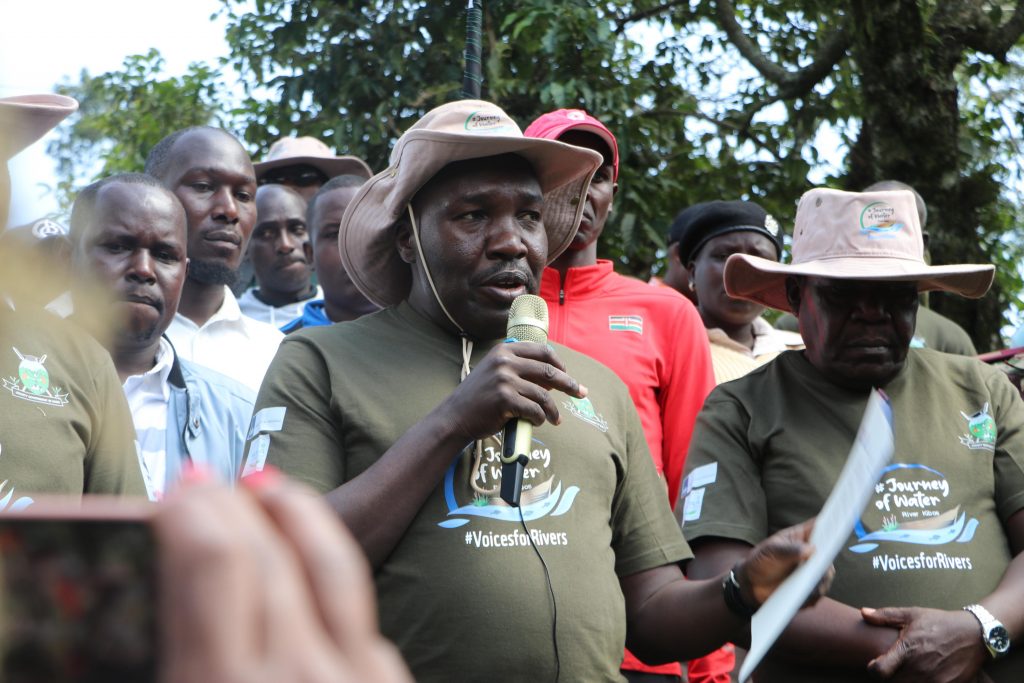
Dr William Ojwang, Fresh Water Lead, WWF-Kenya, called for the management of critical water catchment areas, saying, ” It’s a shared responsibility.”
“This campaign is about all the rivers across the country, not Kibos river only. Let us practice sustainable management of the water basins,” noted Dr Ojwang’
“Extensive use of fertilizer and lack of the use of terracing to preserve the riparian areas from soil erosion is still very high, causing water downstream to be contaminated.”
Mohamed Awer, Chief Executive Officer WWF-Kenya, said collaboration is key in water catchment restoration. He pointed out that population explosion and climate change are exacerbating the water access challenge.
“Water is a precious resource that must be protected at all costs even as the demand rises. We know water does not just come from the tap. It comes from nature. With nature under threat, we are all called upon to protect and conserve our freshwater sources,” Mr Awer said.