


By Catherine Tembo | cathytembo88@gmail.com
In Nathenje, an outskirt area of Lilongwe District, 31-year-old Lezina Aaron is still struggling to overcome the psychological trauma of losing two children to cholera. Both died within the space of one week in 2023.
After Lezina gave birth to her second child on January 7, 2023, the newborn contracted cholera while Lezina was admitted at Nathenje Health Centre. At the same time, her firstborn child fell ill with the disease at home.
Lezina’s condition was dire. Despite being placed on multiple drips—about 24 in total—she was too weak to breastfeed, yet her newborn desperately needed it.
What followed was a nightmare that would leave permanent scars. “After I regained some strength, the doctor came to my room to break the news,” she recalls. “He told me my seven-year-old son had died of cholera. I couldn’t even attend his funeral.”
Days later, her seven-day-old baby also contracted cholera, was referred to Bwaila Hospital, and did not survive. This is the kind of human suffering global leaders are grappling with on the international stage, including at United Nations (UN) climate negotiations.
During the 30th UN Climate Change Conference of the Parties (COP30) in Belém, Brazil, global leaders highlighted how climate change fuels waterborne diseases such as cholera through rising temperatures, floods, and droughts.
The conference acknowledged growing public health risks and launched the Belém Health Action Plan, calling for stronger surveillance, monitoring, and evidence-based policies to address climate-sensitive diseases.
For Malawi, which experiences recurrent cholera outbreaks during periods of flooding and heavy rains, the COP30 outcomes underscore the urgency of linking climate adaptation with improved water, sanitation, and disease surveillance systems.
The discussions also emphasized the involvement of local and indigenous communities in designing and implementing health and climate solutions, recognizing their role in effective adaptation.
A health system overwhelmed
During the 2023 outbreak, hundreds of people lost their lives nationwide.
Nathenje alone recorded 601 cholera cases and 41 deaths, with women accounting for most of those affected including Lezina.
Facility in-charge at Nathenje Health Centre, Mary Lujere, admits the outbreak exposed serious weaknesses in the health system. “It was our first time experiencing such a severe outbreak.
We lacked equipment, supplies, and capacity,” she says. “About 20 people died in the community because cases could not be managed effectively.”
In response, the facility began screening all patients presenting with cholera-like symptoms, given the area’s vulnerability due to limited access to safe water.
A 2024 study by the Ministry of Health through the Public Health Institute of Malawi on Priority Areas for Multisectoral Interventions (PAMIs) shows that the country has experienced frequent cholera outbreaks, with the most severe occurring in 2022/2023. The outbreak recorded 53,020 cases and 1,586 deaths. The study attributes the outbreaks to poor water, sanitation, and hygiene (WASH) conditions, worsened by extreme weather events such as storms, floods, landslides, and droughts.
Cyclones Idai, Anna, Gombe, and Freddy—experienced within just five years since 2019—caused extensive damage to WASH infrastructure and health facilities, increasing the risk and spread of cholera.
Women bear the heaviest burden
In Nathenje, women suffer disproportionately during cholera outbreaks—not only as patients, but also as caregivers.
Margret Paulo, a Group Village Head from Mkwazi in Nathenje, became a caregiver to her mother during the outbreak.
Paulo says caring for her mother until her death disrupted both her livelihood and leadership duties. She could no longer sell fish—her main source of income—nor carry out her responsibilities as a village head. “My mother was very sick, and I had to stay with her until she passed away. I could not do business or carry out my duties,” she says.
Phalombe: When floods wash away care
Lezina’s and Paulo’s experiences mirror those of families in Phalombe District, where climate shocks have compounded the cholera crisis.
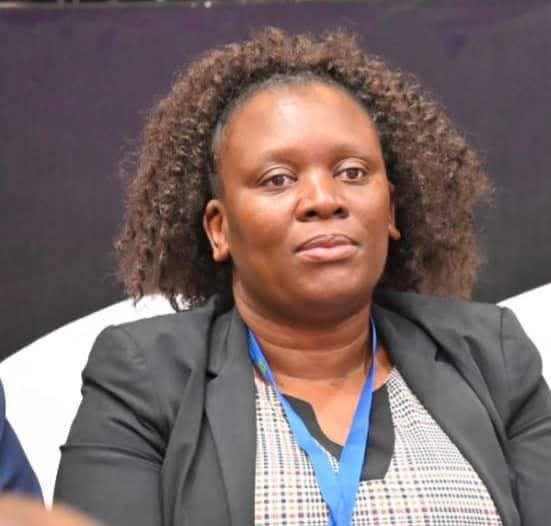
Cyclone Freddy worsened the situation by washing away the Nkhulambe Health Facility, severely limiting access to healthcare. To date, the facility remains under reconstruction, and outpatient services are being conducted in temporary tents donated by Médecins Sans Frontières (MSF).
James Andrew Kambanje, Senior Chief Nkhulambe, says the outbreak spared no one in his area, largely due to poor WASH conditions and the destruction of health facilities by floods.
“At first, people did not understand climate change or its link to health,” he says “But when cholera cases started rising, they understood its impact,” he added. In 2023, 17 people fell sick in his area; only six survived and women were the most affected.
Kumbanje said women and children bore the heaviest burden. Pregnant mothers were forced to deliver without skilled care, walking long distances and drinking unsafe water, while children were left vulnerable as access to treatment and vaccines disappeared.
“All we want is the hospital, which is still under construction. With the rainy season now here, my people will continue to suffer,” he says. “We have also asked the government to construct a dike as a concrete solution to our flooding problem. Without it, health personnel may be forced to leave out of fear, as floodwaters continue to pass through this area.”
As climate change fuels recurring floods and droughts in Malawi, cholera has become more than a health crisis which tests the country’s commitment to the Sustainable Development Goals (SDGs) and Africa’s Vision 2063.
Malawi’s experience highlights the difficulty of achieving SDG 3 on good health, SDG 6 on clean water and sanitation, and SDG 13 on climate action. Phalombe District Health Officer, Dr. Sam Sibakwe, agrees that climate change contributed significantly to the outbreak.
“Cyclone Freddy destroyed five health facilities in the district, including Nkhulambe Health Centre. Reconstruction of the facility is nearing completion and it is expected to be fully operational by early 2026. The maternity wing has already been completed, while construction of the outpatient department is the only remaining component,” said Dr. Sibakwe.
At a High-Level Emergency Meeting on the Cholera Situation in Africa held on June 4, 2025, in Addis Ababa, WHO Director-General Dr. Tedros Adhanom Ghebreyesus noted that the resurgence of cholera in Africa has been driven partly by climate change and conflict.
Lucy Mtilatila, Director of the Department of Climate Change and Meteorological Services, says while there has been no significant change in total rainfall, its intensity has increased. “During Cyclone Freddy, we recorded extreme rainfall—up to 459mm in some areas and over 1,000mm within three days in Nkhulambe,” she explains. “Flooding is not new. What happened in 2023 was history repeating itself.” Her department advises people in high-risk areas to adopt climate-resilient structures, including WASH infrastructure, and to avoid settling in flood prone zones.
Interventions
WaterAid Malawi Country Director Peter Phiri says climate extremes reduce access to safe water, increasing cholera risk. WaterAid has supported Malawi’s multisectoral cholera control strategy and emergency WASH interventions.
Traditional leaders are also supporting awareness efforts through providing civic education on cholera prevention and climate change These interventions alongside other government interventions such as distribution of chlorine to households, are helping to reduce cholera cases, according to Adrian Chikumbe, Spokesperson for the Ministry of Health.
He notes that though suspected cholera cases rose from 211 to 280 in early 2026, this remains far lower than the 700–800 cases recorded during the same period in 2023. To help countries like Malawi cope with the climate-induced health challenges, the Africa CDC has developed the “Climate Change and Health Strategic Framework.” This framework aims to strengthen health systems, improve disease surveillance, and foster sustainable public health outcomes that are resilient to climate change.
As noted in a climate-health assessment for Malawi, the risk of cholera is linked to both climate variability and extreme weather as disaster events damage water, sanitation and hygiene (WASH) infrastructure, disrupt access to clean water or sanitation and create conditions conducive to fecal–oral transmission of Cholera.
While national and continental policies acknowledge these links, translating commitments into climate-resilient WASH infrastructure remains unfinished work.
In a December, 2025 briefing, Minister of Health Madalitso Baloyi, called for support towards cholera preparedness and response plan, noting that approximately five billion Malawi Kwacha (US$3.37 million) was needed to fill the gap.
As Malawi aligns its development path with Vision 2063 and the African Union’s Agenda 2063, tackling cholera as a climate issue rather than a recurring emergency, may determine whether the country can protect its most vulnerable communities in an increasingly unpredictable future.
This story was first published in The Nation-Malawi