

By Milliam Murigi | milliammurigi@gmail.com
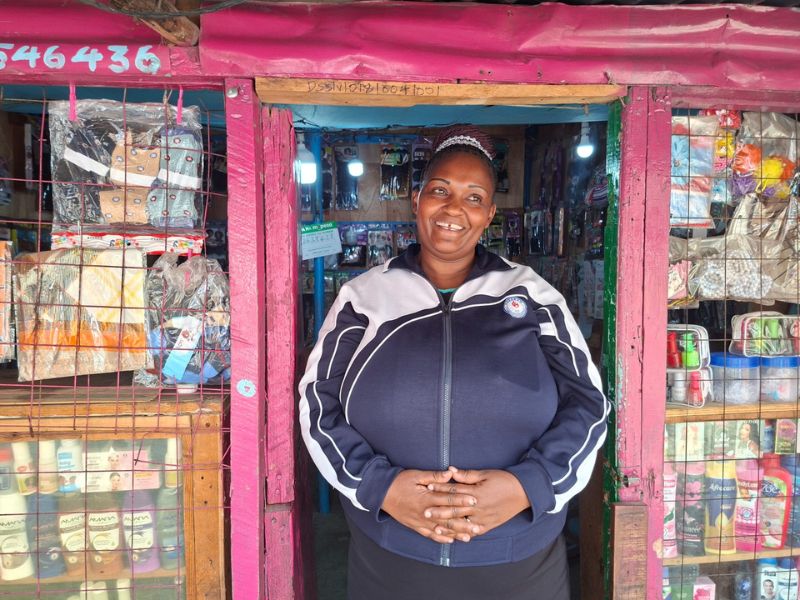
For more than two decades, Anastacia Mutheu built her livelihood in Viwandani slums, Nairobi, Kenya’s capital, as a weaving specialist Hairdressing was not just her profession, it was her identity, her skill, and her main source of income. Today, rising temperatures are quietly undoing that stability.
“Heat has changed everything,” she says. “Clients now choose wigs instead of weaves. Wigs are faster to install, easier to remove, and far more comfortable when it’s hot. Weaves are permanent, and when temperatures stay high for weeks, they feel impractical.” What appears to be a minor shift in beauty trends has major consequences. Fewer customers mean fewer working hours, shrinking income, and skills that are suddenly less in demand.
To cope, Anastacia now sells beauty products and fruits alongside her salon work, a survival strategy rather than a business expansion. “Even the fruits are not spared by the heat.
They spoil faster, lose freshness, and sometimes I can’t sell them at all. It feels like the heat is taking away everything I try to earn,” she says.
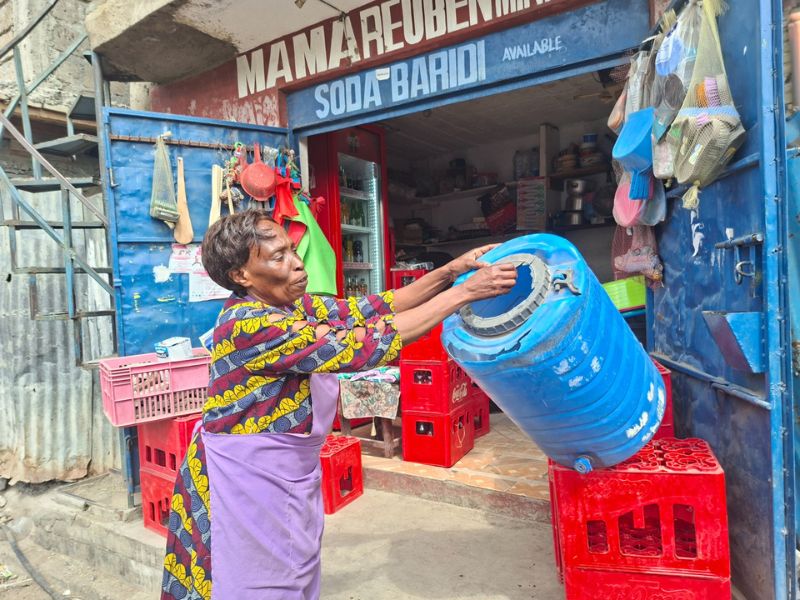
Not far away, Nancy Muthoni has faced a similar reckoning. For more than 30 years, she sold plastic household goods. Today, her shelves are nearly empty.
Without shade or temperature control, the sun damages the very products she relies on. Warped basins, cracked containers, and brittle plastic have become routine losses.
Nancy has since shifted to selling sodas, water, detergents, and other fast-moving items that tolerate heat better a move driven not by opportunity, but by necessity. “The plastics get ruined in the sun,” she explains, holding up a cracked plastic drum worth Sh500 (US$ 3.8).
“On very hot days, I have to keep my products inside, and when people don’t see them, they don’t buy.” Across Nairobi and Kenya in general, stories like those of Mutheu and Muthoni are increasingly common.
The reason being that women dominate the city’s informal economy such as hairdressing, market vending, and small scale retail sectors that depend on long hours of physical presence, often in open or poorly ventilated spaces.
As a result, women are feeling the impact of extreme heat more intensely. Spending long hours in open or poorly ventilated spaces, often without shade or cooling, means that every rise in temperature affects both their health and their ability to earn.
For many of them, stepping away from work during extreme heat is not a choice, it can mean going home with nothing at all.
According to United Nations (UN) Women, climate change does not affect women and men equally.
A gendered analysis by the agency shows that pre-existing social and economic inequalities make women more vulnerable to climate shocks, including extreme heat.
“Women are most vulnerable because they are more likely to work in informal, low-paid, and climate-exposed jobs, while having fewer financial buffers, limited access to social protection and less influence over climate decision-making,” says Kathy Baughman McLeod, Founder & CEO, Climate Resilience for All (CRA).
The analysis also finds that extreme heat impacts intensify women’s unpaid care burden.
As temperatures rise, women are more likely to care for sick family members, secure food and water, and compensate for lost household income responsibilities that compound economic stress.
For women in informal urban livelihoods, extreme heat directly reduces productivity and earnings while offering little room for rest or protection.
Extreme heat itself has long gone unrecognized as a serious urban threat.
Yet in Nairobi, rising temperatures amplified by climate change and dense infrastructure are driving prolonged heatwaves that increasingly disrupt daily life.
Climate data underscores the scale of the crisis. A recent Climate Central analysis shows that more than 14 million Kenyans experienced at least 60 days of high temperatures between June and August 2024, conditions strongly influenced by climate change. Urban areas such as Nairobi are now recording more frequent and more intense “risky heat” days.
Globally, heat waves are becoming more intense, frequent, and prolonged a trend scientist’s link directly to climate change. These events are not just uncomfortable; they are deadly.
“Heat waves are associated with increases in heat-related illness and mortality, disproportionately affecting pregnant mothers and infants,” says Joyce Kimutai of the Kenya Meteorological Service and World Weather Attribution.
Despite these impacts, heat remains widely overlooked as a public health emergency. Dr. Kimutai notes that few countries officially recognize extreme heat as a silent killer or have comprehensive heat action plans in place.
As a result, many health, economic, and social impacts remain unreported and undocumented.
This policy gap leaves vulnerable populations exposed to preventable risks. In Kenya, however, there are early signs of progress.
The government has acknowledged the growing threat of extreme heat and plans are underway to develop a Nairobi Heat Action Plan.
The plan aims to protect resident’s particularly informal workers by strengthening early warning systems, issuing guidance for vulnerable groups, and introducing measures such as shaded public spaces, urban cooling strategies, and public awareness campaigns.
Still, she cautions that heat adaptation must be localized. “Heat doesn’t affect every town or region the same way,” Dr. Kimutai says.
“Different areas experience different temperature profiles, microclimates, and vulnerabilities.
A one-size-fits-all heat action plan cannot work. Each region needs strategies tailored to its own heat thresholds and community needs.” Elsewhere on the continent, cities are already moving ahead.
In Freetown, Sierra Leone, authorities launched Africa’s first comprehensive Heat Action Plan in 2025, prioritizing cooling infrastructure, shaded markets, green spaces, and public education.
Freetown’s approach deliberately focuses on women and informal vendors those most exposed to direct sun underscoring that urban heat is not only an environmental challenge, but a deeply gendered one.
In South Africa, cities are strengthening early warning systems, expanding urban shade, and improving building standards to protect outdoor workers.
However, despite these interventions, UN Women warns that without gender responsive climate policies, adaptation efforts risk reinforcing existing inequalities.
The agency calls for climate action that protects informal workers, centers women lived realities, and ensures their voices shape solutions.
On her side, McLeod emphasizes that raising awareness among women about the specific risks posed by extreme heat, coupled with timely warnings and practical guidance, can empower them to prepare, protect their health, and even save lives.
She notes that such measures are especially critical for women working long hours outdoors or in informal jobs, where a single hot day can have serious consequences for both income and well-being.
“At CRA we are building job-specific heat guidance for informal workers, and better early warning systems focused on specific heat-related health risks. Our goal is to give women and men working in high exposure jobs the knowledge and tools to protect their health, plan their workday safely, and reduce income losses during extreme heat events,” says McLeod.