

By Milliam Murigi I milliammurigi@gmail.com
Climate change is increasingly forcing displacement of communities across Africa as droughts, floods, water scarcity and declining agricultural productivity disrupt livelihoods.
This was revealed by Prof. James Kungu of Kenyatta University during a two-day high-level national dialogue on climate change and human mobility, organised by PanAfricare-Kenya in collaboration with Kenyatta University.
According to Prof. Kungu, climate-related migration is driven by a combination of environmental, economic and social pressures, with rural communities and young people among those most affected.

“People move because there is an imbalance in the socio-ecological systems which affect agriculture,” Kungu said, citing crop failure, water shortages and declining grazing land among factors forcing people and livestock to move.
However, research by the Mixed Migration Centre (MMC) shows that people rarely move because of a single climate shock. Instead, households often make the decision to migrate after economic, environmental and social pressures accumulate, leaving them with few options to sustain their livelihoods.
Presenting the findings, Joan Wamaitha of the Mixed Migration Centre (MMC) said the research, which drew on about 5,000 surveys from Burundi, Kenya, Somalia and South Sudan, showed that migration is driven by more than environmental shocks.
“High food prices, crop failure and livestock losses are among the factors associated with decisions to move. For many households, migration came after substantial losses of agricultural assets, including crops as well as livestock,” said Wamaitha.
Economic hardship and conflict according to the study can compound the effects of climate shocks, putting additional pressure on households to move. By the time some families move, therefore, their main sources of food and income may already have been severely depleted.
These research findings support Kungu’s argument that climate-induced migration should not be viewed simply as people responding to changes in weather. Climate shocks interact with existing vulnerabilities, making it increasingly difficult for households to remain where they are.
Kungu said the movement could take different forms, including rural-to-urban migration, movement within countries and migration across national borders.
“We have to ask ourselves, if it is the climate that is the push factor. Then there are the pull factors,” he said.
The distinction is important because people may move not only because conditions have become difficult at home but also because they expect better economic opportunities, access to services or greater security elsewhere.
The MMC research found that households are not simply waiting for climate shocks to force them out. Many are already changing the way they farm and keep livestock in an effort to cope with changing weather conditions.
In Kenya and Somalia, 59 per cent of respondents said they had changed crops they grew to cope with changing weather conditions over the previous five years, while half reported changing their livestock.
“People are willing to make the plans, but whenever the strategies are not sufficient, displacement will eventually occur,” Wamaitha said.
This suggests that strengthening household resilience before livelihoods collapse could give families more choices and potentially reduce forced movement.
The research also highlights importance of early warning systems in helping communities prepare for climate shocks. Nearly half of respondents reported having no access to any form of early warning system, while others relied on community-based or traditional systems.
Where warnings were available, households reported taking measures to protect themselves and their livelihoods. These included selling livestock, securing assets, storing food and water and planting drought-resistant crops.
For Kungu, such interventions should form part of a broader strategy to address factors that push people out of their homes. He called for greater investment in climate-smart agriculture, including drought-resistant crops, efficient irrigation and water harvesting.
“Such measures can help farmers maintain production despite increasingly unpredictable rainfall. For pastoralists, protecting traditional grazing routes and developing reliable water points could reduce competition over scarce resources and unnecessary movement during dry periods,” he added.
The combined findings point to the importance of intervening before households reach the point where migration becomes their only viable option.
According to Wamaitha, understanding how different pressures interact is important for designing early interventions that protect livelihoods before displacement occurs.
This means strengthening social protection, supporting agricultural and livestock livelihoods and ensuring that early warnings are linked to practical assistance.
“Migration policies should also recognise that movement can be a way households manage risk rather than simply an outcome of disaster. Households may move temporarily, relocate within their countries or follow established migration routes that have been used for generations,” Wamaitha added.
Kungu revealed that African countries need stronger investment in climate adaptation, arguing that building resilience could ultimately cost less than repeatedly responding to disasters after they occur.
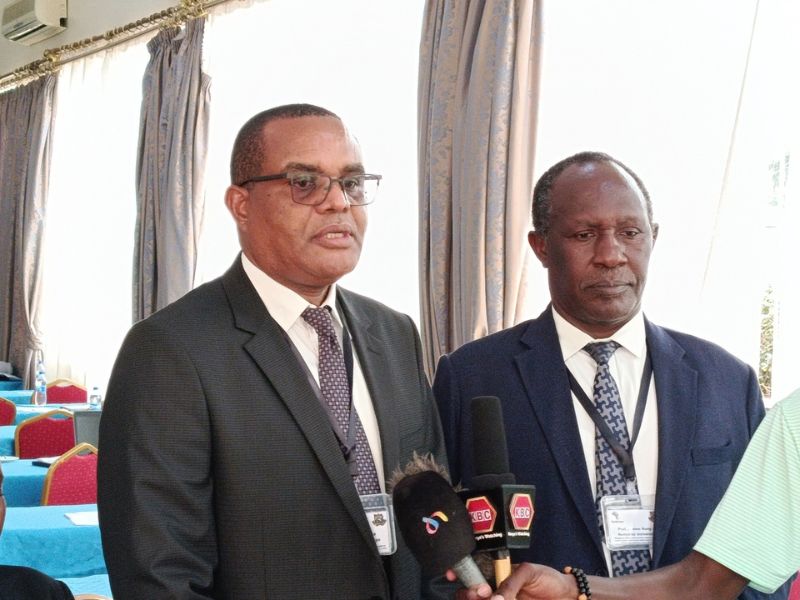
He also urged the government to strengthen urban planning and resilience alongside interventions in rural areas because consequences of climate-related movement do not end when households leave their homes. An increase in migration to towns and cities can place additional pressure on housing, employment, infrastructure and public services. “Rather than waiting until displacement occurs, governments and development agencies can use early warnings and other information to identify households at risk and provide support before their livelihoods collapse,” he concluded.
©MESHA Features 2026