

By Christine Ochogo| christawine@yahoo.com
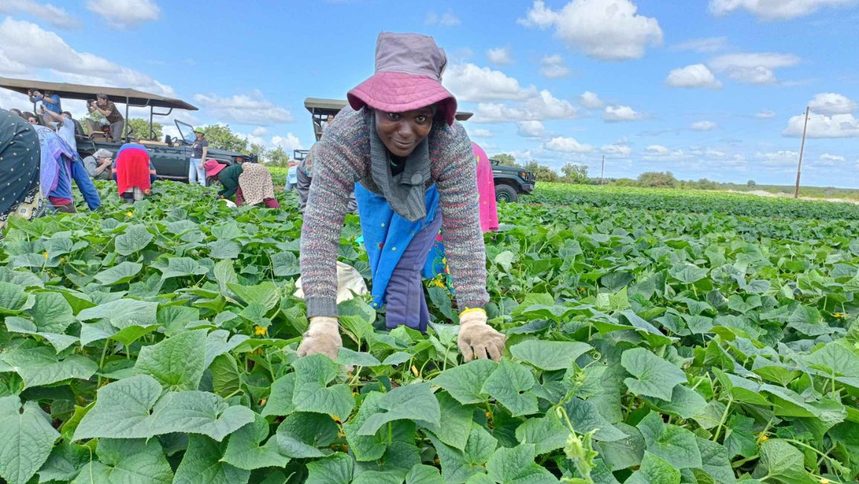
Across Africa, women farmers play a vital role in agriculture notwithstanding the systematic barriers among them poor finance, restrictive societal norms, lack of trust and limited land ownership.
Despite these obstacles, many women are finding innovative ways to overcome the barriers that tend to draw them back to strengthen their participation in agriculture.
The 2025 report on ‘The state of women in the agrifood system in sub-Saharan Africa’ indicates that women contribute to up to 60-80 percent of the workforce labour in the agrifood systems in the continent.
These statistics demonstrate the crucial role and how hardworking women are in the line of ensuring food security and nutrition.
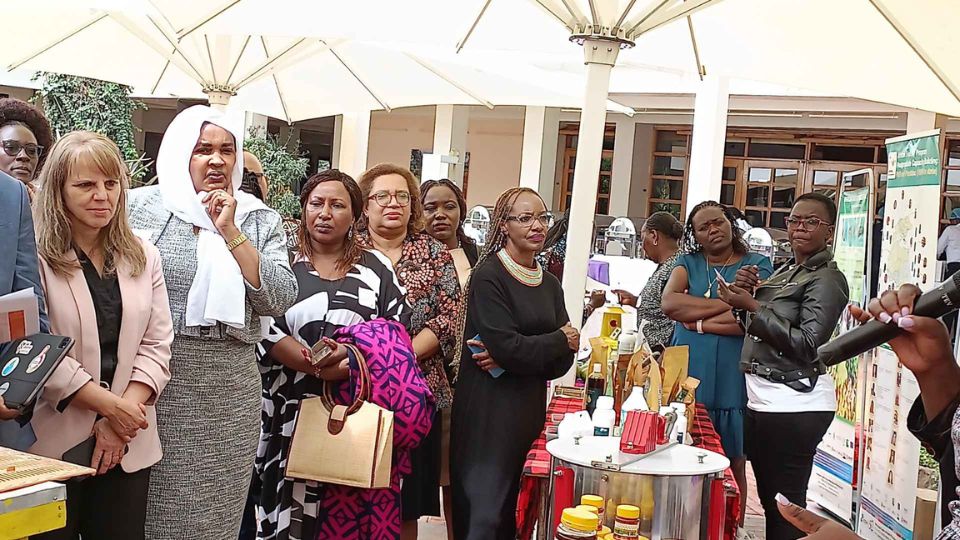
A two day science media café, training journalists on how to report on women in agriculture facilitated by Media for Environment, Science, Health and Agriculture (MESHA) through CGIAR Gender Accelerator, demonstrated various initiatives that are encouraging women’s involvement in agriculture across Africa.
In Kenya (Nyandarua, Uasin Gishu and Nakuru counties), the Project MoreMilk2 is an example of how collective action, improved dairy practices, access to markets and knowledge can help women farmers strengthen their livelihoods.
Dr Esther Achandi, Research Scientist-Gender at International Livestock Research Institute (ILRI) highlighted the model, stating that its primary objective is to upgrade informal markets, ensure provision of safe food and improved market organisation and efficiency to meet rising demands due to population growth.
According to the United Nations, Department of Economic and Social Affairs (UN DESA), the global urban population is projected to grow by 2.5 billion urban dwellers between 2018 and 2050, with nearly 90 per cent of the increase concentrated in Asia and Africa.
With the ever-growing population as indicated, informal markets, especially those in low and middle-income countries, are critical to ensure supply of healthy and nutritious diets and to address the challenge of food insecurity in cities. This development presents an opportunity for women to indulge in agriculture and benefit from the demand created.
In line with the UN International Year of the woman farmer 2026, the Project: MoreMilk2 with a key focus on supporting women entrepreneurship within the evolving dairy sector, provided foundational lessons that led to the implementation of a Vendor Business School (VBS), a mentorship program, designed specifically targeting women vendors and piloted in Nairobi.
“The Vendor Business School mentorship program in partnership with the Kenya Dairy Board brought together 90 women in the dairy sector for training sessions on challenges, milk safety and commercialization,” Dr Achandi mentioned adding that a similar approach was implemented in the Philippines through the International Rice Research Centre.
In Kisumu County, Kenya, Ustawi Organic Farms demonstrates how women can use sustainable and organic farming practices to improve food production, build resilience and create income opportunities.
Ms Bella Kiprotitch, Chief Operating Officer at Ustawi, while speaking on women in Africa and models that work, pointed out the importance of circular economy. She presented a climate smart agricultural model that integrates waste management with sustainable farming.
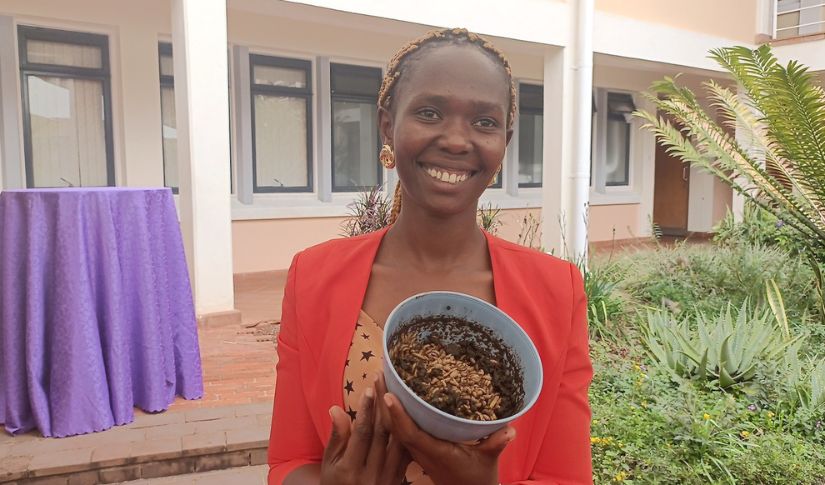
“Our farm which has a circular economy model, utilizes insect technology, specifically Black Solder Fly Larvae (BSFL) and Vermicomposting, to process organic waste into high-value inputs. We produce organic fertilizer, poultry feeds, seedlings and Sasso F1 chicks which in turn generate us approximately Ksh. 12 million (US$93,000) million in annual revenue,” Ms Kiprotich expounded.
The young farmer mentioned that the farm model incorporates contract farming such as sourcing fertilised eggs of Sasso F1 and F2 breeds from local farmers and employing women groups in Kasawino in Manyatta, an informal sector in Kisumu City for waste collection and segregation.
“This links waste management, urban agriculture, livelihoods and environmental sustainability, while creating opportunities for local residents mainly women to participate in a circular food system,” she stated.
“It is high time women in agriculture transitioned from mere participants to value capturing entrepreneurs through sustainable, circular business models,” she added.
In Madagascar, the adoption of improved rice parboiling technology known as Grain quality enhancer, Energy-efficient and durable Material (GEM), has improved the nutritional value of rice and stamped an economic impact on women parboilers in Africa.
The GEM technology co-designed with women, feature energy-efficient, husk-fueled stoves and stainless-steel tanks that reduce health hazards, heavy consumption of time, water and firewood tied to traditional parboiling methods.
A report by AficaRice show that the GEM technology reduces expenditure on firewood from US$1.83 to 0.64 per 100 kg of paddy parboiled. When rice husk gasifier cookstoves are used, the wood cost is zero. It reduces the steaming time from about 60-90 min to 20-25 min per 50-100kg of paddy.
Being a women dominated activity, with women controlling the process from paddy acquisition to market sales, the technology has scaled to over 10 countries across Africa greatly contributing to better health and reduced poverty, women financial independence and influence in family and community decision.
“Women parboilers who use the GEM technology make an extra US$200 on every ton of rice parboiled compared to parboilers using the traditional system. The technology can achieve a higher output rate of up to 25 tons of high-quality milled rice per month. The internal rate of return (IRR) of the GEM parboiling technology is 70 per cent compared to 14 per cent for the traditional technology,” reads part of the report.
Dr Gaudiose Mujawamariya, rice value chain expert at AfricaRice, Madagascar affirms that women who use the GEM parboiling technology do not suffer from heat burns and smoke exposure and face less difficulty in lifting loads.
“The improved rice parboiling technology has added confidence to the women, they no longer have to encounter smoke that make them smell and get disrespect from their husbands,” Dr Mujawamariya held.
The improved rice parboiling technology focuses on empowering women, showcasing their skills and integrating them into the rice value chain. Women through their cooperative societies now have the strength for better market bargain and financial loan access to boost their business.
“When women get money, they invest in cooperative societies, pay school fees, health care and nutrition,” she said.
Beyond individual initiatives, the CGIAR is supporting women in agriculture through research, innovation and partnerships aimed at improving access to technologies, finance, markets, knowledge and decision-making spaces. Such interventions seek to address the structural barriers that keep women from fully benefiting from agriculture.
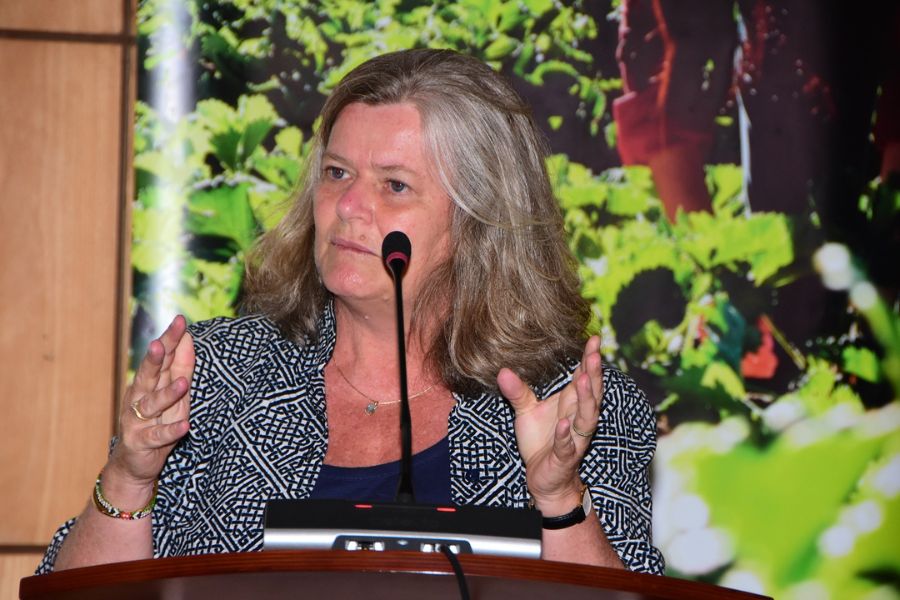
In amplifying women voices, Lynet Otieno, senior editor at Mongabay, advised journalists reporting solutions stories on women in agriculture to move beyond basic reporting by identifying the deeper significance and consequences in stories about women in agriculture.
“Journalists must go beyond the standard five Ws and H and answer the ‘so what’ question to provide true value. Reports should investigate the underlying problems, their causes and their long-term consequences,” she said.
“Giving women farmers a voice in telling their own stories is essential to producing balanced, evidence-based and impactful solutions stories on women in agriculture,” Otieno further recommended.
The science media café was held amidst a background of a recent finding by the CGIAR GENDER Accelerator that rural women are increasingly expected to move to jobs off the farm by 2050, presenting an opportunity for greater, more resilient livelihoods through higher quality jobs in retail, processing and logistics. The report, Advancing equality, transforming futures: a path to resilient and productive food, land and water systems in 2050, cautions that this transition is likely to be uneven.
“This report moves beyond recommending piecemeal interventions to outlining systemic structural changes that can decisively close the gender gap across food systems by 2050,“said Nicoline de Haan, Director of the CGIAR GENDER Accelerator.
“Investing in women, not as labourers, but as leaders, is the path towards unlocking the full potential of our food, land and water systems,” she added.
The initiative of empowering women in agriculture helps in addressing fundamental United Nations Social Development Goals (SDGs). These include Goal 1 on No poverty, Goal 2 on Zero Hunger, Goal 3 on Good Health and Wellbeing, Goal 5 on Gender Equality.
A MESHA Features Publication 2026