


By using this site, you agree to the Privacy Policy and Terms of Use.
Accept
MESHAMESHAMESHA
  • Home
  • Who We Are
    • About
    • Management
    • Strategic Plan, 2023-2027
  • Sayansi Magazine
  • Media
    • Audio
    • Videos
    • Photos
  • Membership
    • Accredited Members
    • How to Join MESHA
  • IFAJ Congress
    • IFAJ 2025 Congress Website
    • IFAJ 2025 Congress Bulletin
Search
Categories
  • Climate Change
  • Health
  • Biodiversity
  • Agriculture
  • Environment
© 2024 MESHA. All Rights Reserved.
Reading: Report: 16 African countries have launched gene editing projects to address agricultural challenges
Share
Sign In
Notification Show More
Font ResizerAa
MESHAMESHA
Font ResizerAa
  • Home
  • Who We Are
  • Sayansi Magazine
  • Media
  • Membership
  • IFAJ Congress
Search
  • Home
  • Who We Are
    • About
    • Management
    • Strategic Plan, 2023-2027
  • Sayansi Magazine
  • Media
    • Audio
    • Videos
    • Photos
  • Membership
    • Accredited Members
    • How to Join MESHA
  • IFAJ Congress
    • IFAJ 2025 Congress Website
    • IFAJ 2025 Congress Bulletin
Have an existing account? Sign In
Follow US
© 2024 Mesha. All Rights Reserved.
MESHA > Blog > Agriculture > Report: 16 African countries have launched gene editing projects to address agricultural challenges
AgricultureBiotechnology

Report: 16 African countries have launched gene editing projects to address agricultural challenges

Mesha
Mesha Published 20 December 2025
Share
5 Min Read
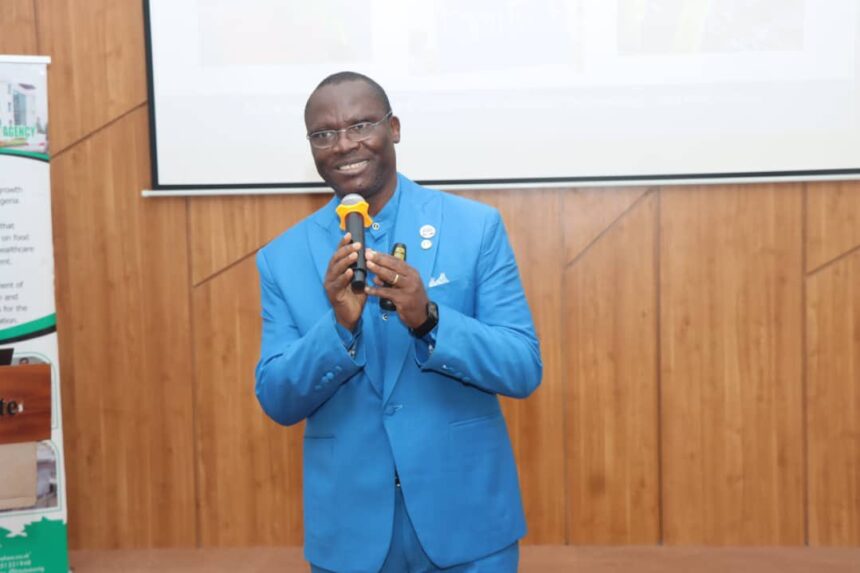
Prof. Olalekan Akinbo, Head of the Genome Editing Programme at AUDA-NEPAD, issues a vital call to action for African leaders to prioritize the frameworks that will power the next generation of scientific advancement.
SHARE

By Milliam Murigi | milliammurigi@gmail.com 

Africa is ready for genome editing, a new report has revealed.

The study reveals that 57 genome editing (GEd) projects are either already concluded or underway in 16 African countries aimed at addressing some of Africa’s most pressing agricultural challenges.

The projects, notes the report, are focused on improving productivity across crops, livestock, forestry, and fisheries. They directly target key production challenges such as climate stress, pests, diseases, and low yields, signaling a clear shift toward science-driven agricultural solutions.

The study was conducted by Africa Harvest Biotech Foundation International and AGTECH Consulting Ltd, and commissioned by the African Union Development Agency (AUDA-NEPAD)

 “These projects are at different stages and most of them are at the proof-of-concept and early product development stages,” said Prof. Olalekan Akinbo, Head, and Genome Editing Programme at African Union Development Agency-NEPAD.

Genome editing (GEd) also referred to as gene editing allows scientists to make precise, targeted changes to an organism’s DNA without necessarily introducing a foreign gene.

According to the report, Kenya is leading the continent, recording the highest number of projects at 13, with nine focused on crops and four on livestock. Egypt has eight projects, all concentrated on crops, while South Africa follows with seven, including six crop projects and one in forestry.

“Kenya is leading in genome editing largely due to strong Public–Private Partnerships that bring together government institutions and the private sector. These collaborations have accelerated research, strengthened regulatory preparedness, mobilized investment, and supported the translation of scientific innovation into practical agricultural solutions,” said Prof. Olalekan Akinbo. 

Nigeria has six projects. Ethiopia, Ghana, and Rwanda have four projects each. Mozambique has three, Morocco has two, and Burkina Faso and Mauritius have one project each. The spread of projects across multiple regions suggests that Africa is not only experimenting with genome editing but actively investing in it. 

Apart from the completed and the ongoing projects out of the 16 countries, eleven (11) have Biosafety Acts (Laws), and five (5) have Ministerial Decrees. Some countries have regulations to regulate the laws and decrees, whereas others have yet to develop and publish their regulations or guidelines. 

Six countries namely Nigeria, Kenya, Ghana, Malawi, Ethiopia and Burkina Faso have gone further to develop and publish their GEd Guidelines. Mozambique and Zimbabwe have developed GEd Guidelines and are yet to be validated and published and the rest have none.

From the findings, six (6) countries, Burkina Faso, Nigeria, Kenya, Ghana, Malawi, and Ethiopia are ready with conducive regulatory frameworks to fully embrace GEd technology in agricultural R&D towards product development, deployment and commercialization. Mozambique and Zimbabwe with GEd Guidelines will join this group once their GEd Guidelines are validated and published.

Prof. Olalekan Akinbo, Head of the Genome Editing Programme at AUDA-NEPAD, issues a vital call to action for African leaders to prioritize the frameworks that will power the next generation of scientific advancement.

“While a few countries have begun creating enabling environments, many still lack the policy frameworks, regulatory clarity, and institutional coordination needed to support responsible innovation. Without deliberate leadership, Africa risks falling behind in a fast-evolving global biotechnology landscape,” said Prof. Olalekan Akinbo.

The study was conducted to provide an evidence-based description and analysis of the status of modern biotechnology and GEd in 16 selected African countries, highlighting key trends, intervening factors and areas for attention, as well as fundamental aspects such as science/technical, political, geo-political, social, human, culture and traditions, etc. that support or hinder advances in the application of genome editing in agriculture and food systems.

 Apart from that, the study also sought to identify the emerging needs in these countries that GEd can readily address, especially those which require rapid responses at scale. These needs will focus on food systems i.e., agricultural productivity, reduction of postharvest losses, climate adaptation, food and nutrition security, diversified and healthy diets.

You Might Also Like

Embrace agri-technology to be food secure, farmers told

IFAJ World Congress Bulletin 2025: Unlocking Africa’s Agricultural Potential

Malawi’s first Bt Maize trials show promise

Researchers vouch for domestic water harvesting

African researchers turn to edible insects to boost food security

TAGGED:Africa genome editing reportAfrica Harvest Biotech FoundationAfrican biosafety lawsagricultural biotechnology AfricaAGTECH ConsultingAUDA-NEPADclimate-smart cropscrop productivity AfricaDr. Florence Wambugufood security innovations.GEd guidelines Africagene editing in agriculturegenetic engineering Africagenome editing landscape analysisKenya genome editing projectslivestock genome editingNairobi validation workshop 2025Prof. Olalekan Akinboscience-driven agriculturesustainable agriculture Africa

Sign Up For Daily Newsletter

Be keep up! Get the latest breaking news delivered straight to your inbox.

By signing up, you agree to our Terms of Use and acknowledge the data practices in our Privacy Policy. You may unsubscribe at any time.
Share This Article
Facebook Twitter Whatsapp Whatsapp LinkedIn Email Copy Link Print
What do you think?
Love0
Sad0
Happy0
Sleepy0
Angry0
Dead0
Wink0
Previous Article “Unlocking agricultural potential in the cradle of humanity”: chronicle and assessment of the IFAJ 2025 Congress in Nairobi
Next Article Scientists decry challenges stifling gene editing work in Africa
Sayansi Magazine edition on how communities are responding resiliently to climate change now out
Climate Change Sayansi Magazine
Sayansi Magazine – Edition 45
Climate Change Development Gender Sayansi Magazine
Where residents fate relies on the hands of filthy water pans and bowsers
Climate Change Gender Health
MESHA introduces effective writing of science among students
Education Media|Journalism Sayansi Magazine

Contact Info

Location
Oasis Apartments, Jogoo Road, 3rd Floor
Phone
+254 721 578517
+254 732 229 230
info@meshascience.org

Facebook

//

We are the number one science, health and agriculture journalists network in Africa accessed by over 20 million users.

Quick Link

  • About
  • Sayansi Magazine
  • Accredited Members
  • Mesha Audio
  • My Bookmarks

Top Categories

  • Climate Change
  • Health
  • Biodiversity
  • Agriculture
  • Environment

Sign Up for Our Newsletter

Subscribe to our newsletter to get our newest articles instantly!

MESHAMESHA
Follow US
© 2024 MESHA. All Rights Reserved.
Join Us!
Subscribe to our newsletter and never miss our latest news, podcasts etc..

Zero spam, Unsubscribe at any time.
Welcome Back!

Sign in to your account

Username or Email Address
Password

Lost your password?