

Milliam Murigi | milliammurigi@gmail.com
Genome editing, one of the latest modern biotechnology is rapidly emerging as one of the most transformative technologies in agriculture and medicine worldwide.
The technology promises Africa locally tailored solutions to food insecurity, crop resilience and health challenges as it allows scientists to make precise modifications to an organism’s DNA.
DNA stands for Deoxyribonucleic Acid, the fundamental molecule carrying genetic instructions for the development, functioning, growth, and reproduction of all known organisms, acting like a biological blueprint (DNA.
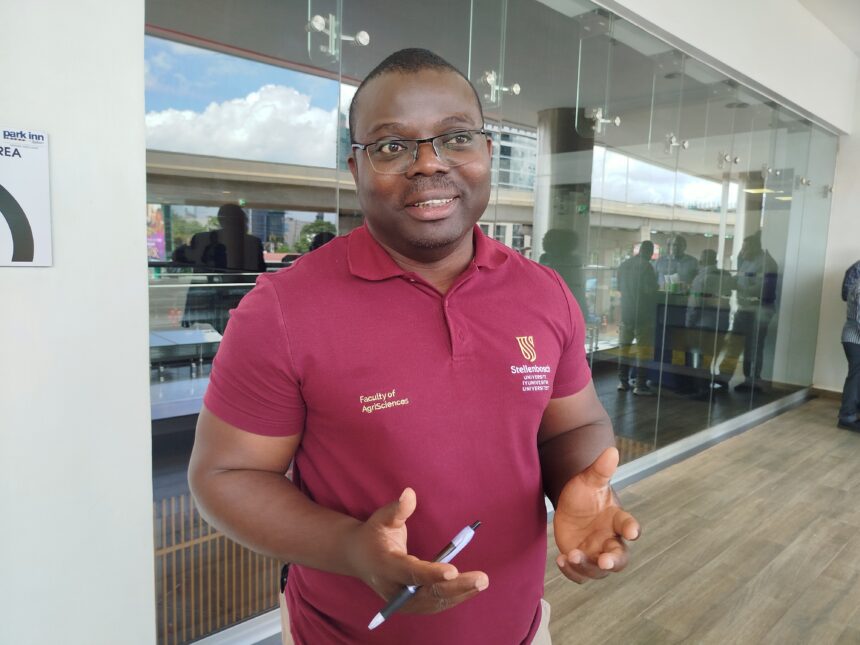
One question remains though; Are African universities ready to lead in this field? Insights from two leading academics, Dr. Oluwafemi James Caleb of Stellenbosch University, South Africa, and Prof. Olufunke Bolatito Shittu of the Federal University of Agriculture, Abeokuta (FUNAAB), Nigeria, provide a nuanced picture.
Dr. Caleb acknowledges that readiness varies across the continent and not all universities are at the same level. Historically established universities have strong technical capacity. They have highly skilled professionals, some international exposure and relatively advanced laboratories. Younger universities, however, will need time and support to catch up.
“Despite these differences, Africa as a whole is ready to engage with genome editing platforms, both in research and in teaching and learning,” he says.
According to him, establishment of centers of excellence or research centers in regions where universities face capacity gaps is one of the solutions that can be used to bridge this gap. Such centres can serve as focal points for advanced research, helping less-resourced institutions participate in cutting-edge genome editing studies.
“By strategically positioning research hubs, we can address regional limitations and create a network of institutions that share knowledge, resources, and expertise,” he explains.
A recently study by African Union Development Agency –
New Partnership for Africa Development (AUDA-NEPAD) shows that several academic institutions across Africa are actively engaged in various aspects of genome editing (GEd) technologies and related research. These institutions have laboratories equipped with basic molecular biology and transformation tools, enabling them to successfully conduct genome editing research and development.
While some facilities are still developing advanced capabilities, these laboratories provide a solid foundation for training, experimentation and collaborative research in GEd, positioning African universities to contribute meaningfully to the continent’s scientific and agricultural innovation.

According to Prof. Shittu, laboratory accreditation and infrastructure remain critical bottlenecks. In Nigeria before any genome editing work can begin, laboratories must be approved by regulatory authorities, yet not so many universities have top notch laboratories that are required.
At her university for example, their laboratory was visited and assessed. The assessment highlighted that structural upgrades were needed. Since the didn’t have the required resources for the upgrade, they decided to collaborate with accredited institutions that already had the necessary facilities.
“This underscores a broader reality across the continent: expertise exists, but the physical and regulatory environments often lag behind. Some research requires higher-level biosafety laboratories, which are expensive to build and maintain,” says Prof Shittu.
Apart from that, Dr. Caleb says that many of the specialized instruments needed for genome editing must be imported from Europe or the United States, exposing researchers to foreign exchange challenges and supply chain delays.
Training is another critical consideration. While universities can provide foundational knowledge in molecular biology and genetics, the practical skills required for genome editing are highly specialized. Prof. Shittu explains that bridging the gap between academic training and real-world research needs is often individual driven.
“Researchers must show interest and readiness to undergo specialized training, sometimes supported by external funding agencies. Motivation and access to such opportunities determine whether we can meet the growing demand for skilled professionals,” she adds.
Despite these challenges, both experts are optimistic about the near-term prospects. Dr. Caleb points to successes in countries like Kenya and South Africa, which are already advancing genome editing research locally. With coordinated research efforts and government support, genome-edited products could be commercialised in a few years’ time.
“Potential is there. With collaboration, vision, and investment, African universities can catch up with global advances and can lead in producing locally relevant, world-class solutions,” Dr. Caleb concludes.
“We must recognize the gaps, yes, but we also have the talent and determination to bridge them. Collaboration, both within Africa and internationally, is key. The continent is ready for genome editing it just needs the right support and direction,” Prof. Shittu adds.