


By Aghan Daniel | aghan@meshascience.org
I spent my Christmas 2025 and New Year holidays along the shores of Lake Victoria in our little village of Kamser Nyagowa, East Karachuonyo.
Here, I met Eric Ochieng’ Okal who has resorted to hunting for termites to use as bait during his fishing expeditions. This is a big departure from use of worms (Dembo in native Dholuo) that is commonly used as baits along these shores and which I grew up using in luring tilapia for our domestic consumption.
“The termites are not eaten by other fishes like tilapia but are loved by mud fish (mumi in local Dholuo dialect), for this matter, we have decided to be smart and specialise on them as we specifically hunt for specific species during each outing,” he told me.
Lake Victoria fishery supports 4 million people for food and income in Kenya, Tanzania, and Uganda, according to reports by African Center for Aquatic Research and Education (AGL-ACARE), the Lake Victoria Fisheries Organization (LVFO) and the Food and Agriculture Organization (FAO).
While commercial fishing is dominant, many locals, like Ochieng’ practice artisanal fishing for subsistence. In recent years, communities have organized into Beach Management Units (BMUs) to collaborate with governments on managing fish stocks and preventing the use of illegal, destructive gear.
Termites are an effective and widely used natural bait for catching fish, particularly in freshwater environments in sub-Saharan Africa and Southeast Asia. Anglers and survival experts like Bear Grylls have highlighted their effectiveness, especially the protein and lipid-rich swarming reproductive termites (alates).
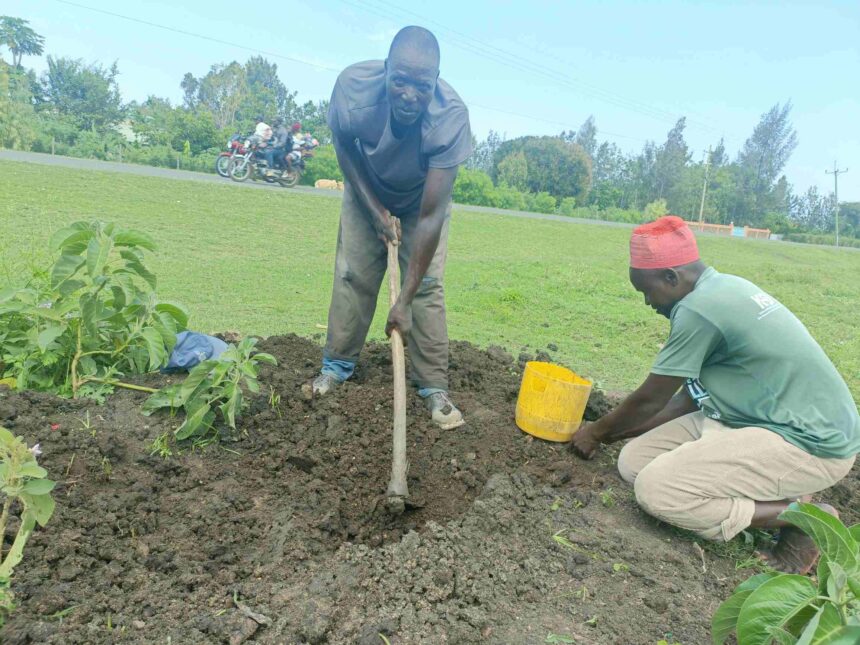
Ochieng and his colleague, Moi Ogola Omiyo hunt for termites in homes and open fields. They employ a system called live bait/chumming which is the most common method which involves gathering a clump of a termite mound and shaking it gently into a container (pictured). The termites heads are pierced on to the hook which is then dropped onto the bed of the lake water.

Fish are attracted to the sudden availability of live prey, which are a natural food source for mud fish.
Historically, I leant recently, the long winged reproductive termite is edible and highly sought after as a delicacy. Moreover, wild-caught termites have been used as a bait to attract fish and insectivorous birds. Natives of South East Africa consume queens of termites as a delicious dish.
According to the Social Development Goals (SDGs), sustainable fishing, that reduces environmental impacts and prevents overexploitation, is essential to achieving and maintaining productive and healthy marine ecosystems (SDG 14). And efforts to improve the sustainability of fishing are encouraging responsible consumption and production (SDG 12) and building constructive partnerships across industry, government, business, NGOs and scientific institutions (SDG 17).
The sustainable transformation of the fishing industry is also leading to innovation that will increase the efficiency of seafood harvests and lead to more environmentally sound technologies and industrial processes (SDG 9). This is how Ochieng’ and Moi’s toil in search of termites is helping achieve this specific development goal.