


By Milliam Murigi I milliammurigi@gmail.com
Africa is rich in fruit but poor in the systems needed to turn that abundance into wealth, with farmers losing value to post-harvest losses, limited processing and fragmented markets.
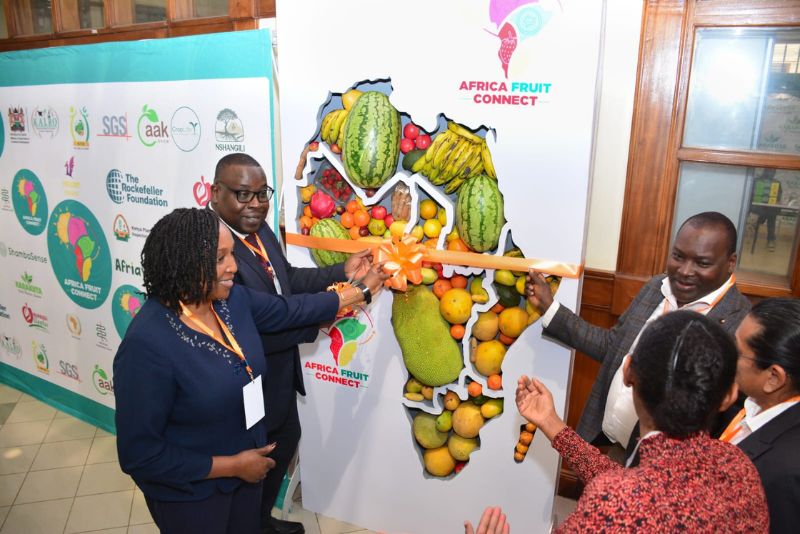
This was revealed during the inaugural Africa Fruit Connect forum underway in Nairobi.
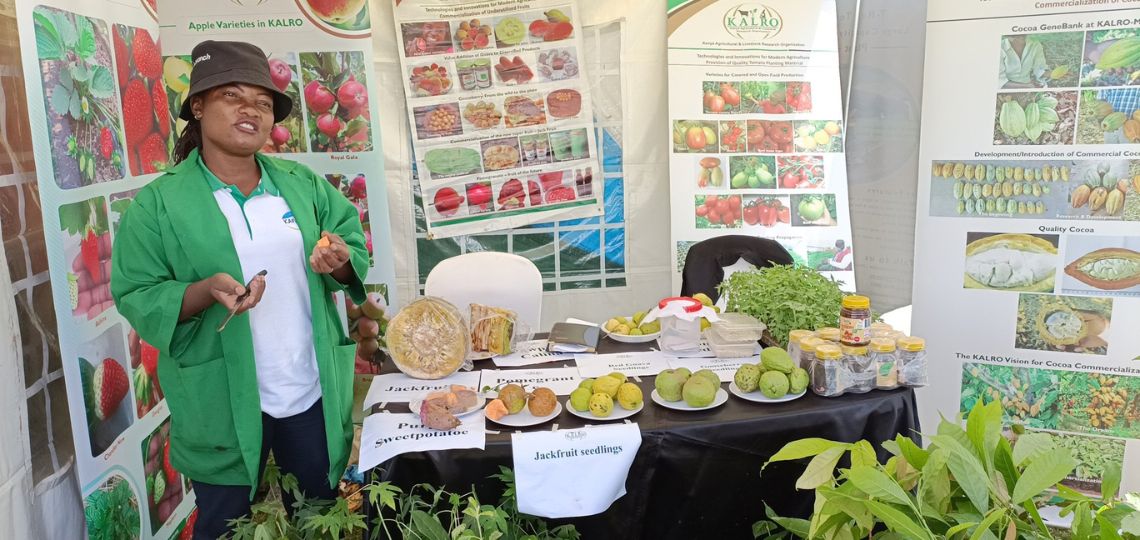
Experts at the forum said Africa must shift from exporting fresh fruit and invest in processing, stronger regional markets and better infrastructure to capture more value from its growing fruit sector.
“Africa does not lack fruits. We lack connection,” said Dr Saliou Niassy, coordinator of the African Union Inter-African Phytosanitary Council (AU-IAPSC), calling for stronger links between farmers, processors, researchers, investors and consumers.
According to Niassy, much of the continent’s fruit is still exported as fresh produce, denying farmers and countries opportunities to earn more income through value addition.
Africa needs to stop relying on fresh-fruit exports and invest in processing, stronger regional markets and better infrastructure to capture more value from its growing fruit sector. Such investments could create more jobs, improve nutrition and raise farmers’ incomes.
“When you sell fresh produce, you are selling it at a very cheap price. The moment you decide to keep it and add value, you can sell it three times more than the initial price,” Dr Niassy said.
According to him, greater investment in processing could enable African countries to produce juice, puree, dried fruit, jams and other products while creating employment, particularly for the continent’s growing youth population.
Loise Wachira, founder of Africa Fruit Connect, said the region also needs to look beyond commercially dominant fruits such as avocado and pineapple and unlock the economic potential of lesser-known indigenous varieties.
“The continent has more than 1,000 indigenous edible fruits, but are we doing enough with them?” Wachira asked.
She said many indigenous fruits are readily available in communities but remain largely absent from formal markets despite their nutritional and commercial potential.

The problem, she said, extends beyond production to weak connections between farmers and markets, post-harvest losses, limited processing and inadequate investment in research and fruit breeding.
“The losses between the farm and the market is enormous, but again, the opportunities between these spaces are also equally enormous,” she said.
Africa should also diversify its fruit economy according to Wachira rather than concentrating investment on a few commercially successful crops.
She pointed to fruits such as guavas, loquats and other indigenous varieties as potential sources of new income for farmers and businesses.
Value addition should also go beyond conventional products such as juice and pulp to include nutraceuticals, oils and other higher-value products.
Unlocking this potential will require stronger research and development.
She called for research that responds directly to farmers’ needs, consumer preferences and market demand, alongside greater investment in fruit breeding and quality planting material.
About markets, Dr Niassy said that Africa’s own population represents a potentially huge market if trade barriers such as high tariffs can be addressed.
“Already Intra-African fruit trade is growing, signaling a rising market for African producers within the continent. Trade in fruits between African countries increased from $880 million in 2014 to $1.8 billion in 2023, although it still represented only about 8.7 per cent of Africa’s total fruit exports in 2023,” he said.
Besides, he said that the African Continental Free Trade Area could help expand this trade by connecting producers in one part of the continent with consumers in another.
Removing tariffs alone will not be enough. Africa also needs better roads, cold-chain infrastructure, pack houses, logistics, harmonized standards, certification, traceability systems and more efficient border procedures.
“We need to harmonize our policies. We need to remove the barriers so that commodities can move from one region to another,” he said.
As trade expands, plant health will also become increasingly important. Niassy warned that pests such as fruit flies and false codling moth can disrupt entire value chains, close export markets and wipe out years of investment by farmers and businesses.
He called for stronger pest surveillance, diagnostic systems, risk analysis, integrated pest management and cooperation between countries.
Post-harvest losses are another major drain on the sector. With the continent losing much as 40 per cent of produce to post-harvest losses or pests, reinforcing the need for better storage, transportation and cold-chain infrastructure.
Both speakers said Africa must move beyond the goal of simply producing more fruit. The bigger opportunity lies in connecting farmers to processors, processors to markets and African producers to African consumers.
“We need to connect the orchards to the pack house, the pack house to the processors, the processors to the market, production to nutrition, and African producers to African consumers,” Niassy said.
For Wachira, that transformation will also require patient investment because orchards can take years before generating returns. She said the sector needed financing models and incentives suited to the long investment periods involved in fruit production.
A MESHA Features Production 2026