

By Cece Siago | siagocece1@gmail.com
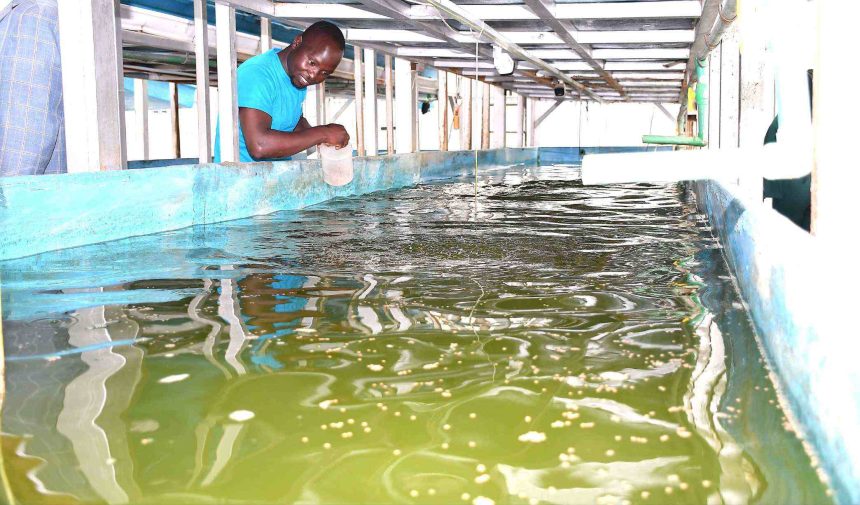
On the semi-arid outskirts of Rongai, on a compact 10 by 10 metre plot, something unlikely is happening. Fish are growing in in vertically stacked tanks fed by harvested rainwater and powered entirely by solar energy.
This is the Vertical Lake, a Kenyan-built aquaculture system that recycles 98 percent of its water, produces organic tilapia free of chemicals and antibiotics, and turns fish waste into fertiliser and collagen. For a group of editors visiting on a cold Nairobi morning, it would be one of the more arresting sights of their careers.
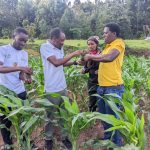
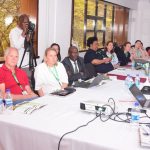
This was MESHA’s Annual Editors’ Forum held on April 30, 2026, where, unusually, the editors would not sit through presentations in a hotel room but instead step outside to experience the real sources of their stories.
Kenyan innovator Jack Oyugi runs a fish farm on a small plot on the outskirts of Rongai town, using vertically stacked containers in what he calls the ‘Vertical Lake’. The one-of-a-kind innovation, possibly a first in Kenya, immersed them in a new form of aquaculture where fish are raised high above the ground.
The tech-run method saves land, water and energy, while giving out high yields and profit in an area that experiences limited rainfall.
This comes as fish populations decline in Lake Victoria due to factors including environmental pressures, according to researchers.
Jack Otieno, a senior editor at Business Daily in Nairobi expressed his amazement over the unique capabilities of the innovation and its contribution to the agricultural sector.

“When we were coming here I did not know the Vertical Lake would be a wonderful project. I look at this venture as a knowledge sharing platform since we have learnt a lot,” said Otieno.
Part of the tour involved walking through the vertically stacked containers in a controlled environment, as well as viewing bio-products derived from the fish, some of which are used as organic fertilisers and for medicinal purposes.
Participants raised questions about how fish, which naturally thrive in open water, are able to survive outside a lake or pond. Mr Otieno explained how many times, editors’ meetings are held in hotel rooms, denying them a chance to have real experiences.
According to him, such tours offer greater values, allowing editors to see beyond written words.
“They say seeing is believing. The opportunity of touring the facility from the bio-products to the main place is an entire learning experience,” he said.
What makes the Vertical Lake more than a farming curiosity is its reach. From a single system, Oyugi produces tilapia fillets now stocked in Nairobi’s premium grocery stores, an organic plant food called Blue Harvest used by over 500 farmers across Kenya who report reducing input costs by 50 per cent, and a fish-derived collagen being piloted in hospitals to treat chronic wounds.
The system delivers an output of 25 to 30 traditional ponds from a fraction of the land. In 2025, it received a nomination for the Earthshot Prize, the global environmental award created by Prince William. For a country watching fish stocks in Lake Victoria fall under growing environmental pressure, the timing of such an innovation is difficult to ignore.
According to the Kenya National Bureau of Statistics (KNBS) Economic Survey 2024, fish production on Kenya dropped from 86,400 tonnes in 2022 to 70,300 tonnes in 2023, with Lake Victoria being the centre of the decline.
Experts from the Kenya Marine and Fisheries Research Institute confirm that global warming and climate change, heavy pollution, overfishing and water hyacinth were threatening tilapia and other fish species in Lake Victoria.
For editors and journalists alike, the visit had opened up a wealth of story angles, ranging from fish farming and climate change to business reporting.
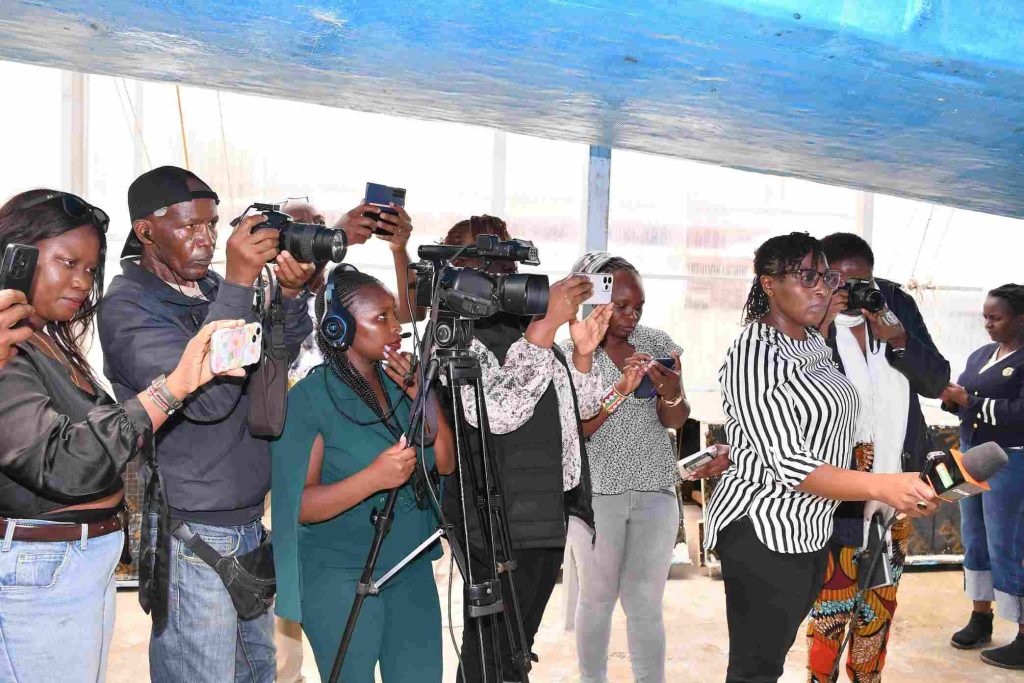
Star’s Newspaper’s Francis Mureithi, an experienced climate, environment, and technology editor, praised MESHA’s choice of venue for the knowledge exchange. He noted how the experience would help improve the quality of stories editors get from journalists.
“There should be more of such meetings. Understanding such stories from a field journalist’s perspective makes a whole difference,” he said.
He equally said MESHA’s efforts to train science journalists through their occasional cafes was making an impact through equipping them with hands on skills to turn complex ideas into simple and impactful stories.
While storytelling was important, Mission inclusion’s Audrey Masitsa emphasised the importance of gender sensitive reporting while covering news, especially on climate stories.
She urged the editors and journalists to look beyond the conventional perspectives, and focus on human rights based approaches while highlighting labor, migration or even technology effects of climate on women.
“Editors have the power to inform conversations,” said Masitsa.
In the end, the editors invited by MESHA together with other journalists got a taste of the Tilapia harvested from the vertical lake a real source to plate experience.
“We want to thank MESHA for organizing the trip. This is the first kind of trip where we are eating from the source and learning from the source,” Otieno said.
The Vertical Lake visit gave these editors a front-row view of what Kenyan innovation looks like when it moves beyond a press release and into practice.
In a country where the fish industry faces pressure from declining natural stocks and shifting climate patterns, a solar-powered, land-based system that grows clean protein in an arid suburb is the kind of solution that deserves sustained, accurate coverage.