

By Gracien Seif | shaggyhasingizwimana@gmail.com
“Whenever it rained heavily, water would flood into our house. Sometimes we had to spend the night sitting on chairs, afraid that the water would rise and reach our beds,” recalls Beatrice Mukama, who lives in Gikondo near the Rwampara wetlands.
“It was especially hard for women and children, because we were the ones left at home. We had to deal with the exhausting task of finding water and taking care of the family during floods,” says Beatrice.
Mukama adds that the flooding caused soil erosion, destruction of crops, and serious disruptions to family life. At times, even fetching water became dangerous, as women and children feared being swept away by the floods.
“Today, thanks to wetland restoration and improved drainage, our neighbourhood is safer, and our homes are dry,” Mukama says. “We’ve learned the value of protecting wetlands and our environment.”
The intergovernmental treaty on wetlands, called the Ramsar Convention on Wetlands, notes that globally, wetlands have disappeared at alarming rates, with roughly a third lost between 1970 and 2015 due to urbanisation, agriculture, infrastructure expansion, pollution, and climate change.
Rwanda has not been spared. Its capital, Kigali, has 37 wetlands covering 9,160 hectares, but rapid urban growth has severely degraded many of them.
Rwampara wetland, for example, shrank from 24 hectares in 1987 to 7.7 hectares in 2018 as nearby built-up areas expanded by 77 per cent, according to the 2020 University of Rwanda study titled Analysis of Urban Growth and Its Effects on Wetlands in Rwanda.
Farming, unregulated dumping, and clearing of native vegetation further degraded soil and water quality, weakening the wetland’s natural ability to regulate floods, filter pollutants, support biodiversity and recharge groundwater.
“If the Rwampara wetland and the other four degraded wetlands—Gikondo, Rugenge–Rwintare, Kibumba, and Nyabugogo—in Kigali are not restored, 220,000 people would be at risk of floods and water supply crises,” the study warns.
The economic cost is already evident. Ntakiyimana Vianney, a retailer in Nyabugogo, an area 5km from the City of Kigali, recalls repeated losses due to flooding.
“One day, rainwater destroyed over 800,000 Rwandan Francs (US$548) worth of products. I had to build a barrier to prevent water from entering, but it still didn’t solve the problem,” he says.
A 2015 research from the Institute of Policy Analysis and Research (IPAR Rwanda) estimates that small businesses lose over US$121,200 annually due to flooding, particularly in wetland-adjacent areas.
Vianney notes that when it rained, water from Nyamirambo, an area 4km away from the City of Kigali, would flood into Nyabugogo. However, now that the drainage system has been built, water is directed properly, preventing damage.
Wetlands play a vital role in climate adaptation. They act as natural sponges by absorbing excess rainwater and releasing it slowly, which helps prevent flooding, especially in urban areas. Besides, they filter polluted water, improve air quality, and provide habitats for many plant and animal species.
This is reflected in the UAE Framework adopted at the 28th United Nations Climate Change Conference of the Parties (COP28), which prioritises restoring wetlands to mitigate climate impacts like droughts and floods, bridging water security with climate goals.
In Rwanda, wetland rehabilitation has become a central part of climate and urban development strategies. Since 2021, the number of people affected by floods has declined, thanks to a combination of restoration efforts and relocation from high-risk areas.
A key driver of this transformation is youth engagement. Government institutions, including the Rwanda Environment Management Authority (REMA), have adopted a three-pronged approach focused on advocacy, green job creation, and innovation. Young people are actively involved through school environmental clubs, restoration projects, and climate-focused startups.
Funding mechanisms such as the Rwanda Green Fund support youth-led climate initiatives, while the Kigali Urban Development Project prioritises hiring local youth for restoration work. In addition, the Ministry of Youth and Arts collaborates with REMA to train “Green Ambassadors” who lead community-based climate adaptation efforts.
Educational institutions also play a critical role. Students combine classroom learning with practical activities such as cleaning wetlands, removing invasive species, planting trees and raising environmental awareness.
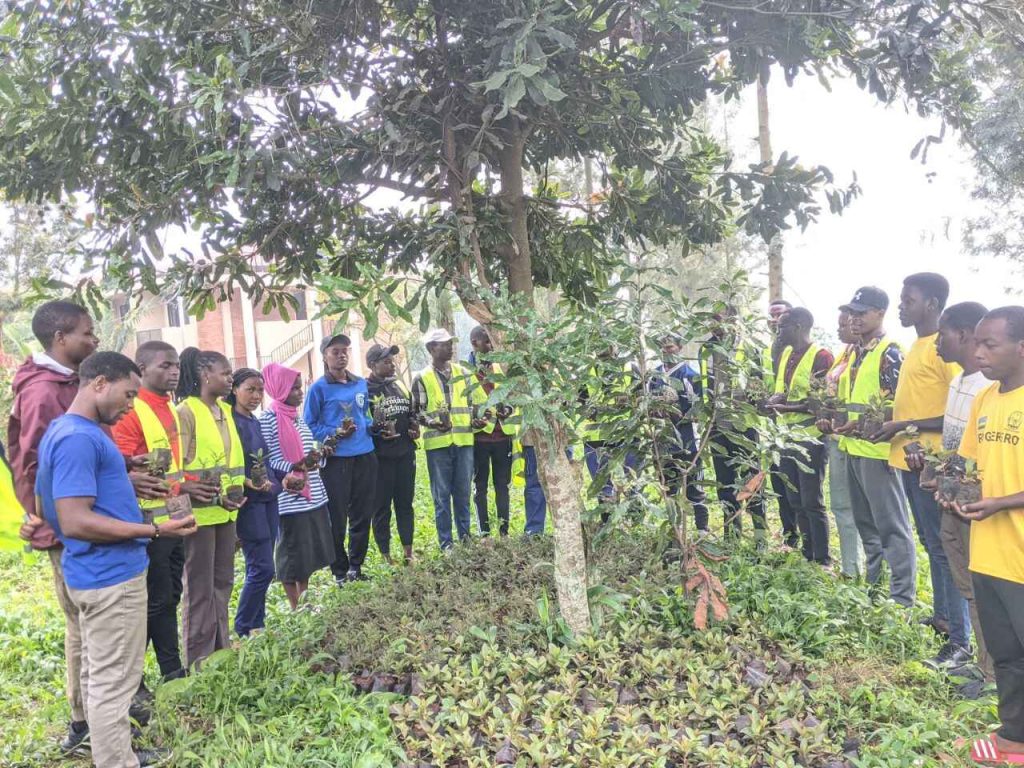
Julius Ndahimana, a student at the University of Rwanda says they have carried out several initiatives to restore degraded land. These include planting mixed tree species, clearing water channels during the rainy season and planting grasses and flowers that help prevent soil erosion.
“As young men and women, our strength shows in physically demanding tasks during land restoration, such as clearing drainage channels where rainwater passes,” he says, noting that these efforts help speed up the restoration of damaged land and ensure the work is done effectively.
He stresses that conservation is a shared effort. Boys and girls work together in tree planting, waste collection and awareness campaigns.
For many young women, conservation is also creating new economic opportunities. Henriette Mbabazi, a student, highlights how women are transforming waste into useful products.
“We focus on activities that can improve our livelihoods while still caring for nature besides protecting the environment,” she says.
“Instead of communities burning old clothes and polluting the air, we reuse them by turning them into carpets and other useful items,” she adds.
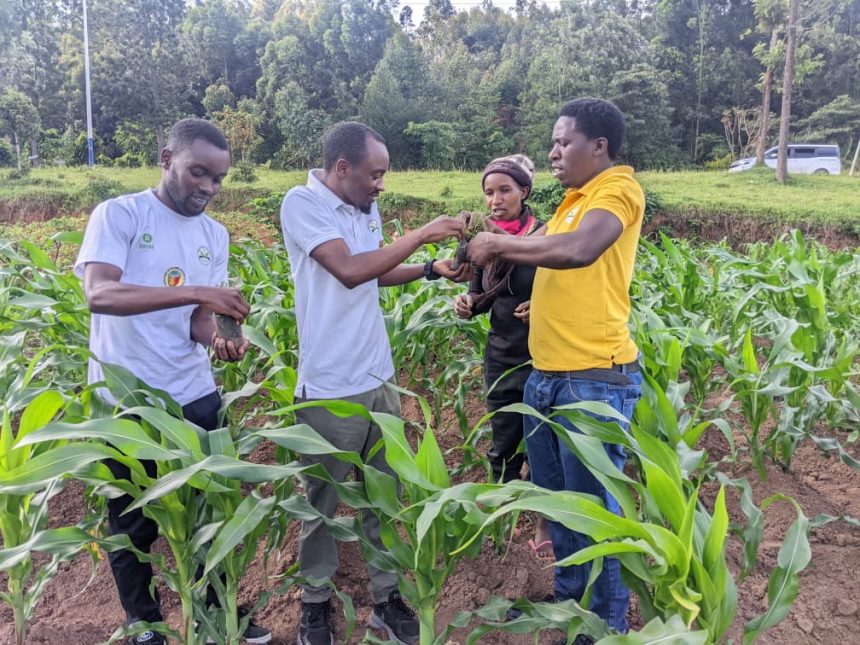
Jean Félix Mugisha Rugango, CEO of the Green Rwanda Initiative, notes that they use a data-driven approach to conservation, where trainees gain practical skills in water management, soil conservation and data analysis, enabling them to collect, interpret and apply data to design effective environmental solutions and take informed action within their communities.
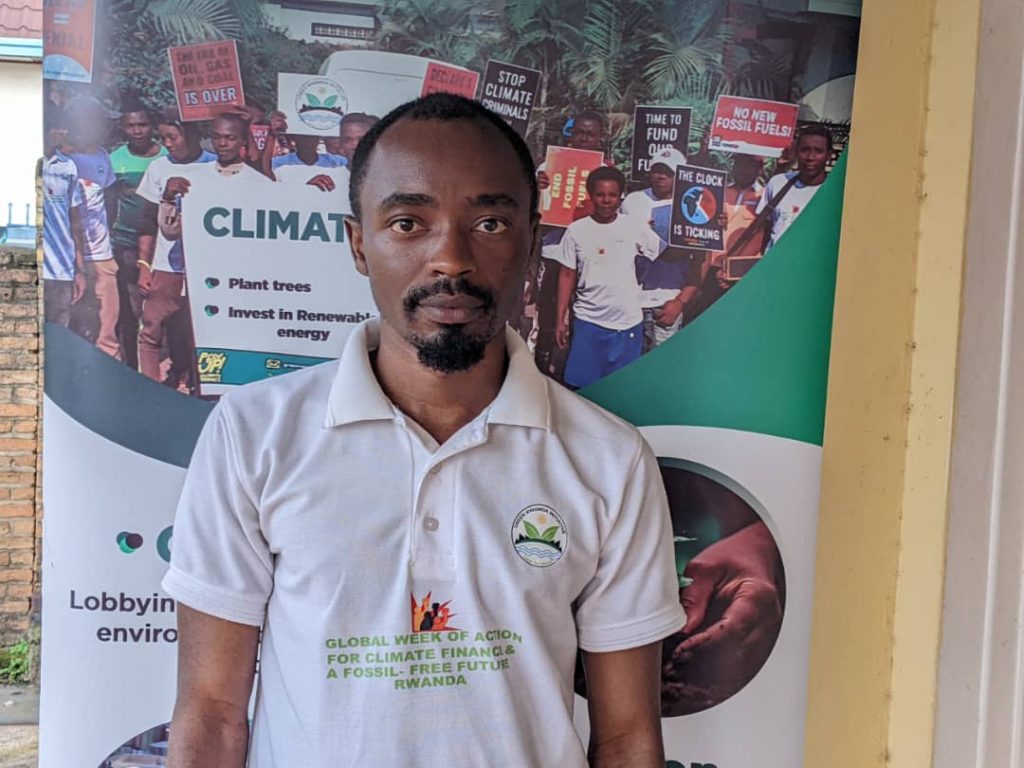
They have trained 58 people, 41 women and 17 men. Rugango observes that women and girls tend to apply what they learn more consistently than men, especially in their households and communities.
Ms Marie Claire Nyirarukundo is one such example. Motivated by worsening soil erosion, declining forest cover and the visible impacts of climate change, she sought to understand how data could support better decision-making.
After receiving training in data collection and environmental analysis, she led a community project on soil degradation. The findings informed practical actions, including tree planting and the adoption of erosion control techniques such as contour farming and agroforestry.
“People are beginning to understand the importance of protecting the environment because of what we have been taught. More trees are being planted, and some farmers have started adopting practices that prevent soil degradation,” Ms. Nyirarukundo says.
Ms Emma Claudine Ntirenganya, spokesperson for the City of Kigali, emphasised youth participation in quarterly Umuganda each month and environmental clean-ups.
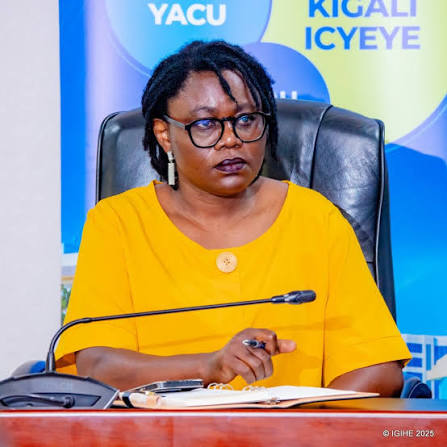
“Our city policies, including the Land Use Master Plan and wetland conservation regulations, support youth involvement. Protecting wetlands is not only an environmental necessity but also a civic responsibility,” she said.
The broader impact of these initiatives is becoming increasingly evident. Restoration of Kigali’s five major wetlands is now about 75 per cent complete, with full completion expected by 2026. Once finalised, the projects are expected to benefit over 220,000 residents through reduced flooding and improved access to water.
In addition, to environmental gains, the projects are generating significant employment. Nearly 6,000 jobs have already been created, with half of them taken up by women. These opportunities are helping young people build skills, earn incomes, and contribute to sustainable development.
Alphonsine Niyomukiza, a worker at the Rwampara wetland, is one of these women. She moved to Kigali from Musanze District, Northern region of Rwanda, in search of better opportunities after losing her previous job. At the wetland, she helps prevent illegal activities such as grazing and unsafe crossings, while also ensuring children stay away from dangerous water areas.
Through her work, Niyomukiza has witnessed early signs of environmental recovery.
“When I first arrived, there were no birds here. Now, they are slowly coming back,” she says.
Niyomukiza believes that once restoration is complete, the wetland will create more job opportunities and improve livelihoods, especially for women, than for men.
Beyond environmental protection, her role also involves raising awareness within the community about the importance of safeguarding natural resources and ensuring public safety.
Rwanda is placing young people at the centre of its climate response, embedding youth action across national development and environmental strategies. Through Vision 2050 and the National Strategy for Transformation II, the government of Rwanda links green growth to youth employment, skills development, and entrepreneurship.
Climate commitments under the Nationally Determined Contribution (NDC) and biodiversity actions in the National Biodiversity Strategy and Action Plan formally recognise youth as climate actors promoting climate education, green jobs, ecosystem restoration and youth-led innovation.
These efforts align with the African Union Agenda 2063, which identifies women and youth as crucial agents in building climate-resilient economies.