

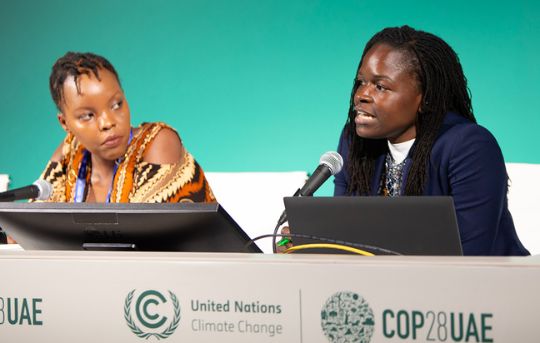
By Sharon Atieno | sharon@meshascience.org
Ever wondered how to prepare for a major international meeting on climate change and you are a journalist, a parliamentarian or a civil society representative lacking networks which could come to your rescue?
Well, you need not look far as the CGIAR, through its GENDER Accelerator programme is one such outfit that provides information and research support that can make the burden of equipping you lighter.
“We generate evidence, tools and monitoring systems to help our partners including policymakers and development practitioners to design and scale solutions that work for farmers and for the planet,” says Vivian Atakos, Global Engagement and Policy Lead, CGIAR GENDER Accelerator.
While speaking at a recent science café by Media for Environment, Science, Health and Agriculture (MESHA) for policy makers and journalists, Vivian noted that CGIAR’s work focuses on addressing global challenges such as climate change, social and gender inequalities, poor diets and environmental degradation.
For legislators like Hon Shakeel Shabbir who attended the café, the centre is at hand to provide apt research findings which are handy in their work as it serves as a one stop host to one of the largest global networks of gender researchers through the GENDER Accelerator. Here, hundreds of scientists work to ensure that policy is supported by gender transformative evidence.
To farmer Phyllis Nduva who toils every day in her 20 acre farm in far away Wote, the Centre works round the clock to ensure that their research influences policy. That is why they prioritize generating solutions, the innovations that will be able to lead to change on the ground while also touching on different groups of people, including youth and women.
“We do not conduct research for it to gather dust on shelves. Our goal is impact, which is why we partner with organizations such as MESHA. We are here to ensure that evidence reaches the communities and stakeholders who need it most,” she said.
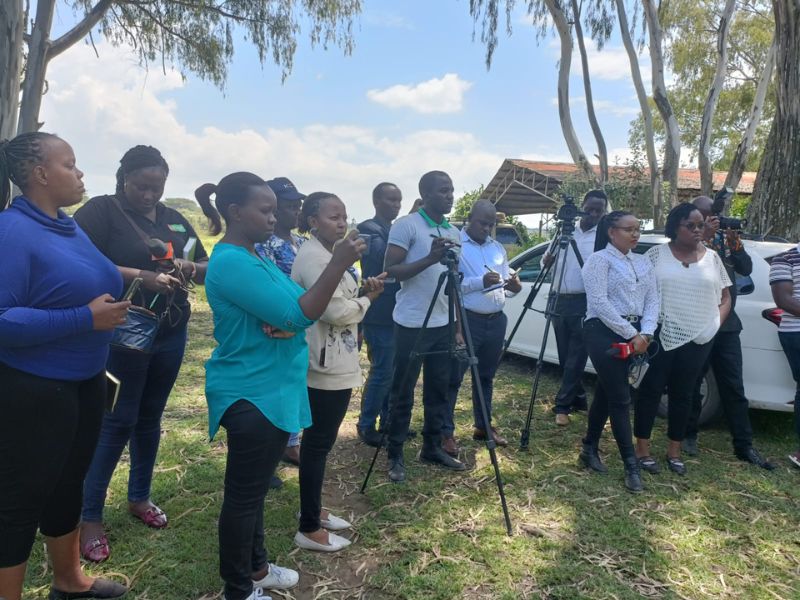
And that is just part of how Vivian and her colleagues help drive transformation toward equitable, sustainable, and resilient food, land and water systems through gender equality, opportunities for youth, and social inclusion.
CGIAR’s work focuses on addressing global challenges such as climate change, social and gender inequalities, poor diets, and environmental degradation.
It also hosts one of the largest global networks of gender researchers through the GENDER Accelerator where hundreds of scientists are working to ensure that policy is supported by gender transformative evidence.
“We aim to reach 500 million plus people, and we basically work to ensure a world where gender equality, opportunities for youth, social inclusion, drive transformation toward equitable, sustainable, and resilient food, land, and water systems,” says Vivian.
Beyond conducting research on gender in agri‑food systems, CGIAR maintains a global resource hub that houses evidence in different formats including explainers, policy briefs, case studies, and working papers among others.
The organization is also keen on working with governments through multilateral processes.
“We are also present in strategic policy conversations. In 2025, when South Africa was hosting the G20 Group, they approached us and asked us to work together to provide evidence from research and practice on how to design financial products, approaches and processes to reach, benefit and empower women through financial inclusion,” she said.
During the Africa Climate Week, CGIAR partnered with governments and other organizations to hold conversations around agri-food systems and provide the evidence on what works.
Working in close collaboration with governments such as Zambia, Botswana, Uganda, and Kenya, the organization has helped to map climate‑gender vulnerability hotspots—geographical areas where extreme climate hazards, high female participation in agriculture, and systemic gender inequalities converge. This exercise identifies where women working in food systems are most at risk from climate impacts and least able to adapt. By pinpointing these hotspots, policymakers can target interventions and investments more effectively to protect the most vulnerable communities.
Hon. Shakeel Shabir, Kenyan Member of Parliament for Kisumu East Constituency, a legislator who promotes climate action and gender inclusion via parliament, emphasized the importance humanizing the narrative by translating climate change concepts into simple language that ordinary community members can understand.
“Parliamentarians and the media have a shared responsibility to translate complex climate related policies into simple language that can easily be understood by locals,” Hon Shabir said.
Hon Shabir has been vocal on climate change mitigation and community support and participated in the International Forums like Africa Climate Week and collaborates with organisations such as Gender Equality Accelerators.
In addition, the organization has partnered with Kenya to report progress under international frameworks, including the United Nations Framework Convention on Climate Change (UNFCCC) Gender Action Plan. Through this collaboration, CGIAR has provided research and evidence to strengthen Kenya’s submissions—for instance, on progress under the Gender Action Plan—ensuring that gender dimensions in agri‑food systems are reflected in its climate commitments.
According to Vivian, the organization’s aim is that its work will be suitable in providing evidence that is convenient for different stakeholders.
“We have access to tools that can, for instance, be able to measure empowerment. We are part of alliances that will be able to push forward the agenda on gender and youth in food systems. We also want to be part of external policy dialogues that are happening in the counties and at the national level, regional and at the international level,” she noted.
These efforts to advance gender equality and create opportunities for young people are reflected across Africa, where farmer organizations are increasingly placing women like Ndanu and youth at the centre of sustainable agricultural transformation.
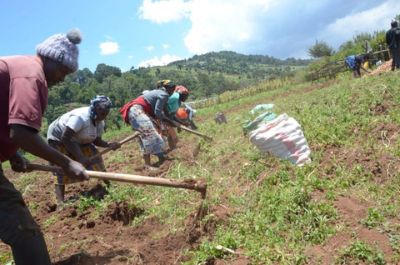
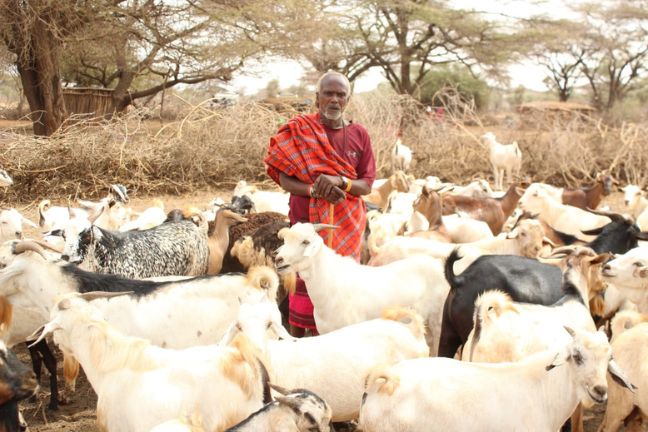
With 2026, being the International Year of the Woman Farmer, Vivian urged journalists to be on the lookout for the 2026: flagship report dubbed Gender equality and inclusion in food, land, and water systems by 2050: Projections and solutions. The document is giving foresight analysis on what to expect by 2050 on gender equality and inclusion in terms of climate change, biodiversity, food, land, and water systems.
©MESHA Features 2026