



By Shaban Makokha | shabaraw64@gmail.com
The dry fields of Lureko village in Mumias West are where Mariam Wesonga farms and raises her family. Each day, she carries a 20-kilogram sack of maize as part of the work needed to put food on the table.
The mother of five has already spent the day tending her farm, hauling water from a distant borehole, preparing meals, attending local chama meetings and caring for her family. Yet her work is far from over.
By evening, another challenge begins. Turning maize into flour depends on whether the local diesel-powered posho mill is operating.
Three kilometres away, the sound of a diesel-powered grinding machine signals that milling has started. If she is lucky, the operator will have enough customers to justify switching on the engine. If not, she has to wait for hours or walk several kilometres to find another mill.
“My family cannot sleep without a meal of ugali,” Mariam says.
“Sometimes I wait for hours before the machine starts. Other times, I have to walk several kilometres in search of another mill that is operating.”
For many Kenyan households, ugali remains a staple food and an important part of daily meals. However, producing the flour often depends on costly and time-consuming milling services.
Across rural Kenya, women continue to shoulder much of the work involved in turning harvested maize into flour. While diesel-powered mills replaced some of the physically demanding traditional grinding methods, they also introduced new challenges related to cost, noise and exposure to emissions.
Many villages still face unreliable electricity access, leaving diesel-powered posho mills as the main option for grain processing. Women often spend hours waiting in queues while children are exposed to maize dust and engine fumes.
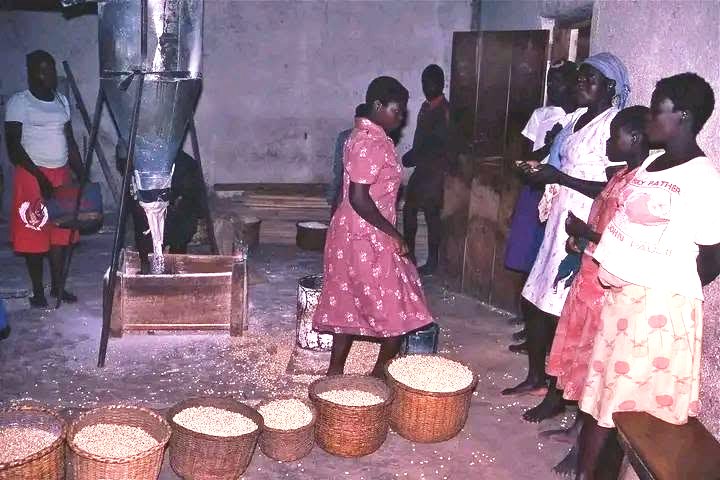
When fuel prices rise, the impact is felt immediately in communities where household budgets are tight. Milling charges increase, forcing some families to make difficult choices between food processing costs and other household needs.
The burden is not only financial. At many mills, women and children are exposed to noise, grain dust and exhaust fumes from diesel engines.
According to Dr Donald Musi of Yatta Clinics, diesel engines release pollutants that can affect respiratory health.
“Diesel engines release a mixture of pollutants into the atmosphere,” says Dr Musi. “These include microscopic soot particles that penetrate deep into the lungs and bloodstream, as well as gases that irritate the respiratory system.”
The World Health Organization’s International Agency for Research on Cancer classifies diesel engine exhaust as carcinogenic to humans, with evidence linking exposure to lung cancer.
Short-term exposure can cause symptoms such as coughing, eye irritation and worsen respiratory conditions such as asthma. Long-term exposure has been linked to respiratory and cardiovascular health risks.
As concerns around pollution and fuel costs grow, innovators are exploring cleaner alternatives, including solar-powered milling systems.
Agsol Green Technology Solutions is among companies developing portable solar-powered milling systems. Speaking during the 2026 World Farmers Organisation Summit in Nairobi, Agsol’s Grants and Impact Manager Binagwaho Gakunja said the technology aims to reduce barriers linked to diesel-powered milling.
“For too long, large diesel milling engines have subjected women to unnecessary challenges, including high costs and exposure to pollution,” says Binagwaho. “Many households struggle with both the financial and physical costs associated with diesel-powered milling.”
The system uses solar and battery energy storage technology to power compact milling machines. The company says the machines can produce up to 50 kilograms of flour per hour without requiring diesel fuel during operation.
Unlike diesel mills, which often depend on enough customers to justify fuel costs, solar-powered systems can operate without fuel expenses.
Users pour grain into the machine, switch it on and collect flour from the outlet chute. The system automatically shuts down when grain runs out.
For Langat Kiptoo of Nandi County, the solar mill has provided both household support and a source of income.
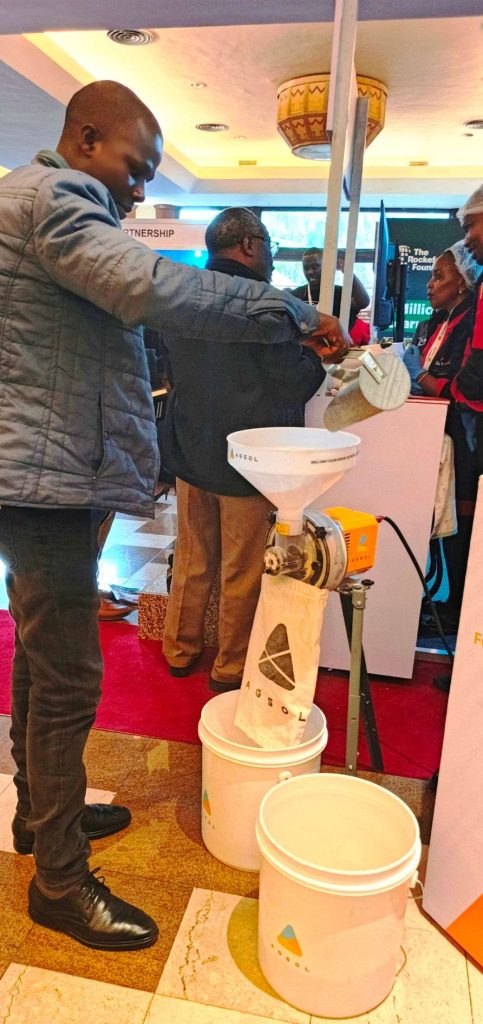
“This machine gives my family access to flour produced using renewable energy,” he says. “It is also an opportunity because I now earn income by offering milling services to neighbours and my wider community.”
Researchers and innovators say cleaner energy solutions could help reduce the time, cost and pollution associated with maize processing. However, wider adoption depends on affordability, access to technology and support for rural communities.
For households where ugali remains a daily staple, improving how maize is processed could make the journey from farm to plate safer and more efficient.
©MESHA Features 2026