
By using this site, you agree to the Privacy Policy and Terms of Use.
Accept
MESHAMESHAMESHA
  • Home
  • Who We Are
    • About
    • Management
    • Strategic Plan, 2023-2027
  • Sayansi Magazine
  • Media
    • Audio
    • Videos
    • Photos
  • Membership
    • Accredited Members
    • How to Join MESHA
  • IFAJ Congress
    • IFAJ 2025 Congress Website
    • IFAJ 2025 Congress Bulletin
Search
Categories
  • Climate Change
  • Health
  • Biodiversity
  • Agriculture
  • Environment
© 2024 MESHA. All Rights Reserved.
Reading: Gender gaps could take over 100 years to close – Experts
Share
Sign In
Notification Show More
Font ResizerAa
MESHAMESHA
Font ResizerAa
  • Home
  • Who We Are
  • Sayansi Magazine
  • Media
  • Membership
  • IFAJ Congress
Search
  • Home
  • Who We Are
    • About
    • Management
    • Strategic Plan, 2023-2027
  • Sayansi Magazine
  • Media
    • Audio
    • Videos
    • Photos
  • Membership
    • Accredited Members
    • How to Join MESHA
  • IFAJ Congress
    • IFAJ 2025 Congress Website
    • IFAJ 2025 Congress Bulletin
Have an existing account? Sign In
Follow US
© 2024 Mesha. All Rights Reserved.
MESHA > Blog > Gender > Gender gaps could take over 100 years to close – Experts
Gender

Gender gaps could take over 100 years to close – Experts

Mesha
Mesha Published 8 March 2026
Share
4 Min Read
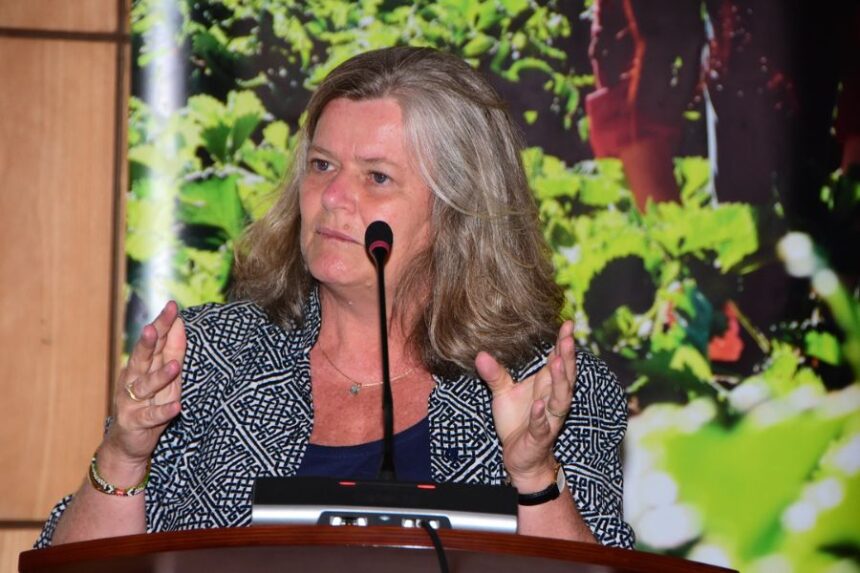
Dr. Nicoline de Haan, Director, CGIAR Gender Equity and Inclusion Accelerator at the AWRAD function to commemorate 2026 International Women's Day held at the World Agroforestry Center in Nairobi.
SHARE

By Aghan Daniel | aghan@meshascience.org

As the world marks the International Women’s Day today, Sunday, March 8, 2026 a recent report on the status of women in agrifood systems in sub-Saharan Africa, shows that greater investment in women’s empowerment can boost social justice and unlock inclusive growth, food security and climate resilience.

Securing African women’s rights to natural resources and ecological repair are also essential for achieving gender equality, enhancing their agency and economic opportunities, and increasing their resilience to climate, environmental, health and economic shocks.

Esther Nafula, from Busia County in western Kenya demonstrates innovations they have adopted in organic farming and use of the flies as alternative protein source for animals. Disaggregated data still lacks posing a challenge to specification of interventions by authorities and agencies.

Despite these recognitions and potential, women’s contributions remain undervalued, and their working conditions are often more precarious: irregular, informal, part-time, low-paid, labor-intensive, and highly vulnerable. They continue to face systemic barriers, including limited access to land, finance, technologies, education, extension services, and participation in decision-making at all levels.

Quoting The 2025 report on The Status of Women in the Agrifood systems in sub-Saharan Africa, Dr Susan Kaaria, Executive Director of AWARD, said that 49 per cent of the work force in Africa are women which is 11 per cent higher than the global average. She added that 76 per cent of working women are employed in agrifood systems. The report reveals the huge inequality that continues to exist in financial services, access to markets, extension and advisory services, decrying the fact that in some of those services, disaggregated data still lacks that allows for discussions on the specificity of women challenges.

“We need to pay attention to accessing better data,” she said.

Women have less access to cooperatives contrary to popular belief. Besides, the report brings out how unpaid labour as they do not have adequate systems in place.

In her remarks Dr Nicole de Haan, Director for the CGIAR Gender Equality and Inclusion Accelerator said that despite women delivering so much in the agrifood systems the gender gap will take a century to fill. She added that the fact that the world is celebrating the day alongside International Year of the Woman Farmer presents an opportunity to renew and accelerate commitments – to make food systems work for women farmers, and for science to deliver solutions that work for the smallholder farmer and her husband.

Against this backdrop, there is a clear need for deliberate, action-oriented conversations that center women’s lived experiences and amplifies their contributions and voices in shaping equitable agrifood systems.

In an effort to address the case of women farmers in Africa, a partnership between African Women in Agricultural Research and Development (AWARD), the CGIAR GENDER Accelerator, the International Centre for Insect Physiology and Ecology (icipe) and CIFOR-ICRAF, convened a half day meeting on Monday March 2, 2026.

The meeting ignited critical conversations on strategies for dismantling barriers that undermine women’s contribution and benefits in agrifood systems, spotlighted women leading innovations in agrifood systems, and enablers for improving women’s experiences aligned with the International Year of the Woman Farmer.

The event spotlighted the contributions and lived experiences of women farmers and those working for women farmers. The program featured dialogues on research, policy, and investments that drive gender responsive action, including sessions highlighting how researchers and farmers co-create solutions.

Additionally, the event included discussion segments led by women farmers and an exhibition where they showcased their work.
You Might Also Like

Sayansi Magazine edition on how communities are responding resiliently to climate change now out

How Kenya’s Kamser women power Lake Victoria’s fishing industry

Sayansi Magazine Issue No. 41

Gender equality ‘key booster for One Health approach to wellbeing’

Kenya’s women-led climate initiative becomes globally recognised study site

TAGGED:agrifood systems sub-Saharan AfricaAWARD Africa women agricultureCGIAR gender equality acceleratorfood security gender equalitygender equality agriculturegender gap agriculture Africagender inequality farming sectorinclusive agriculture developmentInternational Women’s Day 2026women access to land Africawomen agricultural workforce Africawomen agriculture research Africawomen climate resilience Africawomen economic empowerment Africawomen empowerment agriculturewomen farmers Africawomen farmers policy Africawomen in agrifood systemswomen in food systemswomen leadership agriculture Africa

Sign Up For Daily Newsletter

Be keep up! Get the latest breaking news delivered straight to your inbox.

By signing up, you agree to our Terms of Use and acknowledge the data practices in our Privacy Policy. You may unsubscribe at any time.
Share This Article
Facebook Twitter Whatsapp Whatsapp LinkedIn Email Copy Link Print
What do you think?
Love1
Sad0
Happy0
Sleepy0
Angry0
Dead0
Wink0
Previous Article Farming enabled me to educate my children – agrifood champion
Next Article Mongabay calls for more collaboration as it launches Swahili platform
Sayansi Magazine – Edition 45
Climate Change Development Gender Sayansi Magazine
Where residents fate relies on the hands of filthy water pans and bowsers
Climate Change Gender Health
MESHA introduces effective writing of science among students
Education Media|Journalism Sayansi Magazine
Sand dams empowering communities in Kenya’s Makueni County
Agriculture Climate Change Community Development

Contact Info

Location
Oasis Apartments, Jogoo Road, 3rd Floor
Phone
+254 721 578517
+254 732 229 230
info@meshascience.org

Facebook

//

We are the number one science, health and agriculture journalists network in Africa accessed by over 20 million users.

Quick Link

  • About
  • Sayansi Magazine
  • Accredited Members
  • Mesha Audio
  • My Bookmarks

Top Categories

  • Climate Change
  • Health
  • Biodiversity
  • Agriculture
  • Environment

Sign Up for Our Newsletter

Subscribe to our newsletter to get our newest articles instantly!

MESHAMESHA
Follow US
© 2024 MESHA. All Rights Reserved.
Join Us!
Subscribe to our newsletter and never miss our latest news, podcasts etc..

Zero spam, Unsubscribe at any time.
Welcome Back!

Sign in to your account

Username or Email Address
Password

Lost your password?