

Milliam Murigi |milliammurigi@gmail.com
Media for Environment, Science, Health and Agriculture (MESHA) has released a new edition of its Sayansi magazine dedicated to highlighting the contribution of women to agriculture and the transformation of food systems. Sayansi 47th Edition
The 47th edition focuses on women working across the agricultural value chain, showcasing their achievements, experiences and innovations while examining the inequalities that continue to limit their participation and economic opportunities.
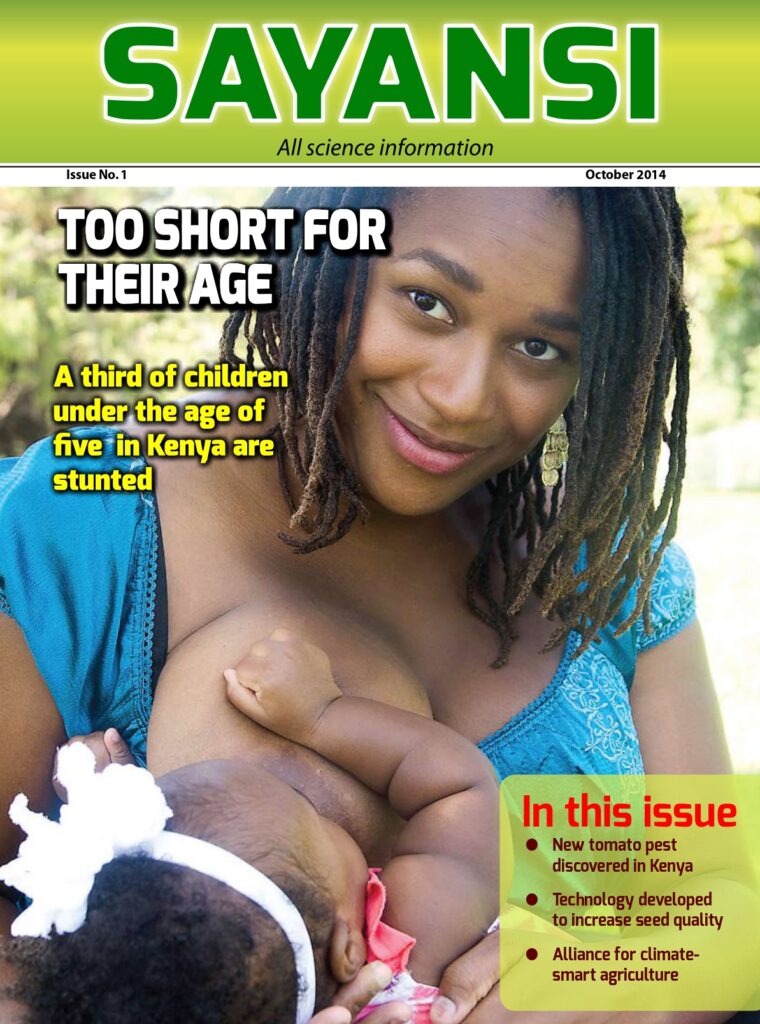
The Sayansi Magazine was launched in October 2014 (Sayansi Magazine October 2014) by the then Education Minister, Prof Jacob Kaimenyi as he officially opened the second African Conference of Science Journalists (The Second African Conference of Science Journalists, 2014) held in Nairobi.
The release comes as the world marks the International Year of the Woman Farmer, providing an opportunity to recognise the role women play in feeding communities, sustaining agricultural production and shaping the future of food systems.
Through the publication, the largest ever produced, MESHA seeks to bring greater attention to women whose contributions often go unnoticed despite their central role in agriculture. The magazine explores their experiences as farmers, researchers, scientists, entrepreneurs, food processors, traders and agricultural extension officers.
Women are involved in nearly every stage of food production, from preparing land and planting seeds to harvesting, processing and marketing agricultural products. They also contribute to the preservation of indigenous seeds, management of natural resources and adoption of farming practices that help communities respond to changing climatic conditions.
Despite these contributions, their participation in agriculture is often not matched by equal access to productive resources and economic opportunities.
Limited land ownership, inadequate financing, restricted access to agricultural inputs and modern technologies, and difficulties reaching markets remain among the challenges affecting women in the sector.
For many women farmers, the lack of secure land rights makes it difficult to use land as collateral to obtain credit or make long-term investments in agricultural production. Limited access to affordable finance also constrains their ability to purchase improved seeds, machinery and other inputs that could increase productivity.
Cultural practices and institutional barriers further limit women’s participation in agricultural decision-making, including decisions on land use, investments and research priorities.
These inequalities have implications beyond individual farmers, affecting household incomes, food security, agricultural productivity and the ability of communities to withstand climate-related shocks.
According to MESHA Chief Executive Officer Aghan Daniel, addressing these challenges requires governments, research institutions, development partners, financial institutions and the private sector to move beyond recognising women’s contribution and invest in practical solutions that respond to their needs.
The new edition also examines how science, research and innovation can help address some of the challenges facing women in agriculture. Climate-smart technologies, improved crop varieties, digital agricultural advisory services, labour-saving equipment and innovative financing models offer opportunities to improve productivity, reduce the burden of farm work and support women in building sustainable agricultural enterprises.
However, the benefits of these innovations depend on whether women can access and afford them. Their involvement in developing, testing and adopting agricultural technologies is equally important to ensure that solutions respond to the realities of their farming activities.
By bringing together stories from different parts of the agrifood system, the publication seeks to showcase women not merely as beneficiaries of agricultural development programmes but as active contributors to research, innovation and decision-making.
Beyond celebrating individual achievements, the new edition highlights the connection between gender equality, agricultural science, climate resilience and food security. As climate change, declining natural resources and growing pressure on food systems demand more sustainable approaches to agricultural production, ensuring women have a meaningful role in shaping solutions will be critical.
For MESHA, giving women greater visibility through science and agricultural journalism is also an opportunity to encourage public discussion on the policies, investments and innovations needed to address inequalities in the sector.