

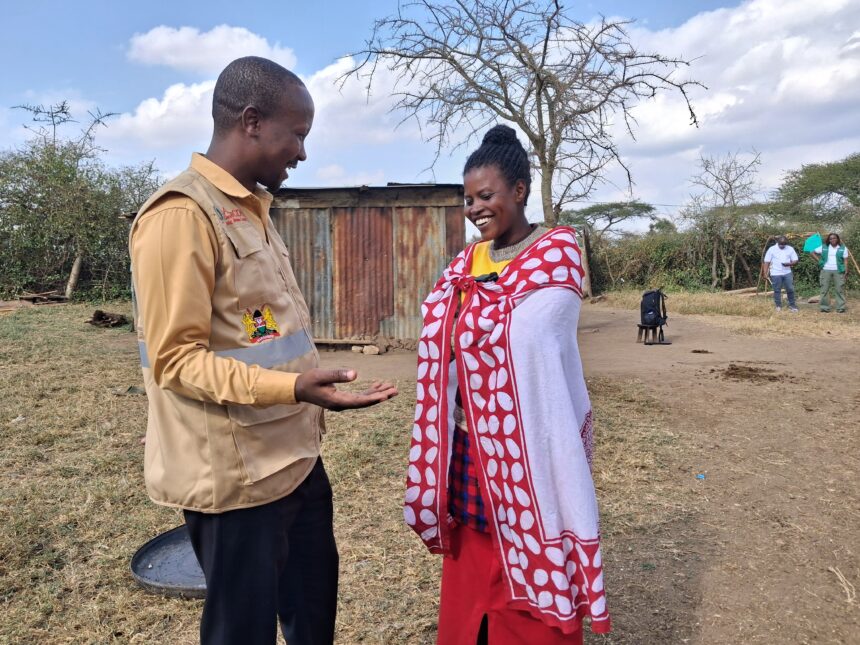
By Sharon Atieno | sharonphoebeatieno@gmail.com
In her fourth month of pregnancy, Lilian Clinton, 35, a resident of Naningoi village, Kajiado county near Nairobi, Kenya had started experiencing severe headaches and difficulty in breathing. Work that she would do comfortably, became too difficult and strenuous. She would spend most of her time sleeping.
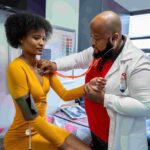
A community health promoter (CHP) visited her home during routine household visits, measured her blood pressure, and found it to be quite high. The CHP referred her to Kajiado County Referral hospital.
During this period, an industrial action was taking place, and health workers at the facility were on a strike. She was not able to get the assistance she needed. Clinton then went to a private facility which gave her some medication but did not do due diligence in helping her understand the risk she was in as a result of the high blood pressure.
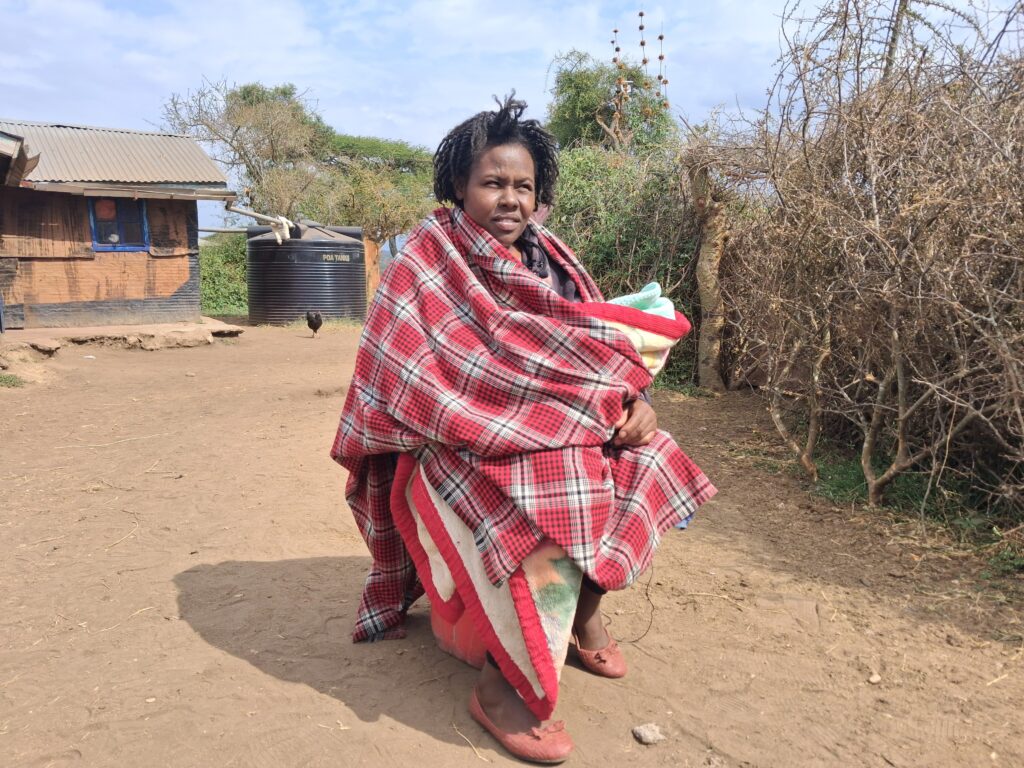
Despite the medication, her situation did not improve. After some time, the CHP visited her home again with news of an outreach campaign coming near their local church. She encouraged her to go for the check up with promise of help as experts would be part of the team.
At the outreach centre, Clinton’s blood pressure was measured thrice and it was found to be as high as 138. At this time, she was about 26 weeks pregnant. Her entire body was swollen including her hands and feet, she was even losing her ability to grasp things in her hand. She was immediately referred to Kajiado County Referral hospital where she was admitted for two weeks under treatment.
The preeclampsia- a pregnancy complication characterized by high blood pressure- had started affecting the number of platelets in her body. For more specialized care, Clinton was referred to Kenyatta National Hospital where she underwent went ceaserian section and the baby was delivered pre-term. She stayed at the hospital for two months before she could go home.
“I feel good. I no longer experience the headaches. I feel lighter than I was previously. The swelling has gone down and I finished taking my medication. My blood pressure has also normalized. My baby is also doing well,” Clinton says.
She is not alone.
Magdalene Silapei, 25, has lost two pregnancies. In 2020, she had a successful hospital delivery but after two weeks, the baby started becoming sick and died two weeks later. In 2023, she became pregnant but lost her baby, hours later.
Currently, she is five months pregnant and almost at the end of her second trimester. Through the help of a CHP, Silapei was able to learn about an outreach campaign that was coming in her village. The CHP encouraged her to attend so that she can receive medical attention which would improve her pregnancy outcome.
At the centre, she was able to open up to the doctors about her previous pregnancies. Multiple tests were conducted on her to find out if there is any problem which had not been identified during her previous pregnancies. Silapei’s pregnancy is now being monitored closely by a reproductive specialist at the Kajiado County Referral Hospital. In a month, she visits the specialist twice. They’ve put her on medication for anaemia and do routine scans to ensure that the baby is developing well.
“My problem is losing my children after delivery. I lost one in 2020 and another in 2023. I am currently five months pregnant and receiving help from Dr. Sankaire. After every two weeks I visit the referral hospital for check-up to ensure that the baby is fine,” Silapei says.
The medical outreaches are organized under the Saving Lives and Livelihood (SLL) Programme supported by Mastercard Foundation and implemented by the Africa CDC and its partners including Amref Health Africa, Kenya Red Cross, and Akros. The Programme focuses on strengthening the health systems, improving vaccination coverage and life course immunization.
“The Saving Lives and Livelihood programme has provided us with the platform that has enabled us to reach women especially in very hard to reach areas. We have been able to organize outreaches where we meet with those women in their villages and give them the much needed attention,” says Dr. Daniel Sankaire, Clinician, Specialist Reproductive Health, Kajiado County Referral Hospital.
He notes that some of them don’t even know when to start antenatal clinics (ANC) but through education and screening during the outreaches, problems can be detected early and the women referred to the health facility where follow up can take place.
Dr. Evelyne Nkaiwuatei, medical officer of health (MOH) Kajiado central sub-county, says they conduct monthly outreaches spread across ten days in different parts of the sub-county. Each community having its day for hosting the outreach. During these outreaches, they carry out health education, administer drugs, immunization, as well as screen for malnutrition, communicable and non-communicable diseases (NCDs) such as hypertension and diabetes. The outreaches also include different specialists such as nutritionist and reproductive health experts.
“Our facilities are very few and people walk very long distance to get to the facility and I think that makes them not even come to the facility most of the time. You’re sick or you need to be checked, but you don’t go because it’s either far or you don’t even have the resources to get there,” she says.
“When we bring health to the community, they get that chance. You get to capture the missed opportunities. These women that do not even come for clinics and we capture them at the community and now tell them more because we don’t just treat, we also teach. We do a lot of health education and tell them the importance of seeking medical attention because we have a very big knowledge gap.”
Mary Mathenge, Amref Health Africa, SLL Team lead Kenya, notes that in Kajiado county, the programme has supported 82 one health outreaches (includes human and animal health or environmental issues) and 111 integrated medical outreaches. Since 2024, more than 9,600 people have received various services during the outreaches.
*This story was funded by MESHA under the Media Science Cafes program 2025 supported IDRC Eastern and Southern Africa Regional Office based in Nairobi, Kenya