

By using this site, you agree to the Privacy Policy and Terms of Use.
Accept
MESHAMESHAMESHA
  • Home
  • Who We Are
    • About
    • Management
    • Strategic Plan, 2023-2027
    • Safeguarding Policy
  • Sayansi Magazine
  • Media
    • Audio
    • Videos
    • Photos
    • Reports
  • Membership
    • Accredited Members
    • How to Join MESHA
  • IFAJ Congress
    • IFAJ 2025 Congress Website
    • IFAJ 2025 Congress Bulletin
Search
Categories
  • Climate Change
  • Health
  • Biodiversity
  • Agriculture
  • Environment
© 2024 MESHA. All Rights Reserved.
Reading: AUDA-NEPAD backs farmer-managed seed systems, seed banks to aid Africa food security bid
Share
Sign In
Notification Show More
Font ResizerAa
MESHAMESHA
Font ResizerAa
  • Home
  • Who We Are
  • Sayansi Magazine
  • Media
  • Membership
  • IFAJ Congress
Search
  • Home
  • Who We Are
    • About
    • Management
    • Strategic Plan, 2023-2027
    • Safeguarding Policy
  • Sayansi Magazine
  • Media
    • Audio
    • Videos
    • Photos
    • Reports
  • Membership
    • Accredited Members
    • How to Join MESHA
  • IFAJ Congress
    • IFAJ 2025 Congress Website
    • IFAJ 2025 Congress Bulletin
Have an existing account? Sign In
Follow US
© 2024 Mesha. All Rights Reserved.
Home » Blog » AUDA-NEPAD backs farmer-managed seed systems, seed banks to aid Africa food security bid
AgricultureBiodiversityFood Security

AUDA-NEPAD backs farmer-managed seed systems, seed banks to aid Africa food security bid

Mesha
Mesha
Published: 23 November 2026
Share
6 Min Read
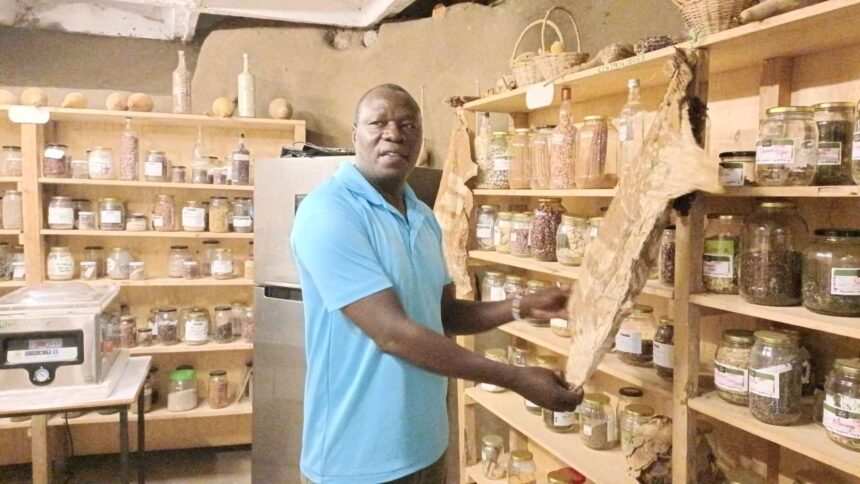
Daniel Wanjama, coordinator Seed Savers Network seed bank, displays indigenous and traditional seed varieties preserved in jars as part of efforts to conserve crop diversity and safeguard local seed resources. Photo Credit I Christine Ochogo
SHARE

By Christine Ochogo | christawine@gmail.com

The African Union Development Agency-NEPAD (AUDA-NEPAD) is pushing for the recognition of farmer-managed seed systems in national policies and the establishment of regional seedbanks across Africa, saying they are vital for achieving food security and agricultural biodiversity on the continent.

Mrs Estherine Lisinge-Fotabong, Director, Agriculture, Food Security and Environmental Sustainability, AUDA-NEPAD, said last week that farmer-managed systems still supply most of the seed smallholders use, yet national policies too often are silent on the needs of this vital system.

“Africa needs formal and farmer-managed seed systems that work alongside and complement each other,” she said during the opening session of the 3rd Africa Seed and Biotechnology Program (ASBP) Assembly in Dar es Salaam, Tanzania last week.

Farmer-managed seed systems account for an estimated 80 per cent of seeds used across Africa.

Under these systems farmers select, save, exchange and replant seeds from one growing season to the next.

This enables them to maintain locally adapted crop varieties while reducing the cost of purchasing planting materials.

The four-day meeting last week brought together representatives of African Union member states, regional economic communities (RECs), research institutions, farmers’ organizations, private-sector actors, development partners, civil society and science media to strengthen continental coordination and accelerate implementation of the ASBP.

Discussions at the meeting focused, among other issues, on strengthening farmer-managed seed systems alongside commercial seed and biotechnology approaches to build resilient food systems across the continent.

The forum also developed a framework to recognise and support farmer-managed seed systems, which have often been overlooked in mainstream agricultural policies and described as informal, but remain essential to millions of small-scale farmers who depend on locally available seeds for their livelihoods and food production.

“The African Union recognises the farmer-managed seed systems as a complementary component to the formal sector and therefore we encourage member states to integrate it into national seed policies,” said Clement Adjorlolo, Head of Agriculture and Rural Transformation at AUDA-NEPAD.

Clement Adjorlolo, Head of Agriculture and Rural Transformation at AUDA-NEPAD fields questions from journalists on farmer-managed seed systems in Dar es Salaam last week. Photo Credit | Christine Ochogo

AUDA-NEPAD is the new secretariat of ASBP.

The programme‘s role is to coordinate the implementation of the key recommendations from last week’s ASBP General Assembly held in Dar es Salaam.

The ASBP technical working Groups, which are led by expert institutions in the seed sector from across Africa, refined their work plans for 2027-2028.

These plans include the implementation of the Africa Union Farmer Managed Seed Systems Policy Framework, strengthening national seed quality assurance systems, adopting guidelines for genome editing, and the establishment of five regional seed banks across the continent, among many other interventions.

According to the Food and Agriculture Organization (FAO), farmer-managed seed systems are central to maintaining agricultural biodiversity and building climate-resilient and equitable food systems, making them important in the fight against hunger.

For their part, the proposed seed banks will serve as gene banks, preserving valuable plant genetic resources for future generations while providing farmers with access to seeds that can withstand changing climatic conditions.

According to Daniel Wanjama, the Seed Savers Network Coordinator, lack of farmer-managed systems policies has seen Kenya lose 30 per cent of its indigenous seed and plant varieties in the past 20 years.

“We work with more than 96,500 farmers in 121 community seed banks under our network, spread across 15 counties in Kenya. We have conserved more than 3,000 seed varieties, 188 being local crop varieties. We have, however, documented 89 lost varieties,” said Mr Wanjama.

Beatrice Wangoi, a small-scale farmer in Gilgil, Nakuru County, doubles up as the manager of Belakom Organic Farmers community seed bank.
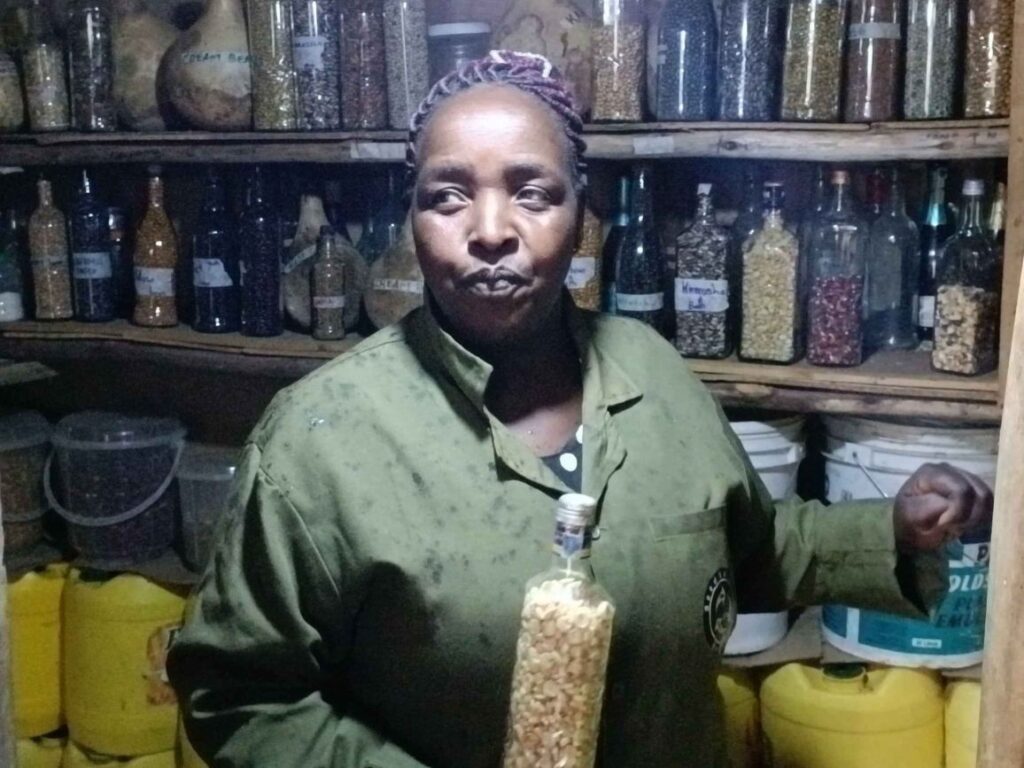
Beatrice Wangoi, a small-scale farmer and manager of the Belakom Seed Bank in Gilgil, Nakuru County, displays a bottle containing preserved seed as part of efforts to conserve indigenous and traditional crop varieties. Photo Credit | Christine Ochogo

With a membership of 17 members the farmers select, clean, dry, multiply, and store local and traditional seed varieties (including cereals, legumes, and indigenous crops) to reduce reliance on commercial seeds.

“We do not want to lose our indigenous seeds, which have sustained us for generations. That is why we established our own seed bank after being training from the Seed Savers Network Community Seed Bank, of which we are members,” said Ms Wangoi.
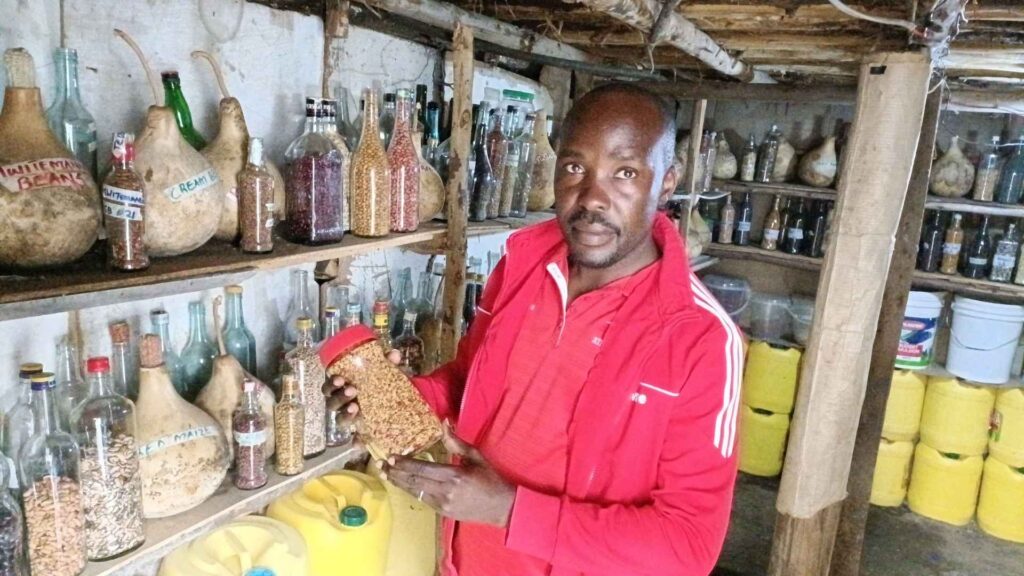
Thomas Osolo, a visitor at the Belakom Seed Bank on an educational tour to learn about community seed banks. Photo Credit I Christine Ochogo

A MESHA Features Production 2026

You Might Also Like

Kenya: Empowering women in the agrifood systems in Makueni County
Race to save Narok South’s remaining wetlands and tame climate risks – Copy
How a university Student’s study is saving endangered African wild dogs
Striga Smart Sorghum Project Launched
Mtopanga: Breathing New Life to a ‘Dead’ River
TAGGED:Africa food securityAfrica Seed and Biotechnology ProgramAfrican agricultureagricultural biodiversityagricultural policy Africaagricultural resilienceASBPAUDA-NEPADBeatrice WangoiClement AdjorloloClimate Adaptationclimate-resilient agriculturecommunity seed bankscrop genetic diversityDaniel WanjamaEstherine Lisinge-FotabongFAOfarmer managed seed systemsfood sovereigntyindigenous cropsindigenous seedsKenya community seed banksnational seed policiesplant genetic resourcesregional seed banksseed banks Africaseed conservationseed exchangeSeed Savers Networkseed savingseed securitySmallholder Farmerssustainable food systemsTanzania agriculturetraditional seed varieties

Sign Up For Daily Newsletter

Be keep up! Get the latest breaking news delivered straight to your inbox.

By signing up, you agree to our Terms of Use and acknowledge the data practices in our Privacy Policy. You may unsubscribe at any time.
Share This Article
Facebook Twitter Whatsapp Whatsapp LinkedIn Email Copy Link Print
What do you think?
Love0
Sad0
Happy0
Sleepy0
Angry0
Dead0
Wink0
Previous Article Special Sayansi Magazine edition puts spotlight on women transforming agriculture
//

We are the number one science, health and agriculture journalists network in Africa accessed by over 20 million users.

Quick Link

  • About
  • Sayansi Magazine
  • Accredited Members
  • Mesha Audio
  • My Bookmarks

Top Categories

  • Climate Change
  • Health
  • Biodiversity
  • Agriculture
  • Environment

Sign Up for Our Newsletter

Subscribe to our newsletter to get our newest articles instantly!

MESHAMESHA
Follow US
© 2024 MESHA. All Rights Reserved.
Join Us!
Subscribe to our newsletter and never miss our latest news, podcasts etc..

Zero spam, Unsubscribe at any time.
Welcome Back!

Sign in to your account

Username or Email Address
Password

Lost your password?