

By Ademola Ajagbe
Climate finance is on trial this November in Belém, Brazil. World leaders and climate advocates attending the 30th United Nations Climate Change Conference of the Parties (COP30) must decide whether the long-discussed plan for funding efforts against climate change can finally deliver for the people and places that need it most.
The urgency is clear, climate finance must be availed, more easily, predictably, and equitably to frontline communities. This includes nature-rich regions like Africa that are leading the way in reducing climate change and adapting to its effects.
Across Africa, families are continually rebuilding after floods that are more frequent and severe. Farmers watch their once-fertile land turn to dust, and coastal communities move further inland each year. The continent, which contributes less than four percent of global carbon dioxide emissions, continues to shoulder the heaviest climate burden. According to the World Meteorological Organization, Africa is warming faster than the global average, and estimates that countries are losing up to five percent of GDP with many forced to prioritize response to extreme conditions.
On the other hand, Africa’s ecosystems, its forests, coasts, and grasslands form a significant part of the world’s climate insurance, absorbing billions of tonnes of carbon every year. Yet the continent receives less than 10 percent of global climate finance. That imbalance must end.
A fairer system for people and planet
A decade after the Paris Agreement that required developing counties to be financed to mitigate and adapt to effects of climate change, the divide between ambition and action remains wide. Africans have voiced their expectation of the next global climate finance goal expected to reach 1.3 trillion dollars a year by 2035. Funds must reach local actors, prioritize adaptation and support community-driven resilience.
This call is consistent with our experience at The Nature Conservancy (TNC) working across Africa. We have seen that finance works when it strengthens systems that people rely on like food, water, energy and ecosystems. In Gabon, one of the few carbon-negative countries in the world with 88 percent forest cover, the government is advancing an innovative model to secure long-term investment in forests, oceans, and communities while creating jobs, supporting fisheries, and funding education and health services. The Project Finance for Permanence (PFP) model blends public, private, and philanthropic capital into a national framework that guarantees accountability and measurable results.
Along Kenya’s coast, mangroves that store up to five times more carbon per hectare than terrestrial forests, are being restored in community-led Blue Carbon initiatives supported by TNC. Verified carbon credits from this, fund women’s cooperatives, youth enterprises and coastal protection. Here, finance is not abstract; it is a livelihood mechanism that keeps both nature and communities standing.
These examples prove that finance works when it is long-term, inclusive and locally driven.
Nature as infrastructure
Nature is not a cost item in a budget, but the foundation of every economy. Forests regulate rainfall. Wetlands filter water and shield cities from floods. Grasslands and soils store carbon and sustain agriculture.
That these nature-based solutions only receive a morsel of total climate finance is not just a funding gap, but a policy failure. Scientific evidence shows that conserving and restoring ecosystems could deliver more than one-third of the cost-effective climate mitigation needed by 2030 while supporting food security and biodiversity. This makes Africa’s forests, rivers, and coastlines essential infrastructure. Investing in their protection is one of the fastest, most cost-effective ways to strengthen resilience and drive inclusive growth.
Tapping into Africa’s renewable energy sources, from the wind corridors of Namibia to the solar plains of the Sahel, can unlock prosperity for millions. However, this transition must be just, protecting workers, empowering women and youth, and leaving no community behind.
The Africa Civil Society Organizations Position Paper calls for a Belém Action Mechanism on Just Transition that prioritizes local ownership, skills, and social protection. Public and private finance must reduce debt pressures and build industries that sustain communities rather than displace them. When communities lead, solutions last. Inclusive partnerships rooted in science and respect produce environmental and social dividends.
The path from ambition to permanence
Africa does not seek charity, but fairness and partnership. The continent’s ecosystems stabilize the planet’s climate; investing in them is a shared responsibility.
At COP30, global leaders have a chance to rebuild trust. The new climate finance goal must move beyond pledges to create systems that last — finance that is transparent, equitable, and designed to endure. If we act decisively, COP30 could be remembered as the turning point when the world moved from promises to long view and recognized Africa not as a victim of climate change but as a vital partner in solving it.
Without nature, there is no economy. Without equity, there is no stability. And without Africa, there can be no climate solution.
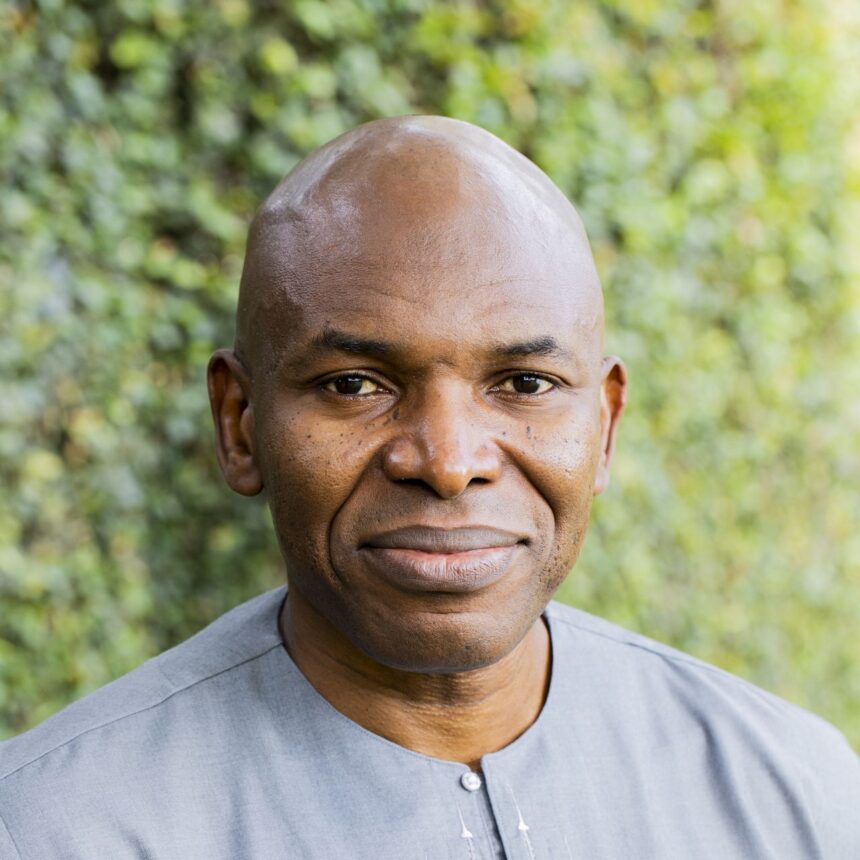
Ademola Ajagbe is the Regional Managing Director for Africa at The Nature Conservancy (TNC). He leads teams working across 17 countries to advance durable climate finance, nature-based solutions and inclusive development.