

By Bernard Morara | morara@meshascience.org
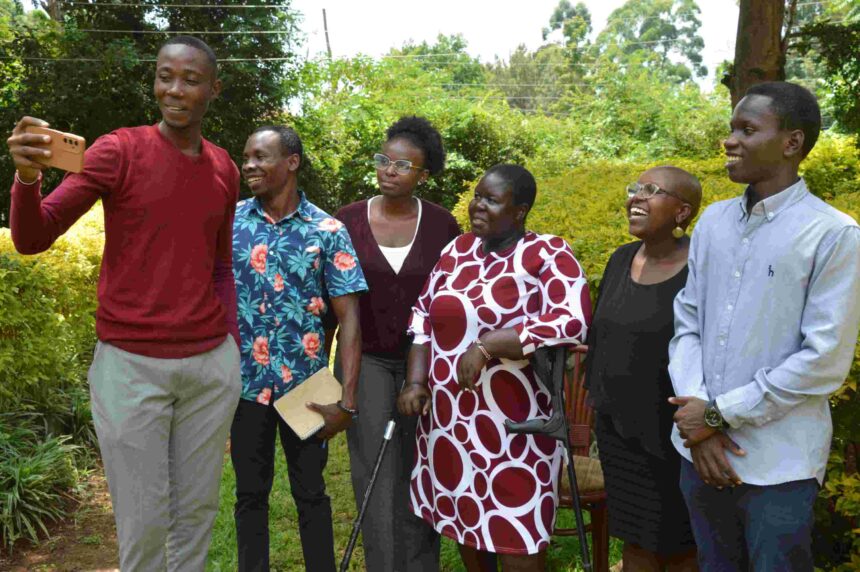
Maseno University journalism students on February 20, 2026 gained skills on gender and climate reporting from experts and practitioners.
Through a Science Media Cafe organised by Media for Environment, Science, Health and Agriculture was hosted by Maseno University Department of Communication and Media Technology.
Kisumu County Senior Meteorologist, Chris Mutai said climate change has led to floods, severe drought and heat waves, increasing incidences of diseases such as malaria, typhoid and cholera outbreaks.
Mutai highlighted measures in combating adverse climate change and on action plans focusing on adaptation, mitigation and access to clean energy.
Programme Officer, Shack Dwellers International Kenya, Lizian Onyango mentored students on the intersection of gender equity, diversity and social inclusion with climate change for effective and just climate action.

She explained how marginalised groups are disproportionately affected by climate change while highlighting approaches for inclusive policies that drive equitable climate solutions.
Ms Onyango reinforced the role of journalists in climate change as being to highlight unequal climate impacts, amplify marginalized voices, tell human stories behind data and ask boldly who benefits from climate policies and funding.
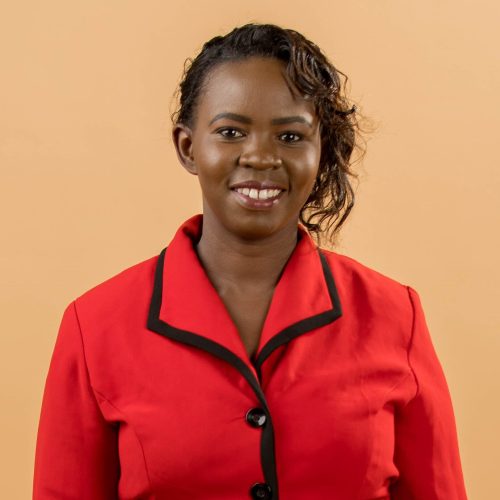
The Director, Hope and Disability Organisation, Ms Caroline Agwanda, stated that Persons with disabilities experienced layered vulnerabilities occasioned by climate change.
“Climate change magnify existing inequalities despite robust international, regional and national provisions protecting persons with disabilities,” she noted.
Contributing Editor Mongabay East Africa, Ms Lynet Otieno said climate change disproportionately affects women.
“By 2050, climate change is estimated to push up to 158 million more women and girls into poverty (16 million more than the total number of men and boys) according to the Gender Snapshot 2024 report,” Ms Otieno said.
Ms Otieno shared useful hints with the journalism students on the various angles of pitching stories for national and international outlets.
The workshop followed a memorandum of understanding signed between MESHA and Maseno University in 2025 aimed at equipping journalism students with skills to report on science-related issues with clarity, accuracy, and creativity.
“Our collaboration with MESHA is about empowering the next generation of science storytellers,” said Maseno University Vice-Chancellor Prof. Julius Nyabundi at the signing of the MoU last March.
“By integrating practical journalism training into academic learning, we are giving our students a platform to amplify science and technology in a way that truly matters to society.” said Prof Nyabundi.
“We are excited to walk this journey with Maseno University. There is a growing need for accurate and engaging science reporting in Kenya, especially on issues that affect health, the environment, and agriculture. Together, we can help shape a more informed society,” said Ms Nduta Waweru, the MESHA Vice-Chairperson.