

How climate change is disrupting Lake Victoria’s fisheries
By Cece Siago | siagocece1@gmail.com
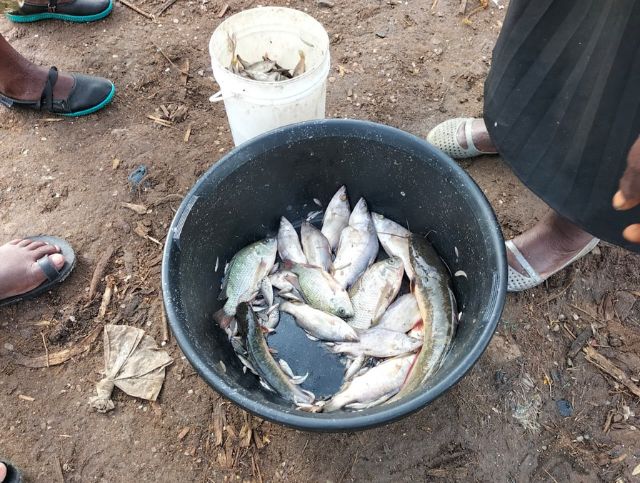
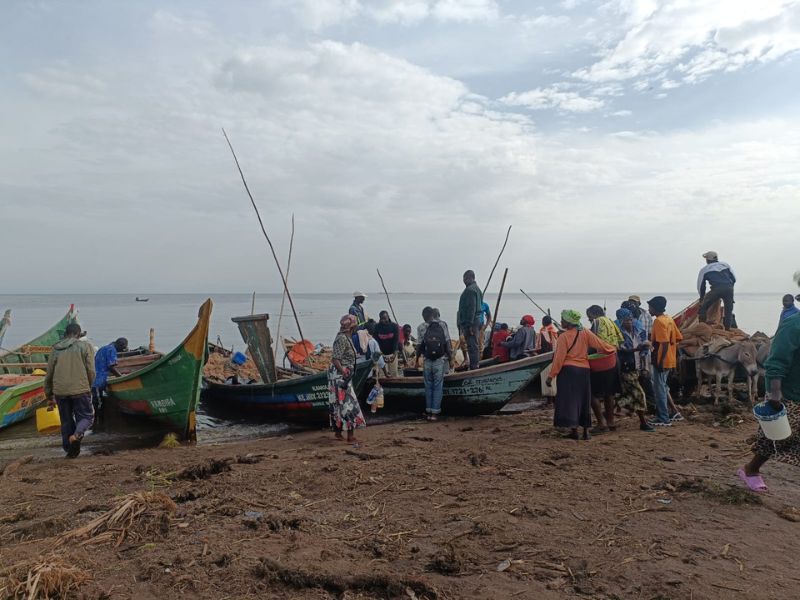
The sun has risen in Kamser Nyagowa Village’s Kamolo Beach in Homa Bay County, western Kenya. Women crowd around newly landed boats on the shores of Lake Victoria, eager to secure a share of the morning’s catch before it all ends up in the hands of transporters and other traders.
Each one of them tries to bargain for a better price and weighing the fish which they will buy, clean its skin, before they sell in the market later in the day.
For many years, Lake Victoria has supported more than 200,000 fishers, with an estimated 35 million people dependent directly or indirectly on it for a living, based on FAO’s Nile Perch Fishery Management Plan (2015–2019).
According to the Kenya National Bureau of Statistics in 2022, the Lake Victoria fisheries contributes more than Ksh100 billion to the GDP in terms of food, income, employment and foreign exchange earnings.
Behind the daily scramble for fish, experts in the blue economy field say the lake is changing.
Rising temperatures, shifting rainfall patterns and extreme weather events are increasingly affecting fish production and the livelihoods that depend on it.
A recent study by WorldFish researchers examined how climate change is affecting fishing communities in Homa Bay and Migori counties through a gender lens.
Dr Rahma Adam and her colleagues Dorothy Amwata, Kevin Ouko, Philip Osano, and Nicholas Ndiema found that climate change is worsening inequalities in Lake Victoria’s fishing communities, with women, youth, and persons with disabilities bearing a disproportionate share of the impacts.
The study combined household surveys, interviews and meteorological data spanning more than four decades to understand how changing rainfall and temperatures are reshaping livelihoods around Lake Victoria.
Presenting the findings during a recent MESHA Science Media Cafe, Rahma Adam, a researcher with WorldFish, said climate change is increasingly threatening the lake’s fisheries and the communities that depend on them.
“Most fishing boats and gear are owned by men, and fishing activities are dominated by men, mostly youth. Due to the decline in catches, there is an increase in fish prices, which makes it difficult for women—who mainly earn from postharvest activities—to purchase fish from the fishermen,” she said during the virtual engagement.
Beyond declining catches, fishing communities grapple with rising lake levels and recurrent flooding. In parts of Migori County, homes and trees have remained submerged since 2021, disrupting livelihoods and forcing families to adapt to changing shorelines according to Dr Rahma’s findings.
Besides women, youth have also been highly affected. Despite forming the largest proportion of the population in the communities, inadequate job opportunities and poor income from fishing has made them resort to drug and substance abuse. This has affected availability of labour.
The research also found that persons with disabilities face limited opportunities within the fisheries sector, leaving them with fewer options as climate-related pressures on livelihoods intensify.
To address some of the interventions, World Fish, in collaboration with CGIAR have partnered to provide women with gender inclusive post-harvest technology accessing, fish smoking kilns, solar freezers and fish display boxes.
Kenya’s commitment under the African Union’s Agenda 2063 which calls for inclusive growth and harnessing the potential of women and youth, echo the concerns raised in the study.
While researchers are documenting how climate change is disrupting fisheries and deepening inequalities around Lake Victoria, innovators are exploring alternative ways of producing fish outside the lake itself.
Nearly 400 kilometres away to the East in Rongai, Kajiado County, Kenyan entrepreneur Jack Oyugi believes technology can help address some of the challenges threatening communities that depend on fisheries.
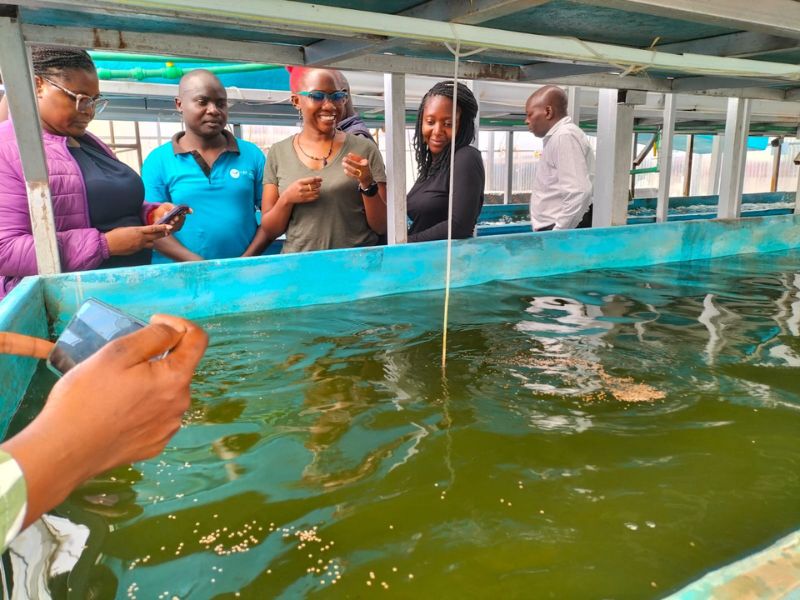
Oyugi is the co-founder of Vertical Lake, an innovative aquaculture system that raises fish in a controlled environment protected from many of the environmental pressures affecting natural water bodies.
Unlike fish in Lake Victoria, which are increasingly exposed to rising temperatures, pollution and declining fish stocks, fish at Vertical Lake are reared in stacked tanks where water quality, temperature and feeding are carefully managed.
“We keep fish in a controlled environment where we monitor their growth and protect them from many of the challenges affecting open-water fisheries,” said Oyugi during a recent visit by Kenyan editors organised by the Media for Environment, Science, Health and Agriculture (MESHA).
The system relies on renewable energy and harvested rainwater, allowing fish production in a semi-arid region where any other form of aquaculture would be difficult. Water is continuously recycled, reducing wastage. The model also eliminates the risk of contamination from pollutants.
“Because the water is controlled, we maintain a clean production process while reducing environmental impacts associated with fish farming,” said Oyugi to the editors.
Beyond fish production, Vertical Lake has expanded into additional value chains. Fish are processed into fillets for human consumption, while by-products are converted into collagen-based biomaterials for medical use and bio-fertilizers for regenerative agriculture.
According to Oyugi, these additional value chains create opportunities for women and youth beyond the traditional fish trade.
“Women are involved in sales, fertilizer distribution and engagement with farmers. The model creates several entry points for income generation beyond selling fish,” he said.
Though it might not replace the extensive fisheries in Lake Victoria, the Vertical Lake demonstrates climate-smart aquaculture’s role in helping communities adapt to climate change.
The innovation is backed by the United Nations Sustainable Development Goal (SDG) 13, on climate action, as a climate smart aquaculture project that can be applied in other areas too. Back in Kamser Nyagowa’s Kamolo Beach, women’s scramble for fish continues but with hopes that more innovations would reach them to protect them from the harsh climate effects affecting their livelihood.