

By Milliam Murigi | milliammurigi@gmail.com
For generations, keeping livestock has largely depended on two things; having enough land to produce fodder or having enough money to keep buying it.
For women farmers, both can be difficult to secure. Many do not own land in their own right, while control over household income and agricultural finances often remains with men.
These are some of the reasons the Food and Agriculture Organisation of the United Nations (FAO) has dedicated 2026 as the International Year of the Woman Farmer.
The initiative seeks to recognise women’s contribution to agri-food systems and draw attention to the barriers that continue to limit their access to land, finances, technology and other productive resources.
“I have been a fish and poultry farmer for more than five years, and the cost of commercial feeds almost made me close the business because I was relying on my father for most of the finances,” says Agnes Gathondu from Mahiga Ward, Othaya Constituency, in Kenya’s Nyeri County.
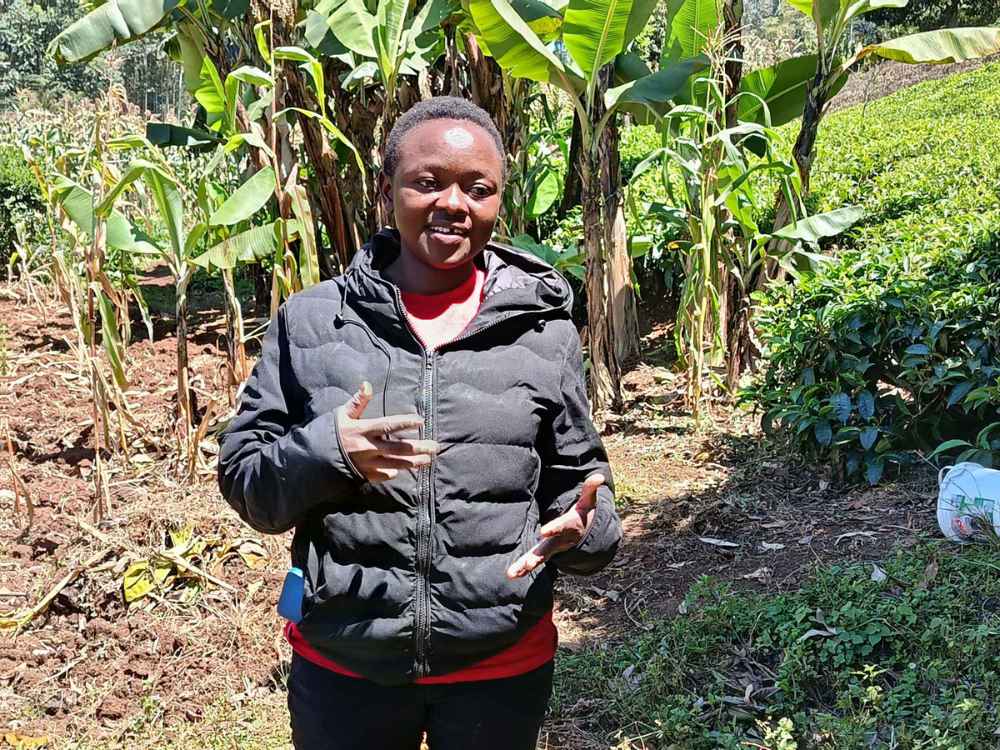
However, what began as a response to expensive commercial feed now gives her means to keep her fish and poultry enterprise running.
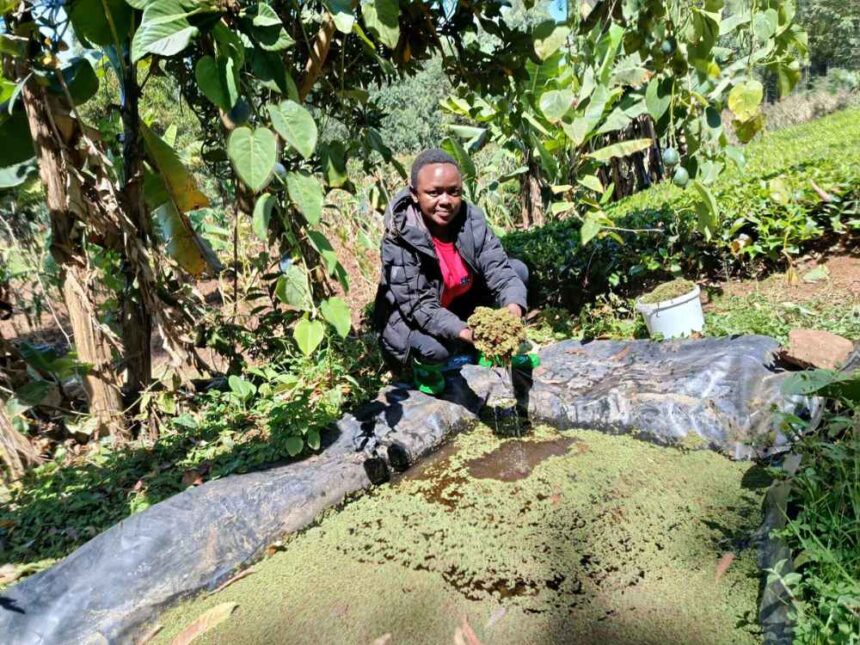
Today, Gathondu is into Azolla farming. She uses the aquatic plant to supplement commercial feed for her fish and poultry, helping reduce the amount of feed she buys and keep her production costs under control.
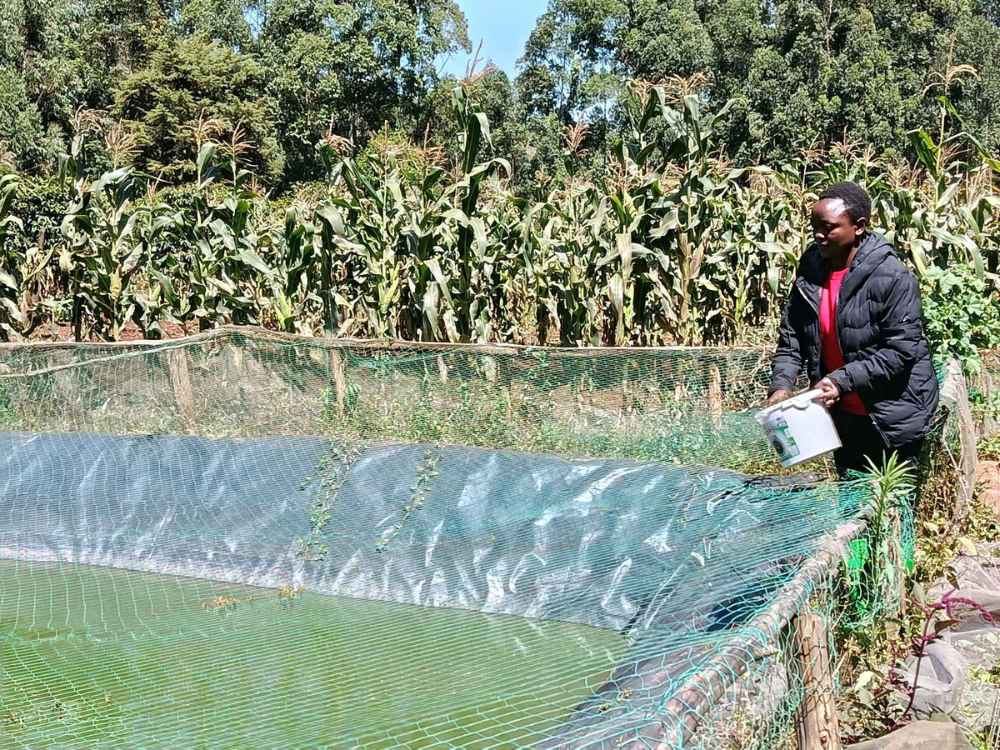
“I started Azolla farming in 2021 after feed prices hiked due to scarcity. Since then, I no longer rely on my father because the business is profitable,” she says.
Azolla is a small, fast-growing aquatic plant that floats on water. It is rich in protein and can be used as supplementary feed for livestock, fish and poultry.
Gathondu’s journey into this new kind of farming was not smooth. Coming from a culture where girls do not traditionally inherit land from their parents, she had to ask her father for a piece of land to start her enterprise. Today, she grows Azolla in three small ponds occupying just 5 by 10 metres of the farm.
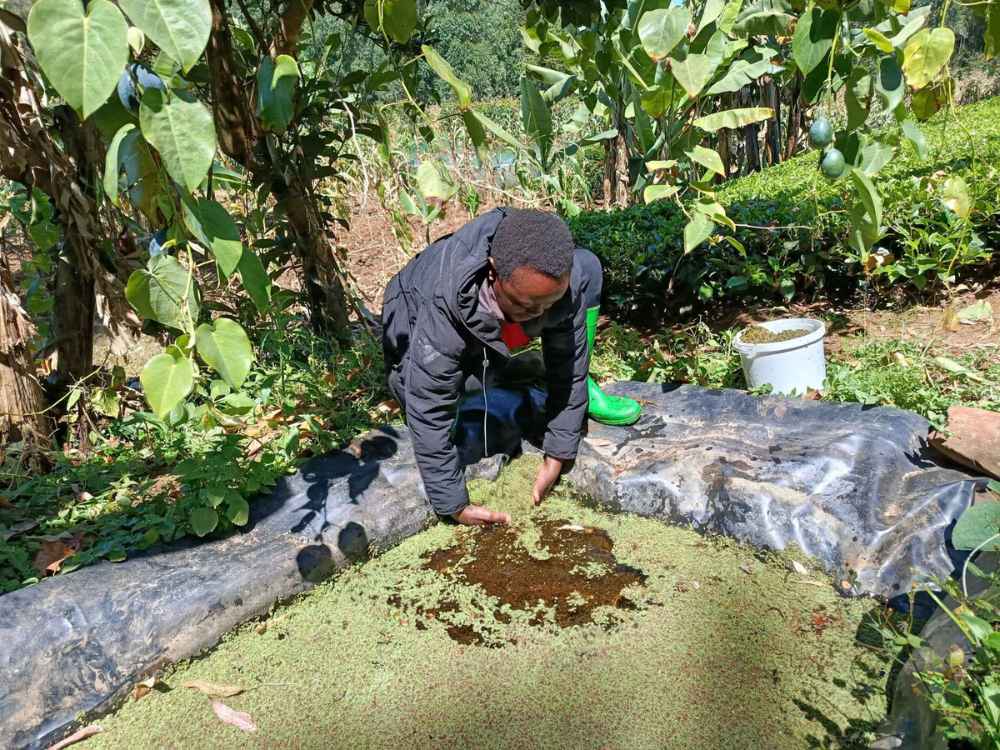
Gathondu says a 25-kilogramme bag of commercial fish feed costs about Sh4,700 ($36.23) and lasts roughly eight days. By alternating Azolla with commercial feed, she estimates that she has reduced her production costs by about 40 per cent.
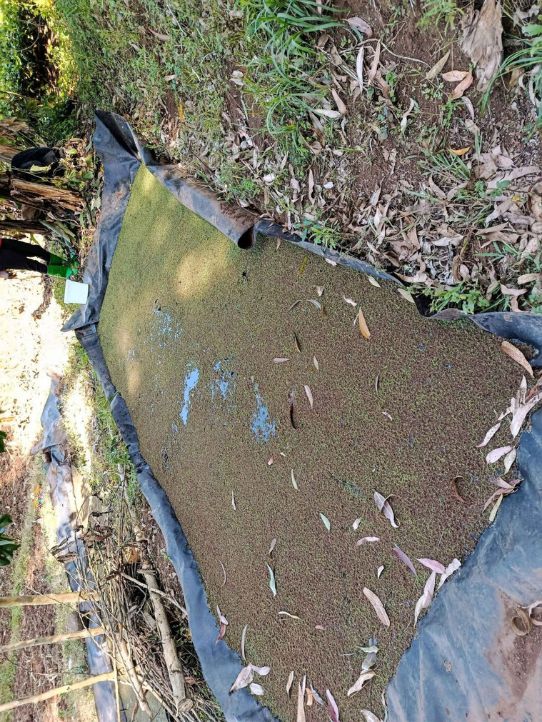
“The ponds have also become a business. I sell Azolla planting material at Sh1,000 ($7.71) per kilogramme. I have so far introduced 120 women to the technology,” she says.
Gathondu’s experience illustrates why the International Year of the Woman Farmer is focusing not only on recognizing women’s contribution to agriculture, but also on the resources they need to meaningfully participate in it.
FAO recognises that women are not only farmers, but also processors, traders, scientists, workers and rural entrepreneurs whose contribution runs across the agri-food system.
Winnie Wambui Githinji is another woman challenging the traditional barriers to livestock farming, and turning an unlikely resource into animal feed.
She focuses on Black Soldier Fly (BSF) farming, producing protein-rich larvae that can be processed into feed for poultry, pigs and fish, offering farmers an alternative to conventional commercial feeds. Wet or live BSF larvae can also be fed directly to the animals.
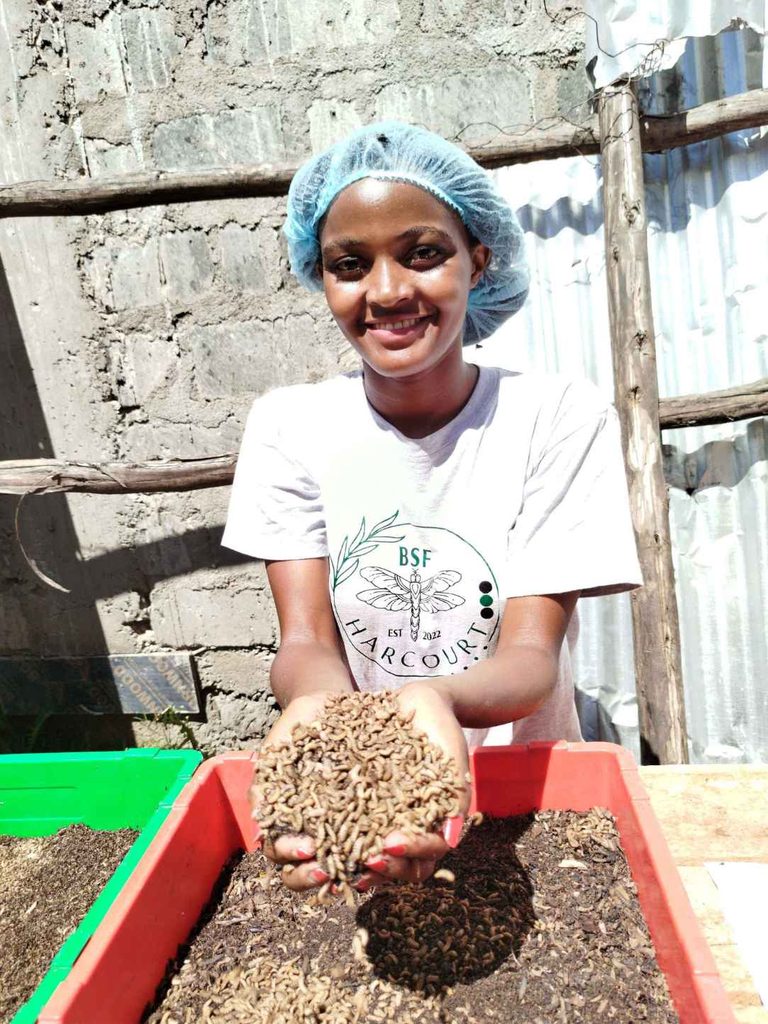
In its larval stage, around 21 days into its life cycle, it has a crude protein content of at least 45 per cent. This makes the larvae attractive to livestock and poultry feed manufacturers, who use them as alternative protein source to ingredients such as silver cyprinid (omena) and soya beans.
Githinji says she asked herself how waste could become valuable agricultural resource. “I discovered that organic waste could be used to rear Black Soldier Fly larvae, turning discarded material into a source of protein for livestock while leaving behind a residue that can be used to make organic fertilizer,” she said.
But for her, BSF farming goes beyond producing an alternative feed. It is a business opportunity that allows women to participate in livestock production without needing large tracts of land or substantial capital.
Githinji says the fact that she did not need large tracts of land for the BSF farming was a big motivation. She started by leasing a small piece of land, where she constructed the greenhouse structure required for rearing the insects. She started small.
But technology, Githinji cautions, does not make the land problem disappear. “As an enterprise grows, land and infrastructure become increasingly important for sorting, processing, waste treatment and other forms of value addition,” she says.
Technology according to her can reduce some barriers, but there is still a need for systems that allow women to own, access and control productive assets.
“Alternative feeds may lower the entry barrier, but they do not automatically remove the structural barriers that have historically limited women’s participation in agriculture,” says Githinji.
That distinction is increasingly reflected in global agricultural research. Through its gender equality and inclusion accelerator, CGIAR is seeking to move the conversation around women in agriculture beyond simply counting how many receive or adopt a new technology.
Its approach starts with women’s agency, recognising women as people who should have a voice in the decisions affecting their lives, livelihoods and agricultural systems.
The accelerator focuses on generating evidence about what works for women farmers, amplifying women’s voices, showcasing gender-responsive innovations and connecting research evidence to policy and investment.
Its 2026 theme, “Empowered women. Investable innovations. Transforming agri-food systems”, captures a central question facing agricultural technologies such as Azolla and BSF: Can innovations become pathways to greater economic opportunity and decision-making for women, rather than simply giving them another technology to use?
“If we tell women, ‘Here is another technology. Now rear insects, process them and produce feed,’ without considering the other responsibilities they already carry, then we are simply adding another layer of work,” Githinji adds.
This is where CGIAR’s emphasis on gender-responsive innovation applies. Its approach recognises that technical innovations do not operate in isolation. The social and institutional conditions surrounding a technology can determine whether women are able to access it, use it and benefit from it.
For a woman producing BSF, for example, accessing the insects and technical knowledge may not be enough. She may also need land, equipment, finance, reliable waste supplies, markets, transport and control over the income generated by the enterprise.
CGIAR’s work also places emphasis on making innovations “investable”, not simply developing technologies but creating conditions in which solutions can attract resources, scale and deliver benefits to women.
Technical knowledge is another hurdle. Learning how to rear BSF, for example, is only the beginning. A viable business also needs consistent waste supplies, quality control, processing, regulatory compliance, customers and cash-flow management.
CGIAR’s approach also calls for evidence to be connected to policy. This matters because individual women may innovate on their farms, but wider change depends on whether agricultural policies, financial systems, markets and institutions respond to the realities they face.
According to Githinji, women should not be viewed merely as beneficiaries of agricultural technologies, but also as people designing solutions, running businesses and making decisions about the future of agriculture.
“For me, recognising women farmers means recognising women as producers, innovators, entrepreneurs and decision-makers in the food system,” she says.
That vision mirrors the broader objective of the International Year of the Woman Farmer: to move beyond celebrating women’s contribution and address the barriers that prevent them from benefiting fully from the agri-food systems they help sustain.
A MESHA features production 2026
This article first appeared on the Star Newspaper on Oct 2, 2026.