

By Godfrey Ombogo | gombogo@rocketmail.com
MESHA has successfully completed the Voices for Just Climate Action (VCA) project, a six-month engagement focused on amplifying the voices of marginalised groups and strengthening journalists’ capacity to tell impactful, solution-oriented stories about climate change and climate action. The project was funded by WWF-Kenya.
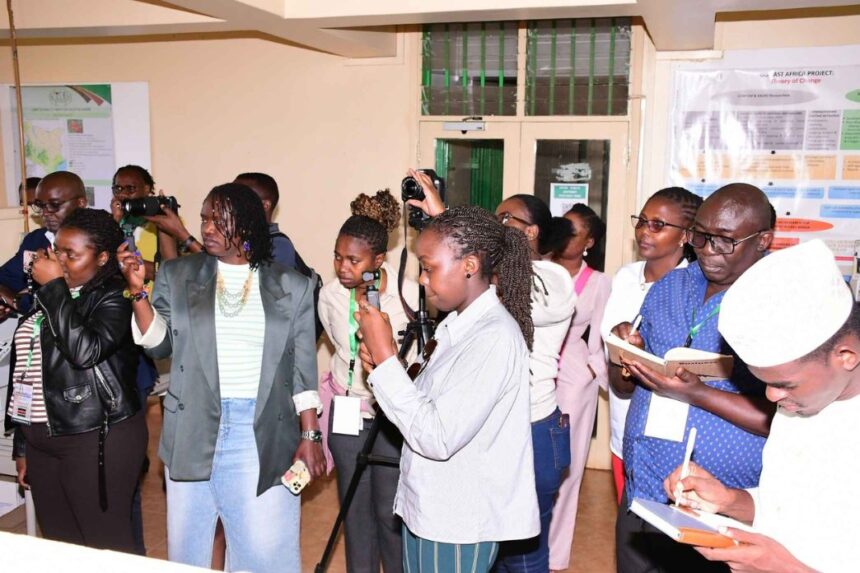
The project included a science media café attended by 21 participants, including journalists, editors, youth, people with disability, WWF-Kenya and representatives of VCA implementing partners. This was followed by training for journalists on solutions journalism, impactful climate storytelling and podcasting.
Partner organisations such as the Kenya Climate Change Working Group were trained on applying their voices and participating effectively in matters of science, as this contributes to food security and water security, which align with social justice and economic rights as guaranteed under Chapter 4 of the Constitution of Kenya. Beyond building participants’ capacity, the engagements also aimed at amplifying their voices to demand accountability from local leaders.
“The reason we trained the partners and the journalists was to ensure serious fact-checking and accurate reporting, which empowers members of the public to know their civic rights, contributing to social justice, economic and political rights,” said Daniel Aghan, MESHA CEO.
Mr Aghan warned that disinformation and misinformation have become common among the political class, thereby misleading the public on critical matters such as climate justice and human rights. The organisation has been tackling misinformation and disinformation since 2021, during the Covid-19 pandemic.
MESHA subsequently awarded 11 story grants to 10 journalists, enabling them to produce in-depth stories highlighting climate impacts, community-led solutions and the experiences of vulnerable groups. By the end of the project, all grant-supported stories had been published or broadcast through various media platforms, including The Standard, Daily Nation, Citizen TV, The Star and Radio Rahma. The stories were also published in Sayansi Magazine, creating an additional platform for wider dissemination and archiving.
Overall, the project strengthened the capacity of journalists and marginalised groups to amplify their voices, increased media coverage of locally led climate solutions, and connected journalists with organisations implementing climate action at community level.
The project aligns with MESHA’s mission to empower the populace to demand their rights, including access to scientific services such as a clean environment, water, food and housing, by being informed.
“People only demand their rights when they are empowered to understand such issues,” added Mr Aghan.