


By using this site, you agree to the Privacy Policy and Terms of Use.
Accept
MESHAMESHAMESHA
  • Home
  • Who We Are
    • About
    • Management
    • Strategic Plan, 2023-2027
  • Sayansi Magazine
  • Media
    • Audio
    • Videos
    • Photos
  • Membership
    • Accredited Members
    • How to Join MESHA
  • IFAJ Congress
    • IFAJ 2025 Congress Website
    • IFAJ 2025 Congress Bulletin
Search
Categories
  • Climate Change
  • Health
  • Biodiversity
  • Agriculture
  • Environment
© 2024 MESHA. All Rights Reserved.
Reading: Adoption of agricultural drones by farmers on the rise in the US
Share
Sign In
Notification Show More
Font ResizerAa
MESHAMESHA
Font ResizerAa
  • Home
  • Who We Are
  • Sayansi Magazine
  • Media
  • Membership
  • IFAJ Congress
Search
  • Home
  • Who We Are
    • About
    • Management
    • Strategic Plan, 2023-2027
  • Sayansi Magazine
  • Media
    • Audio
    • Videos
    • Photos
  • Membership
    • Accredited Members
    • How to Join MESHA
  • IFAJ Congress
    • IFAJ 2025 Congress Website
    • IFAJ 2025 Congress Bulletin
Have an existing account? Sign In
Follow US
© 2024 Mesha. All Rights Reserved.
MESHA > Blog > Agriculture > Adoption of agricultural drones by farmers on the rise in the US
AgricultureInnovation & Research

Adoption of agricultural drones by farmers on the rise in the US

Mesha
Mesha Published 26 January 2026
Share
4 Min Read
A recent study shows that American farmers are increasingly investing and showing interest in agricultural drone technology and services.
SHARE

By Bernard Morara | morara@meshascience.org

Farmers in America are increasingly investing and showing interest in agricultural drone technology and services, new research has confirmed.

This trend observed in the last couple of years is captured in a research paper titled, “Farmer Perceptions of Agricultural Drones,” sponsored by SweetWater Technologies, Agri Spray Drones, the National Corn Growers Association and Syngenta.

This study spotlights the growing trend of American farmers adopting the use of agricultural drone technology and equipment in crop production.
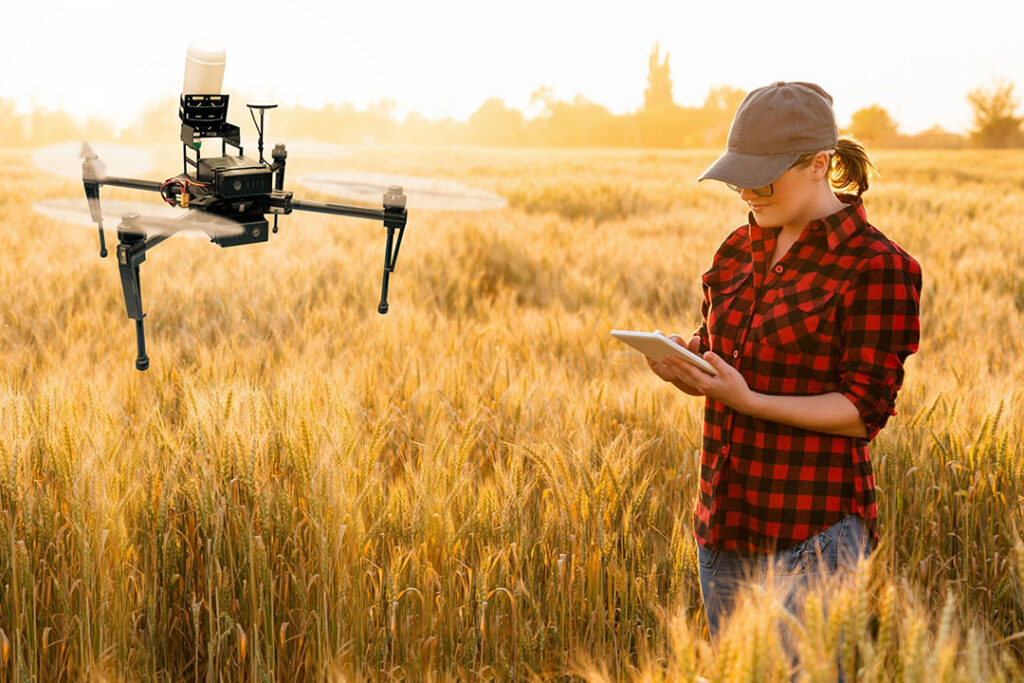
The most common drone type among farmers is the multi-rotor drones at 89%. They carry out precision tasks like targeted spraying (pesticides, fertilizers, seeds), crop monitoring with advanced sensors (thermal, multispectral), and field mapping.

The project, jointly deployed with CropLife America, The Fertilizer Institute, the Agricultural Retailers Association and D.C. Legislative and Regulatory Services and conducted by Stratovation Group, notes that farmers are fast embracing drone technology and services in their fields.

“Agriculture is in a pivotal position where emerging technologies like drones are becoming tangible tools for production efficiency,” said Cam Camfield, CEO and founder of Stratovation Group, a leading agriculturally focused research and communications firm. “Farmers told us that drones or drone services are becoming a core piece of their operational infrastructure,” he added.

The study explored a wide range of topics, including farmer perceptions of drone technology, barriers to adoption, brand preferences, future purchasing plans and specific technical concerns shaping decision making at the field level.

Study results paint an encouraging picture of the drive to increase the utility of new agricultural innovations. Of the farmers currently using drones, the most common drone type by far was the multi-rotor drones at 89%.

Findings from the survey show a high degree of market uptake for the agricultural drone sector. A value perception poll done among drone owners indicates that they largely have a very positive perception of drones, with almost seven in every ten or 67% expressing positive impressions and none having negative perceptions.

In developed countries, drones offer many benefits, including real-time monitoring of crop health, efficient resource management and improved yield prediction. However, adoption and utilisation of drones remain limited in developing economies.

In Africa, drones are used in sectors such as agriculture, healthcare and security with countries like Rwanda, Ghana and Kenya taking the lead. Key applications include farming to boost yields, delivery of medical supplies especially in remote areas and surveillance, though challenges like high costs, regulatory barriers and limited technical expertise remain.

In Kenya, the World Bank piloted the application drones to farmers in Kitui, Machakos and Narok in a bid to help farmers improve on their farm management practices and the outcomes have been very impactful.

According to the Kenya Institute for Public Policy Research and Analysis (2024), drones contribute to increased efficiency in various aspects of the farming process, including crop monitoring, planting, livestock management, crop spraying, and irrigation mapping.

Drones have distinct features which make them uniquely applicable in agriculture, particularly in assisting farmers in maximizing their harvest. They achieve this by detecting issues early on and managing crops through specific cameras designed to identify pests and water shortages.


You Might Also Like

Nairobi to the world: Future of global agriculture to be discussed here this October

“Unlocking agricultural potential in the cradle of humanity”: chronicle and assessment of the IFAJ 2025 Congress in Nairobi

Report: 16 African countries have launched gene editing projects to address agricultural challenges

Malawi seed sector amplify support for biotech

Are termites replacing worms as baits in fishing?

TAGGED:agri-tech adoptionagricultural dronesagricultural innovationagricultural researchagricultural technology researchcrop monitoring technologydigital agriculturedrone services for farmersdrone spraying technologydrone technology in agriculturedrones in African agriculturefarm innovationfarm management toolsfarming technology trendsglobal agriculture technologyinnovation in farmingprecision agriculturescience and agriculturesmart farming technologytechnology adoption Africa

Sign Up For Daily Newsletter

Be keep up! Get the latest breaking news delivered straight to your inbox.

By signing up, you agree to our Terms of Use and acknowledge the data practices in our Privacy Policy. You may unsubscribe at any time.
Share This Article
Facebook Twitter Whatsapp Whatsapp LinkedIn Email Copy Link Print
What do you think?
Love0
Sad0
Happy0
Sleepy0
Angry0
Dead0
Wink0
Previous Article Africa’s leading science media association releases magazine covering gender and climate change
Next Article Six media groups adopt strategy to steer science journalism in Africa
Scaling science journalism at Maseno University
Climate Change|Environment Media|Journalism
MESHA 2025 Annual Report: Celebrating science journalism across Africa
Media|Journalism Reports
African researchers turn to edible insects to boost food security
Agriculture Climate Change|Environment
Africa’s jeopardy, climate, gender and the superbug crisis
Climate Change|Health Gender

Contact Info

Location
Oasis Apartments, Jogoo Road, 3rd Floor
Phone
+254 721 578517
+254 732 229 230
info@meshascience.org

Facebook

//

We are the number one science, health and agriculture journalists network in Africa accessed by over 20 million users.

Quick Link

  • About
  • Sayansi Magazine
  • Accredited Members
  • Mesha Audio
  • My Bookmarks

Top Categories

  • Climate Change
  • Health
  • Biodiversity
  • Agriculture
  • Environment

Sign Up for Our Newsletter

Subscribe to our newsletter to get our newest articles instantly!

MESHAMESHA
Follow US
© 2024 MESHA. All Rights Reserved.
Join Us!
Subscribe to our newsletter and never miss our latest news, podcasts etc..

Zero spam, Unsubscribe at any time.
Welcome Back!

Sign in to your account

Username or Email Address
Password

Lost your password?