

By Christine Ochogo | christawine@yahoo.com
“I was born into a family of farmers and at the tender age of 12 years, I began helping my father in our village farm. It was during this time that my passion for farming began to grow,” says Phylis Nduva, a fruit farmer from Makueni County, eastern Kenya.
The 72-year-old mother of seven, says she inherited good farming traits from her father who inspired her into being an organic farmer and since then her passion has persisted.
“When I got married, I continued farming since my husband had land and was supportive of my passion. He allowed me to choose crops to plant on the farm,” she told Sayansi.
Lady Luck smiled on her in 2002 upon planting fruit trees for commercialization when she got a bumper harvest. With support from her children who are also farmers, they formed a family company, ‘Kituasi Orchards’ named after their village in Makueni.
The proceeds from farming enabled me to educate my children who are now grown ups and together we are working to better our farm.
As a farmer who uses integrated pest management innovation for fruit pest and a cooperative leader, Phylis has empowered about 10,000 farmers through their fruit cooperative society in Makueni, eastern Kenya by training them on the innovation she learnt from International Centre of Insect Physiology and Ecology (icipe).
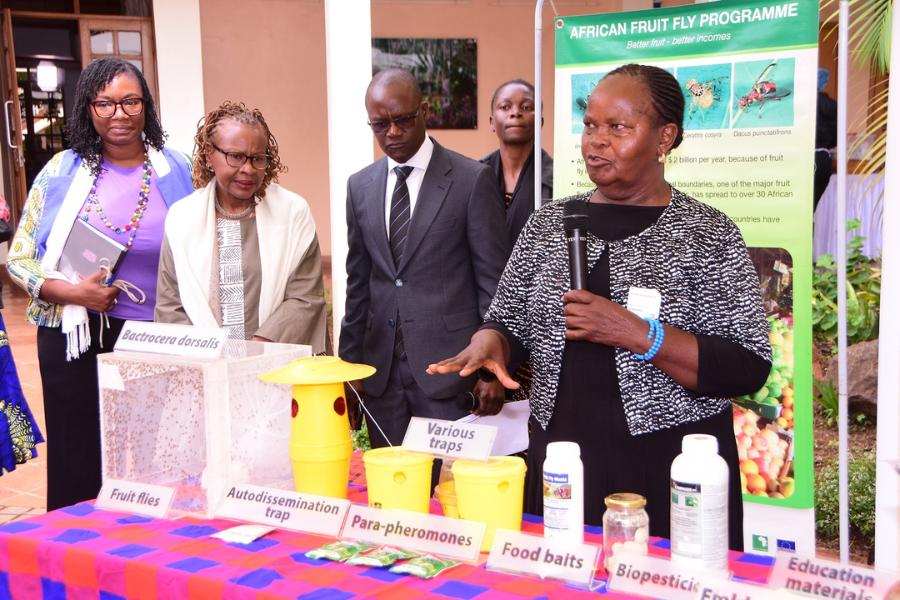
In Busia County, Western Kenya, Esther Nafula, a Black Soldier Fly farmer, cultivates vegetable integrated push-pull technology which offer alternative protein source for domestic animals, fish, biopesticides and manure for their vegetables at Nambale Magnet School where she trains farmers on the same.
They extract oil from the fertilizer and use it in food formulations rich in protein. They also produce foliar fertilizer from Black Soldier Fly and biochar which act as both fertilizer and biopesticide.
Foliar fertilizer is a liquid nutrient solution sprayed on the laves of a crop so that plants can quickly absorb nutrients through the leaf surface. It helps correct nutrient deficiencies, improves plant growth and crop yield.
Nafula explains that the black solder fly has helped her institution reduce the cost of production by 30 per cent and reduce poverty levels as many women farmers whom they have trained have adopted this technology.
“We have trained 5 women groups, 150 youths and 200 individual women farmers who are now practicing. Our cost of training is about US$ 80,” Nafula mentioned.
She further explained, “We have created employment as we pay our waste collectors, marketers and transporters and at the end of the day we help reduce environmental pollution since we turn waste that would have been swept in our rivers into organic fertilizer and folia.”
Charity Kelsy an Agripreneur and Black Soldier Fly farmer from Nakuru County is passionate about Regenerative farming. Her work has been recognized by Nakuru Mkulima Digital awards on Regenerative farming and achieved 2nd-runners up position in Youths in Agriculture Award –Insect category.
Kelsy is known for rearing Black Soldier Fly larvae that promotes sustainable farming through insect and organic waste recycling thus promote circular economy practices where no waste is discarded.
These among other success stories of empowered women is a clear demonstration of their ability to drive real change in the agrifood systems and in addressing climate change challenges if given equitable opportunities.
As much as women in sub-Saharan Africa comprise nearly half (49 percent) of the total agrifood systems workforce, the largest proportion of any region in the world, significant gender gaps persist.
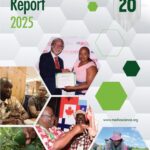
A 2025 report, The Status of Women in the Agrifood Systems in sub-Saharan Africa published by the Food and Agriculture Organization of the United Nations (FAO), African Women in Agricultural Research and Development (AWARD); and the Natural Resources Institute of University of Greenwich, Rome, indicates that women face persistent challenges in accessing professional opportunities in the agricultural sector.
This is often as a result of discriminatory practices and structural barriers within institutional frameworks.
The report further mentions that these barriers have hindered women, like Phylis, Esther and Charity from advancing in agrifood careers and acting on their leadership potential.
“We have a problem of certification due to bureaucracy in the procedures that makes our operations challenging. We wish our systems be simplified to make it easy to access such important documents,” Esther said.
In sub-Saharan Africa, agriculture contributes 23 per cent to regional Gross Domestic Product (GDP) and the small-scale farmers create employment of over 70 per cent of the population of which majority are women.
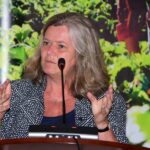
Dr. Nicoline de Haan, Director, CGIAR Gender Equality and Inclusion Accelerator, decried the slow progress in closing the gender gap.
“If no quick solutions are taken, the gender gaps could take over a century to close,” Nicoline stated.
Nicoline mentioned that as the world celebrates the International Women’s Day (IWD2026) and the International Year of the Woman Farmer, it is an opportunity to renew and accelerate commitments to make food systems work for women farmers and for science to deliver solutions.
“We are behind and out of time. Rights and justice for women matter especially in the food systems because this not only benefit women but the entire communities at large,” Nicoline noted.
She was speaking during the International Women’s Day commemoration at the World Agroforestry Centre in Nairobi, noting the effect of climate change to the world, affecting women more due to lack of resources.
“Let us not leave women behind but rather build their resilience. Evidence shows that women are less likely to own a smart phone or get access to digital tools and if we are not intentional digital transformation could deepen inequalities rather than close them,” Nicoline stressed.
Prof Appolinaire Djikeng, Director General, International Livestock Research Institute (ILRI) equally cited the importance of coming up with innovations to close the gaps on equal access to land, putting women at the centre and empowering them with tools.
Djikeng cited that women face unequal access to land, resources and technology, limiting their productivity and economic opportunities. However, there are professional opportunities for women both locally and internationally and the society should position women to take up these opportunities in agriculture.
We have to speak as husbands, fathers to girls, friends and colleagues of women and be proud of their work.
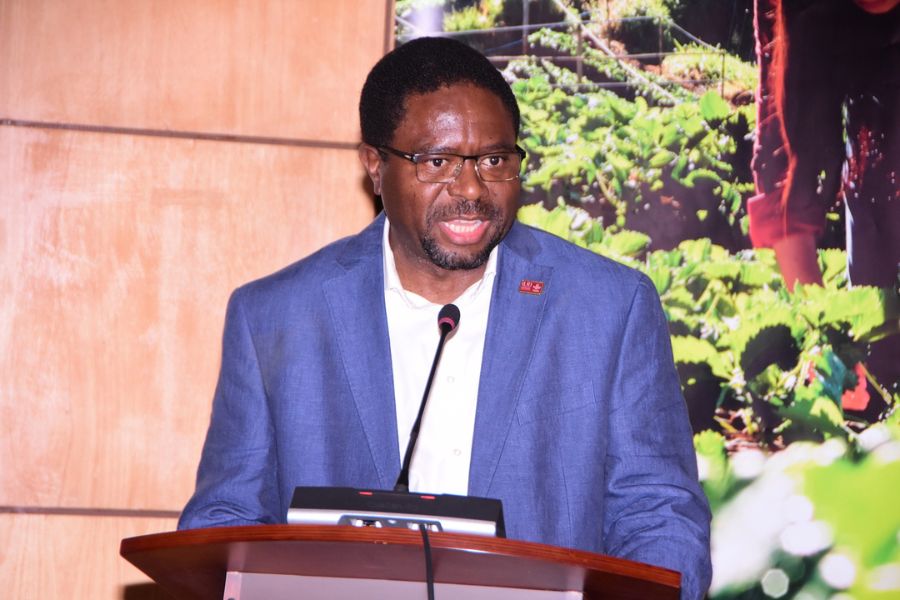
We must also start naturing girls at their early stage of life to prepare them in the pipeline of professionalism in all sectors,” Prof Djikeng added.
Dr Alice Murage Deputy Director General for Crops Research, Kenya Agricultural Research Organisation (KALRO) who spoke on putting women at the center of agriculture, alluded to the theme From Commitment to Transformation saying commitment alone does not change systems but transformation does.
Murage stated that empowering women is not a policy statement but a strategy, productivity and national progress.
She celebrated and remarked that agricultural science has majorly been male- dominated but that narrative is changing as women are now taking up positions in among them; top management, technical directorate and leadership. This aligns with the 2015 United Nations Sustainable Development Goal 5 that calls for Gender Equality by 2030.
“When designing technologies the question expands beyond yield. At KALRO we have outstanding women breeders, soil scientists, pathologists, Policy analysts and program leaders.
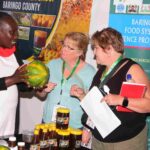
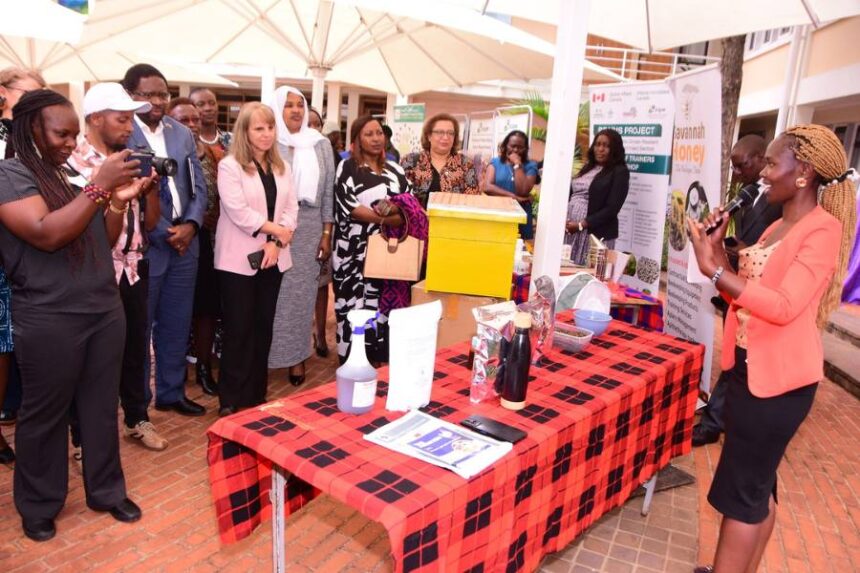
In line with the UN Women global theme “Rights. Justice. Action. For ALL Women and Girls” the event featured women farmers from ten counties in Kenya who showcased their women-led agricultural innovations, their voices, leadership and their lived realities. The women are beneficiaries and users of CGIAR technologies and innovations.
The commemoration event was organized by CGIAR Gender Equality and Inclusion Accelerator and African Women in Agricultural Research and Development (AWARD), in partnership with the CIFOR-ICRAF, and the International Centre of Insect Physiology and Ecology (icipe).