


Milliam Murigi | milliammurigi@gmail.com
Millions of Kenyans remain at risk of consuming cancer-causing aflatoxins, with recent data showing that contamination levels in maize continue to exceed safe limits in many parts of the country.
Findings from more than 3,000 maize samples collected between 2020 and 2026 show that a significant proportion exceeded Kenya’s safety threshold of 10 parts per billion (ppb). Some samples recorded contamination levels as high as 4,000 ppb in 2026.
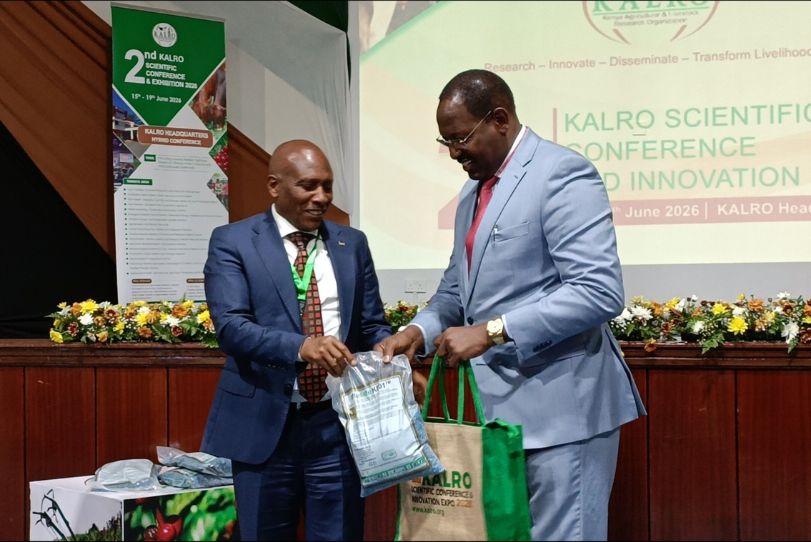
Presenting the findings during the Second Scientific Conference and Innovation Exhibition by the Kenya Agricultural and Livestock Research Organization (KALRO), KALRO Board Chair Thuo Mathenge said many samples tested above 500 ppb between 2025 and 2026.
“In some cases, up to 50 per cent of tested samples surpassed the recommended standard, raising alarm over widespread exposure,” he said.
The data shows a worrying upward trend over the years, with contamination peaking at 145 ppb in 2020, 381 ppb in 2021, more than 500 ppb in 2025 and higher levels recorded in 2026.
Experts say the persistence of high aflatoxin levels signals a deepening national food safety challenge, especially in maize-dependent regions.
Aflatoxins are toxic compounds produced by certain fungi, including Aspergillus flavus, which occur naturally in agricultural environments. The fungal spores can infect crops such as maize and groundnuts, especially under hot, dry or drought-stressed conditions.
“Millions of Kenyans are potentially exposed to aflatoxins daily through consumption of maize which is a staple for most Kenyan households. Studies have shown continuous exposure to aflatoxins translates to chronic health conditions including, liver cancer, stunted growth in children, weakened immune system, increased vulnerability to illnesses,” he added.
Beyond public health concerns, the contamination is also causing significant economic losses. Contaminated grain can create economic losses for farmers through rejection in formal markets. Experts also warn that contaminated feed may affect livestock productivity.
Speaking during the same event, Dr John Kanyuithia Mutunga, Chairperson of the Departmental Committee on Agriculture and Livestock in the National Assembly, said Kenya needs to expand preventive measures such as Aflasafe to reduce aflatoxin exposure risks.
“Prevention at farm level is the only sustainable solution. Once aflatoxin contaminates grain, it cannot be eliminated through cooking, milling, or processing. Testing alone, they note, only detects the problem but does not remove it,” said Dr. Mutunga.
Aflasafe is a biological control technology applied in farmers’ fields to reduce aflatoxin contamination before harvest. It works by introducing non-toxic fungal strains that compete with toxin-producing fungi, reducing contamination risks before harvest. Studies have shown that, when applied correctly, it can significantly reduce aflatoxin contamination.
It is used once per cropping season and has demonstrated success in reducing contamination to undetectable levels in pilot areas, including irrigated maize production zones.
The intervention has also recorded positive outcomes in groundnut and sorghum production, improving market access for farmers in several regions. In Tharaka Nithi, researchers report that sorghum treated with the technology has gained acceptance by East African Malting Limited, indicating potential market benefits. “With all these benefits, we are now calling for Aflasafe to be integrated into existing government agricultural subsidy programs, alongside fertilizer and seed support initiatives. Distribution through national supply systems would ensure wider reach to smallholder farmers,” added Dr. Mutunga.
According to him, climate change-related shifts in temperature and rainfall patterns could increase aflatoxin risks in vulnerable farming regions.
Limited adoption of preventive technologies such as Aflasafe could have public health and economic consequences.
The reason is contaminated crops are often rejected in markets or fail to meet export standards, reducing farmers’ incomes and limiting Kenya’s competitiveness in regional trade.
“Other countries in the region, including Uganda, have expanded use of Aflasafe, raising questions about how Kenya can maximise the benefits of the technology,” said Dr Mutunga.
©MESHA Features 2026