


State of the World Fisheries and Aquaculture report 2026
By Agatha Ngotho | angotho@gmail.com
Experts want Kenyans to eat more fish because it provides high-quality protein and nutrients such as omega-3 fatty acids, which support heart and brain health. However, despite being promoted as an affordable protein source, many low-income households say fish remains beyond their reach.
Fish contains omega-3 fatty acids, including eicosapentaenoic acid (EPA) and docosahexaenoic acid (DHA), which the body utilizes directly without conversion. These nutrients are linked to heart health, brain development and reduced inflammation. Health experts recommend regular fish consumption as part of a balanced diet.

Ann Muringa, a mother of six living in Kibera in Nairobi, says she washes clothes for a living in neighbouring estates and the little money she earns cannot stretch to cover the cost of tilapia for her large family.
“Even a 2kg tin of dagaa fish (omena in local language) has become too expensive,” she says.
Muringa explains that it is often cheaper to buy just Ksh 50 (US$0.4) or Ksh 100 (US$0.8) worth of beef. Even if it is a small amount, she can stretch it by making a lot of soup to pour over ugali (bread) for her children’s evening meal.
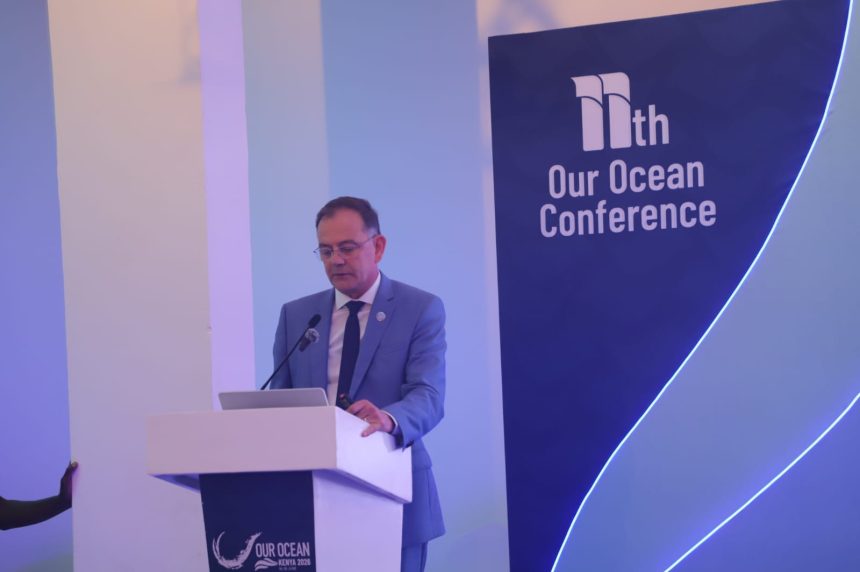
Speaking at the 11th Ocean Conference in Mombasa, Dr. Paul Orina from the Kenya Marine and Fisheries Research Institute (KMFRI) explained that the country’s population is growing fast leading to increased demand for red meat and plant-based protein sources such as beans which in turn leads to price hikes unless production keeps pace with population growth.
Fish is among the most efficient animal proteins to produce, and that is the direction we need to go,” said Dr Orina. He added that fish farming, also known as aquaculture, has expanded significantly in Kenya.
According to KMFRI, production has increased from about 9,000 metric tonnes in 2009 to more than 40,000 metric tonnes following government investments in the sector.
“More communities in places like Central Kenya and Maasailand, where people didn’t traditionally eat fish, are now adding it to their diet. Today, on average each Kenyan eats about 4.5 kilograms of fish per year,” he noted.
However, Dr. Orina warned that we must protect our water sources if we want this to last.
“Anything happening hundreds of kilometres away from our lakes and rivers ends up in our waters,” he explained.
These pollutants include plastic waste, agricultural runoff and untreated sewage, which degrade aquatic ecosystems and affect fish populations.
Kenya’s struggles are mirrored across the whole continent. According to the 2026 State of World Fisheries and Aquaculture report published by the UN Food and Agriculture Organization (FAO), fish demand in Africa continues to outpace supply.
The report estimates that average global fish consumption stands at 21.1 kilograms per person each year, compared with 9.1 kilograms per person across Africa.
It however, indicates that fish contributes significantly to daily protein intake in some African countries, accounting for as much as 54 per cent of animal protein consumption.
Aquaculture is currently the fastest-growing food production sector in Africa, expanding at an estimated annual rate of 8 per cent with this farming mostly concentrated in just a few countries. Egypt produces a massive 66 per cent of all farmed fish in Africa, followed by Nigeria, Ghana, Uganda and Zambia.
Experts at the conference hosted in Africa for the first time, said the continent needs greater investment in aquaculture technology, financing for small-scale fishers, and policies that support sustainable fisheries management. Experts say such investments could help increase fish production and improve affordability for households such as Muringa’s.
At the Mombasa conference, Kenya’s Cabinet Secretary for the Blue Economy, Hassan Joho, noted that while reports and statistics are great, data alone is not enough. He urged authorities and stakeholders to translate this knowledge into actual investments and partnerships that deliver real benefits for the people.
©MESHA Features 2026