

By Sharon Atieno | sharonphoebeatieno@gmail.com
As African countries begin to advance the development of resilient and sustainable agrifood systems, agroecology, an expert has said, is a viable pathway to achieve this goal. However, inadequate funding, misaligned government priorities and systemic debt is hindering its adoption.
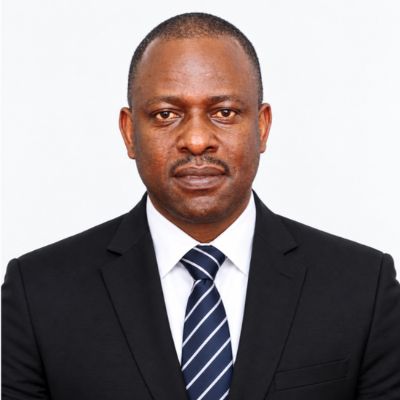
Bavon Christopher, Tanzania Country Director, Action Aid said this during a Media for Environment, Science, Health and Agriculture (MESHA) cafe in partnership with his organization.
Agroecology is a whole-system approach to farming and food that works with nature rather than against it. This approach includes agroforestry, intercropping and mixed cropping, crop rotation and cover cropping, biological pest management as well as organic composting and manure recycling.
According to Christopher, there is a lot of funding flowing into industrial agriculture and nothing is being spent in agroecology.
“Every time we advocate for financing, critics raise questions like can agro-ecology be scaled up, can it really feed the growing population in African countries and can it be made profitable?” he posed.
With reference to actionaid’s recently launched report on agroecology, he observed that this approach can solve multiple, often interlinked social, ecological and economic challenges.
The report titled “Adapt to Thrive: Transforming Food Systems in Africa – The Case for Investing in Agroecology” is carried out in 10 African countries including Ethiopia, the Gambia, Ghana, Kenya, Malawi, Nigeria, Tanzania, Uganda, Zambia and Zimbabwe.
The report finds that agroecology can deliver comparable or greater yields than industrial agriculture. This includes a 41% average increase in cereal yields from rotating legumes with cereals in Ghana, an almost threefold rise in pigeon pea and sorghum yields in Tanzania, and maize yields up to twice as high in demonstration plots in Zambia.
It notes that farmers can benefit financially through lower input costs and more diverse crops and income streams with studies in Kenya showing an average 37.8% increase in profits within one to three years of transition.
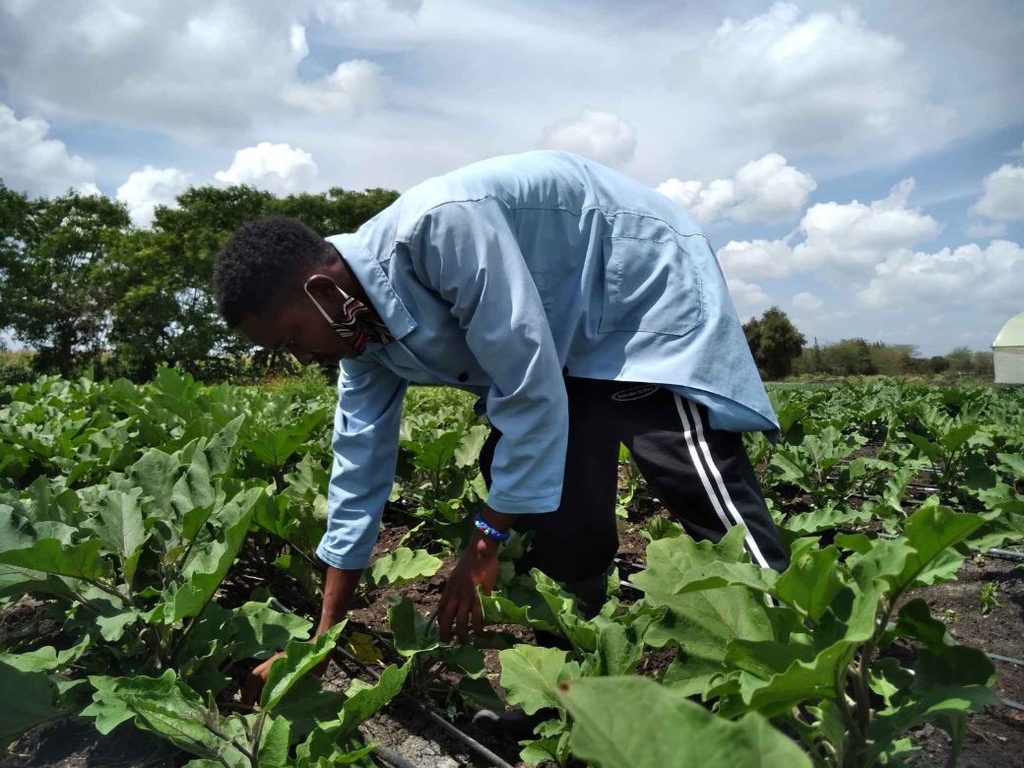
With regards to climate change, it was found that agroecology strengthens climate resilience by stabilising production during dry periods and droughts, restoring soil health and supporting biodiversity. Agroecological production can also be two to four times more energy efficient than conventional farming.
Despite these benefits, Christopher argued that there is a massive gap in funding and government accountability, noting that despite 85 per cent of the African population depending on agriculture and most being smallholder farmers, funding is heavily geared towards industrial agriculture.
Under the Malabo Protocol, he noted that countries are supposed to set aside 10% of their budget into agriculture, but only four African countries have achieved this. However, there is no transparency on how that budget is spent, it can be used to purchase vehicles or subsidizing chemical fertilizers and imported non-organic seeds.
“In 2023–24, subsidies for mostly imported synthetic fertiliser and hybrid seeds absorbed 80% of Zambia’s agricultural budget and 50% of Zimbabwe’s, despite both countries developing agroecology strategies,” the agroecology report says.
The debt distress is also a challenge. Countries are being forced to prioritize export-oriented large scale industrial farming to generate foreign exchange to service external debts, leading to cases of land grabbing while failing to address local food security, Christopher said.
Additionally, he noted that there is insufficient public investment in agricultural research and extension services to train farmers in agroecological methods. Their lack is forcing farmers to continue with conventional farming methods.
According to Christopher, there are six priority areas where the finance should flow. Supporting and de-risking farmers through subsidies during the transition period which takes about five years. Funding research, curriculum development and extension services for agroecology. Supporting local production of organic bio-input products including manure and biological pesticides.
The other areas include building marketing infrastructure including organic certification and labelling to allow farmers to command premium prices as well as integrating supportive technologies (for planting, harvesting and storage) that align with agroecological practices.
In this regard, Christopher is calling on governments to be able to raise resources domestically to be able to reduce dependence on external debt so that they can fund agriculture.
Additionally, he is pushing for global climate finance like the Green Climate Fund and Adaptation Fund to be able to reach vulnerable groups like youth in agriculture. At the 31st United Nations Framework Convention on Climate Change (UNFCCC) Conference of Parties (COP 31) in Turkiye, agroecology is among the systematic and holistic approaches to address farm and landscape climate action that African negotiators on agriculture are going to discuss. Others include climate smart agriculture, sustainable land management and nature-based solutions and the integration of crop-livestock systems.