

By Charlotte Dikenyi I info@meshascience.org
A groundbreaking new study has uncovered the significant scale, strategic importance, and strong growth trajectory of the African diaspora food market in the United Kingdom.
According to the study released at the Africa Museum in Brussels on 22 May, “A Research on the African Diaspora Food Market in the United Kingdom: Understanding Market Dynamics, Opportunities and Indigenous Food Systems” the estimated annual market value is £1.5 billion in the UK alone, expected to grow between 5 -15 per cent annually.
The majority of this African diaspora food is imported directly from Africa and represents value chain and value addition opportunities for the UK as well as trade opportunities for Africa.
The research commissioned by the Global Forum on Agricultural Research and Innovation (GFAiR) and conducted by The Food Bridge vzw and funded by the European Commission, surveyed 1,507 African diaspora consumers across the UK and found that 97 per cent include African food in their regular diet, with 35 per cent consuming African food daily and 39 per cent at least once a week.
GFAiR is a multi-stakeholder network facilitating Equitable Partnerships and Collective Actions to transform agri‑food systems for a more sustainable and equitable future. It was established in 1996 by FAO, IFAD, the World Bank, and CGIAR.
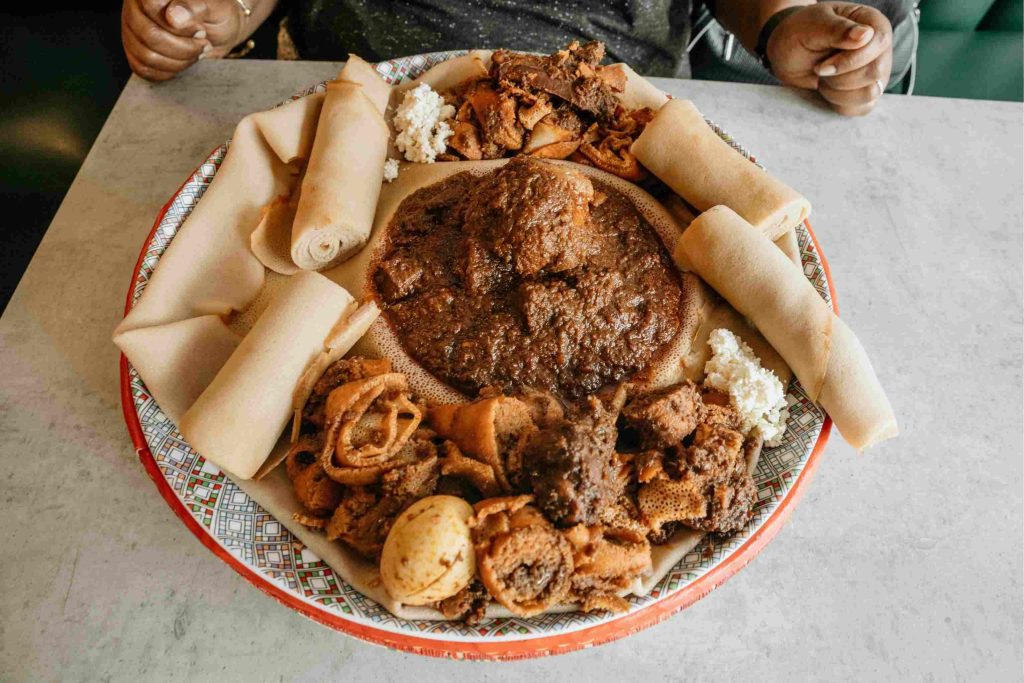
The research – conducted between January and April 2026 – highlights that African food is not a niche or occasional choice, but a core component of daily diets – comparable to staple foods in national consumption patterns. This positions the African diaspora food market as a mature, stable, and scalable agro‑food sector. The top 4 largest African communities in the UK are from Nigeria, Ghana, Sudan and Kenya, however many more are represented.
Market Opportunities
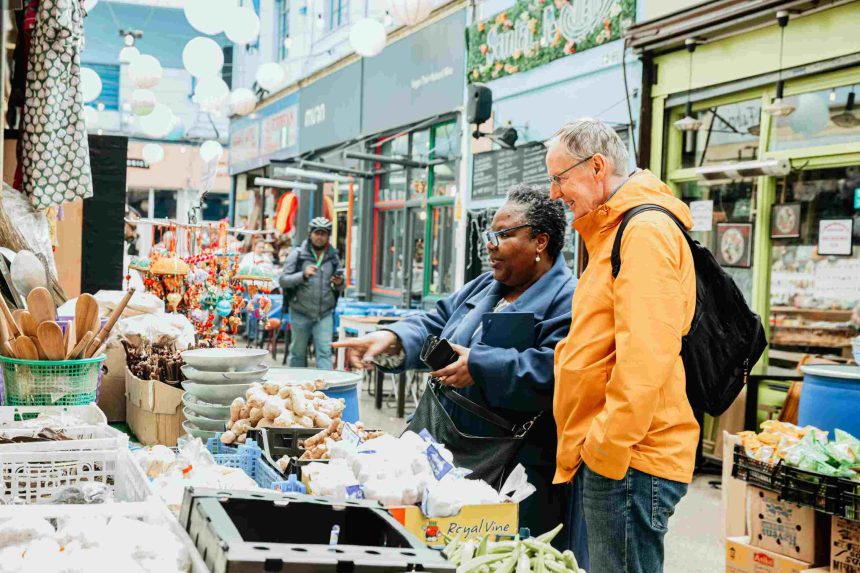
The study maps a dynamic ecosystem of importers, wholesalers, retailers, restaurants, and online platforms, with major hubs in London, Birmingham, Manchester, and Leeds. While demand is strong, the research also identified key challenges including high prices, inconsistent quality, limited availability outside major cities, and regulatory barriers affecting imports.
Crucially, the report aligns this dynamism with core European Commission priorities: biodiversity conservation through crop diversification, supply chain sustainability by shortening distances and reducing waste, and inclusive growth.
Call to Action
In response to the report’s findings, the Global Forum on Agricultural Research and Innovation (GFAiR) has issued a clear call to action for policymakers across Europe and Africa and beyond. First, it urges them to formally recognise diaspora food markets not as peripheral or informal trading spaces, but as strategic agri-food subsectors in their own right—deserving of the same policy attention, data collection, and infrastructure investment afforded to conventional supply chains. Second, it asks for concrete support for indigenous and forgotten foods, framing their rehabilitation not as heritage preservation alone but as a vital lever in the transition toward sustainable, climate-resilient nutritious food systems.
Third, the research advocates for targeted, systemic support for diaspora agri-food entrepreneurs in both Africa and the UK—opening pathways to affordable finance, technical incubation, and streamlined certification processes that reward rather than penalise small-scale, cross-border actors. Finally, it calls for the full integration of diaspora stakeholders into European development cooperation with Africa, shifting from a donor-recipient model to one of genuine partnership, where diaspora networks become co-designers of trade, agricultural development, and food security policy.
Together, these measures, the research argues, would unlock a more inclusive, biodiverse, nutritious food systems and economically dynamic Europe-Africa relationship.
“This research confirms what we have long observed – the African diaspora food market is not a niche sector. It is a multi‑billion‑pound ecosystem with the power to transform Europe‑Africa trade, promote indigenous crops, and support sustainable food systems,” said Dr. Maureen Duru, founder The Food Bridge vzw, ahead of the report launch on the 22 May, during the Tasting the Forgotten event in Brussels, Belgium.